If you’re repairing bare lawn spots, choose blends designed for patch growth, durability in sun or shade, and easy establishment. The top picks below are selected for different patch needs—easy at-home repair, fast coverage, and all‑in‑one solutions. Ideal buyers include DIY homeowners with small to mid-sized bare patches, busy households needing simple application, and those seeking all-in-one seed, mulch, and fertilizer kits.
Product Comparison At a Glance
| Product | Best For | Coverage | Notes |
|---|---|---|---|
| Scotts EZ Seed Patch & Repair Sun & Shade (85 sq ft) | Small bare spots, sun/shade variety | Up to 85 sq ft | Seed + mulch + fertilizer combo |
| Scotts PatchMaster Lawn Repair Mix Sun + Shade (Up to 140 sq ft) | Patch work with mulch component | Up to 140 sq ft | All-in-one bare spot kit, mulch included |
| Scotts PatchMaster Lawn Repair Mix Sun & Shade (10 lb, 290 sq ft) | Medium to larger patches | Up to 290 sq ft | Mulch + seed + fertilizer, fast growth |
| Scotts EZ Seed Patch & Repair Sun & Shade (10 lb) | Large areas, versatile sun/shade | Up to 445 sq ft | Expanded mulch around seed, tackifier |
| Pennington Bare Spot Repair Mix Central (1 lb) | Small patches, Pennington brand option | Small areas (1 lb bag) | Quick establishment, simple steps |
Scotts EZ Seed Patch & Repair for Sun and Shade (85 sq ft)
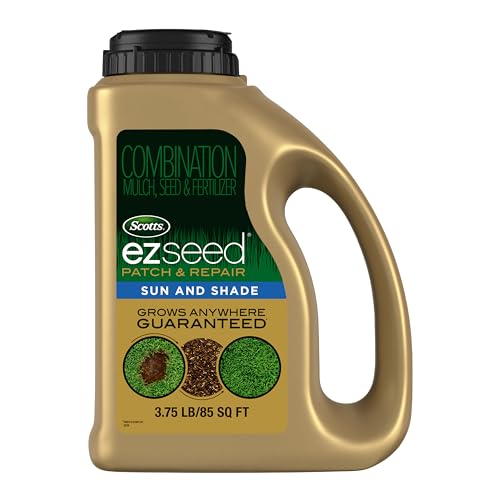
Best for small bare spots in mixed sun/shade conditions. This mix combines Kentucky bluegrass, perennial ryegrass, and fine fescue to establish quickly in temperate climates. It includes mulch and fertilizer built into one bag, simplifying the repair process. Use when daytime temps are between 60°F and 80°F and there is no frost risk.
- Best for: Homeowners with limited patch areas in sun or shade.
- Why selected: All-in-one kit that reduces steps and enhances seed moisture retention during establishment.
- Caution: Coverage is modest; larger patches require multiple bags or a bigger kit.
Scotts PatchMaster Lawn Repair Mix Sun + Shade Mix (Up to 140 sq ft)

Better for small to mid-sized bare spots needing a mulch-backed seed bed. The product combines mulch, seed, and lawn fertilizer to provide moisture retention and nutrients as seeds germinate. It’s designed for both sun and shade areas and starts growth in as little as seven days with up to six weeks of feeding.
- Best for: Patches in variable light, where mulch helps keep seeds moist.
- Why selected: All-in-one mix that supports quick germination and steady growth.
- Caution: Slightly higher price per square foot than simple seed alone.
Scotts PatchMaster Lawn Repair Mix Sun and Shade Mix (10 lb, 290 sq ft)
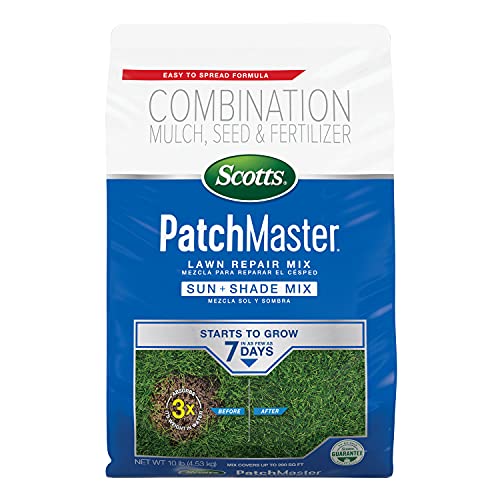
This larger 10-pound bag is suited for bigger patches or lawns with persistent bare spots. It uses a mulch-rich formula to keep seeds in place while the grassy mix greens up. It’s best for buyers who want a comprehensive, ready-to-use patch solution that covers substantial area.
- Best for: Larger patches or patch-heavy lawns needing faster fill-in.
- Why selected: Covers up to 290 sq ft with a mulch-based moisture reserve.
- Caution: May be overkill for tiny patches; pricing per sq ft is higher than smaller kits.
Scotts EZ Seed Patch & Repair Sun & Shade (10 lb)
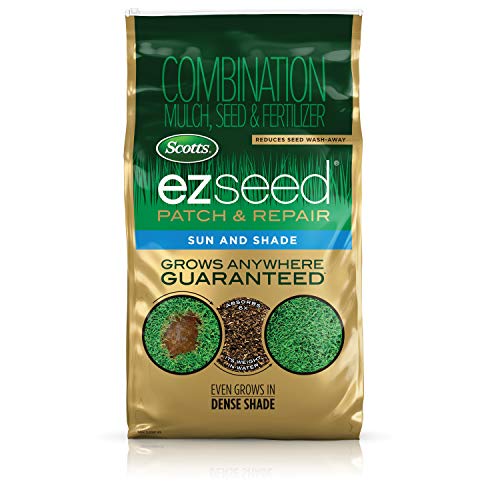
Choose this for larger lawn repairs where a reliable seed bed is needed in sun or shade. The formulation expands mulch around the seed, provides a tackifier to reduce washout, and includes a protectant for seedling safety. It’s designed to grow anywhere with proper care, including slopes and areas with high traffic.
- Best for: Large patches where a robust, long-lasting establishment is beneficial.
- Why selected: Strong moisture retention and seed protection features support reliable germination.
- Caution: Heavier bag requires more storage space and heavier handling.
Pennington Bare Spot Repair Mix Central (1 lb)

Pennington offers a dedicated bare-spot repair option. This 1-pound bag is ideal for small repairs and quick establishment in lawns that need quick fill-in. It’s a straightforward choice when patch size is minimal and you want a simple, predictable germination path.
- Best for: Tiny bare spots or as a supplemental patch material.
- Why selected: Quick establishment and simple three-step use make it accessible for beginners.
- Caution: Smaller bag means more frequent reapplication for larger patches.
Buying Guide: Key Considerations For Patch Repair
What patch size is best for each product?
Small patches: 85 sq ft or less benefit from EZ Seed patches or PatchMaster 140 sq ft kits. Medium patches: 140–290 sq ft work well with the 290 sq ft PatchMaster or similar all-in-one mixes. Large patches: 445 sq ft or more are best tackled with the larger EZ Seed bags or similar multi-pack solutions that include mulch and fertilizer.
Sun, shade, or mixed conditions — which mix to choose?
For mixed sun/shade lawns, choose products specifically labeled for sun and shade or those with a versatile seed blend that tolerates variable light. Pure sun-loving seed blends may struggle in dense shade, while shade-tolerant mixes perform better under trees or on the north side of homes.
All-in-one vs. seed-only approaches
All-in-one kits (seed plus mulch plus fertilizer) simplify the repair process and improve seed establishment by retaining moisture and protecting seedlings. Seed-only products may require extra mulch or soil amendments but can be more cost-efficient for larger patches or repeat repairs over time.
Establishment speed and feeding
Look for products that advertise fast germination (often 7 days) and ongoing feeding (up to 6 weeks) if you want quicker, thicker turf. Mulch content helps keep seeds in place during rainfall and irrigation, reducing washout on slopes or loose soils.
Application environment and care
Apply when temperatures are within the recommended range and avoid frost risk. Watering guidance is typically included in product instructions; keep the seed bed consistently moist but not saturated during establishment.
Choose this if you value
- Simple, all-in-one patches for quick results
- Moisture retention and mulch-assisted germination
- Blends designed to blend with existing lawn types
Frequently Asked Questions
- What is the best time to repair bare spots?
Apply in spring or fall when soil temperatures support germination and growth, avoiding frost periods. - How much seed do I need for a bare spot?
Coverage varies by product; calculate square footage and choose a kit that covers or slightly exceeds that area. - Can I overseed over existing lawn with patch products?
Yes, but ensure the patch area is prepared, clean, and mildly compacted for better seed-to-soil contact. - Are all-in-one patch kits better than seed-only options?
All-in-one kits simplify the process and tend to improve establishment, especially for beginners. - Do these products work in high-traffic areas?
Many blends are designed for general lawn use, but for heavy traffic, consider durable seed blends and ensure proper irrigation after establishment. - Is Pennington’s bare spot mix suitable for sunny lawns?
Yes,Pennington options provide broad applicability for typical home lawns but confirm sun/shade suitability on the label.