Answering the question of how to extend growing seasons, these greenhouses and protective coverings help you cultivate fruits and vegetables year-round. They suit small yards, patios, and raised beds. This guide highlights five practical options for American buyers, with clear reasons to choose each based on space, ventilation, and protection needs.
Summary table
| Product | Best For | Key Benefit | Size / Capacity |
|---|---|---|---|
| Quictent Raised Garden Bed With Cover | Small to medium gardens needing integrated cover | 3-in-1 design with removable greenhouse | 6 x 3 x 1 ft |
| Miory Raised Garden Bed with PE Cover | Season extension in variable climates | 2-layer zippered windows for airflow and protection | 6 x 3 x 1 ft |
| LUBORN Garden Netting Kit | Insect and bird protection for raised beds | Ultra-fine mesh with hoops and clips | 8 x 20 ft netting, 5 hoops |
| MKMJ Fine Mesh Garden Netting | Protecting crops in open beds or rows | Ultra-fine, breathable mesh | 4 ft x 10 ft cover |
| ANGAR Garden Covers (2-Pack) | Two-row protection in early spring | Durable PVC breathable fabric with stakes | 45 in x 22 in x 16 in each |
Buyer note: These options range from fully enclosed mini-greenhouses to protective netting and row covers. Choose based on your plant types, climate, and how much space you can dedicate to an elevated bed or ground cover.
Quictent Raised Garden Bed With Cover

Best for: gardeners seeking an all-in-one raised bed with a built-in mini greenhouse. This kit combines a 6x3x1 ft galvanized garden bed with a dismountable greenhouse cover and two large screen windows. The design supports customizable growing space and straightforward access for daily care.
Why selected: It provides a compact, integrated solution that reduces the need for separate structures while enabling ventilation via zippered windows. The large soil capacity supports a wide range of vegetables and herbs in moderate climates.
Limitations: The structure relies on the bed frame for stability; extremely windy locations may require additional anchoring.
Miory Raised Garden Bed With PE Cover
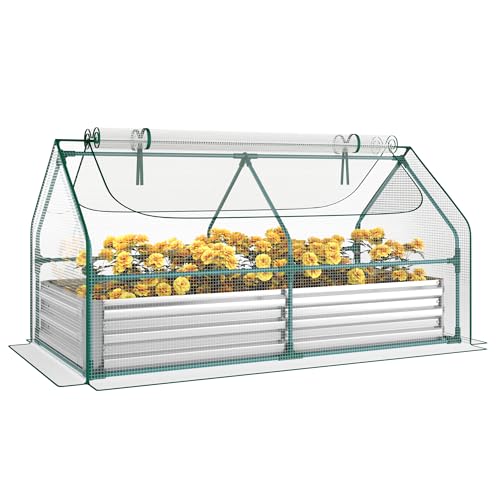
Best for: gardeners who want longer growing seasons and flexible protection against wind and rain. The PE greenhouse cover shields plants while the mesh layer deters birds, and the dual-layer windows promote airflow when needed.
Why selected: The 3-in-1 design supports raised bed cultivation with the option to seal in warmth and moisture during cooler periods. The included labels and gloves simplify organization and care.
Limitations: For windy sites, additional ballast is recommended to secure the cover more firmly.
LUBORN Garden Netting Kit

Best for: gardeners wanting insect and animal protection for several beds without full enclosure. The kit includes 8×20 ft netting, five sets of hoops, and clips for secure attachment.
Why selected: See-through netting allows ongoing plant monitoring while preventing pests. It balances airflow with protection, making it suitable for vegetables and fruits in open garden spaces.
Limitations: This netting is not a full greenhouse; it does not regulate temperature or humidity by itself, so it’s best for pest protection in moderate climates.
MKMJ Ultra Fine Mesh Garden Netting

Best for: protecting crops from birds, bugs, and small pests while allowing light, air, and water to pass through. Ideal as a row cover for vegetables, fruits, and flowers.
Why selected: The breathable, ultra-fine mesh supports healthy growth with minimal microclimate disruption. It serves well as a lightweight barrier in busy garden seasons.
Limitations: It may require multiple pieces or additional securing methods for larger beds or strong winds.
ANGAR Garden Covers (Two Pack)

Best for: beginners or gardeners with multiple raised beds who want reliable early-season protection. The two-pack provides coverage for separate rows or beds.
Why selected: Durable PVC mesh supports warmth retention while allowing essential ventilation. Stakes ensure stability, and see-through material makes it easy to monitor seedlings.
Limitations: Covers are relatively shallow; deeper or larger beds may require longer or additional netting to cover fully.
Buying Guide
What to consider when choosing a greenhouse or protective cover for fruits and vegetables:
- Growing goals: Do you want a full mini-greenhouse, insect protection, or a simple row cover? Your goal determines the product type you need.
- Climate and seasonality: In cooler regions, more robust wind and temperature control may be necessary; in milder areas, lighter netting often suffices.
- Bed size and layout: Measure your raised beds or planting space to ensure the fit and ease of access for watering and care.
- Ventilation controls: Look for zippered windows or mesh layers that allow adjustable airflow to prevent overheating and humidity buildup.
- Durability and anchoring: Consider wind exposure; some products include stakes or weights, while others require separate anchoring.
- Maintenance: Reusable netting and easy-clean surfaces save time and effort across seasons.
Practical tips for selecting and using protective coverings
- Use removable covers during mild days to maximize sunlight and airflow while retaining warmth at night.
- Combine a raised bed with a cover when you want a compact, efficient growing system in small spaces.
- Secure lightweight nets with stakes or clips to prevent damage from wind.
- Inspect seams and zippers regularly to maintain ventilation and protect plant growth.
FAQ
- Q: Do these products work in winter climates? A: Some are designed to extend seasons with warmth retention; check the cover’s wind resistance and insulation level for your area.
- Q: Can I grow tomatoes under these covers? A: Yes, with proper ventilation and enough light, though taller varieties may need a taller structure.
- Q: Is netting better than a full greenhouse? A: Netting provides pest protection and airflow, while a greenhouse offers temperature control and humidity management.
- Q: How do I secure covers in windy locations? A: Use stakes, weights, or clips supplied with the kit; ensure anchors are driven into stable ground.
- Q: Are these covers easy to install? A: Most options use simple zippers and clips, designed for quick setup and removal.
- Q: Do I need separate tools to install these covers? A: Generally no tools are required beyond basic securing stakes or weights.