Grow bags for tomatoes offer versatile, portable, and high-yielding solutions for small spaces or seasoned gardens alike. This guide highlights five top options, explaining who each bag is best for, why it stands out, and practical cautions to consider before you buy. Whether you’re a balcony gardener, raised-bed grower, or backyard farmer, these picks help optimize root health, drainage, and plant support.
Product comparison at a glance:
| Product | Best For | Key Benefit | Typical Limitation |
|---|---|---|---|
| FEED GARDEN 10 Gal Grow Bags (4 Pack) | Vegetable growers needing durability | 300G thick fabric, reinforced handles | May be heavier to move when full |
| Gardzen 10-Pack 10 Gal Grow Bags | Heavy plant setups | Thick 300G fabric, strong handles | Bulkier storage when not in use |
| Songrey 10-Pack 10 Gal Grow Bags | Budget-conscious multi-plant setups | Safe BPA-free material, strong ventilation | Fabric quality varies with season |
| Moirsunt Tomato Cages with Grow Bags (3-Pack) | Integrated plant support systems | Three-layer cages plus 10-gallon bags | May require assembly |
| MQJIAZHI 4 Pack Tomato Cages with 17 Gal Grow Bags | Space-maximizing 2-in-1 kits | Large growing space and sturdy trellis | Higher upfront cost |
FEED GARDEN 10 Gal Grow Bags 4 Pack

Best for gardeners who prioritize durability and strong root health. The FEED GARDEN set uses 300G thickened non-woven fabric that enhances airflow, promotes fast drainage, and helps prevent overwatering and root rot. It’s designed for multi-season use with reinforced handles that survive heavy soil and large plants. Choose this if you need a reliable, reusable option for vegetable plots or balcony gardens.
Best use case: tomatoes, herbs, and other vegetables in containers or raised beds where moving pots is common.
Caution: heavier when filled; plan for easier relocation or additional support when full.
Moirsunt Tomato Cages with 10 Gallon Grow Bags
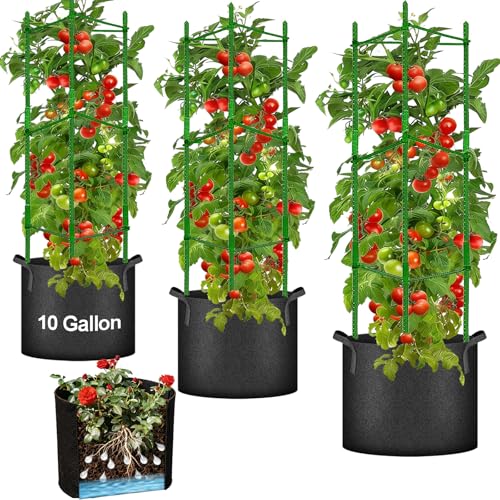
Best for growers who want an integrated climbing support system. This set includes three 10-gallon grow bags paired with stainless-steel core tomato cages that are weather-resistant and durable. The breathable bags help with air pruning and root growth, while the sturdy cages provide upward growth support for tomatoes and other climbing plants. Choose this if you prefer a combined solution to train plants and reduce fruit touching soil.
Best use case: determinate and indeterminate tomato varieties, peppers, and vining vegetables in outdoor gardens or patios.
Caution: assembly required for the cage system; ensure proper anchoring in windy locations.
Jorvila 5 Pack 5 Gallon Grow Bags

Best for gardeners seeking a balance of capacity and manageability. Jorvila’s 300G thickened nonwoven fabric emphasizes root health through excellent aeration and self-air pruning, which helps prevent root tangling and supports robust plant development. The bags are washable, reusable, and easy to store when not in use. Choose this if you value return-to-storage practicality and reusability.
Best use case: tomatoes, potatoes, and diverse vegetables in containers or small garden spaces.
Caution: longevity depends on care; clean and dry thoroughly before storing to prevent mold.
Gardzen 10-Pack 10 Gallon Grow Bags

Best for multi-plant setups that need dependable air flow. Gardzen’s bags use 300G thickened fabric to balance drainage and root respiration. The reinforced X-shaped stitching on the handles adds durability when moving full soil loads. They are BPA-free for safer organic gardening and promote air pruning to encourage strong root systems. Choose this if you expect to reposition plants frequently or work across several containers.
Best use case: mixed vegetables like tomatoes, peppers, cucumbers in balconies, patios, or small yards.
Caution: ensure proper bag positioning to maximize drainage during heavy rainfall or irrigation.
MQJIAZHI 4 Pack Tomato Cages with 17 Gal Grow Bags

Best for space-efficient, 2-in-1 growing kits. This kit combines a 17-gallon grow bag with a triangle tomato trellis, enabling upward growth while reducing soil erosion from rain. The heavy-duty steel frame is rust-resistant and designed to support heavy fruit loads. Choose this if you want a compact system that maximizes vertical space and simplifies plant training.
Best use case: tomatoes, cucumbers, beans, and other vining crops in limited spaces or elevated beds.
Caution: larger trellis requires sturdy anchoring and adequate headroom for plant height.
Buying Guide
What to consider when selecting tomato grow bags
- Bag material and thickness: Look for 300G thickened nonwoven fabric for better airflow and drainage. Thicker fabrics reduce tearing and extend bag life.
- Drainage and aeration: Ensure the bags promote air pruning to prevent root circling and encourage healthy root systems.
- Handles and portability: Reinforced handles help move heavy bags safely; consider how often you’ll relocate plants.
- Size and capacity: Common options are 5 to 17 gallons. Choose based on tomato variety, root space, and available growing area.
- Integrated supports: If you want a 2-in-1 solution, kits pairing grow bags with tomato cages or trellises save space and assembly time.
- Durability and reuse: Reusable bags are more cost-effective long term, especially for seasonal gardeners who plant yearly.
- Storage and maintenance: Check if bags can be cleaned and dried thoroughly to prevent mildew between seasons.
FAQ
- What size bag is best for determinate tomatoes? A: 5 to 10 gallons typically suffices for many determinate varieties, depending on plant size and spacing.
- Should I use tomato cages with grow bags? A: Yes, especially for taller or heavier-fruited varieties; cages help support fruit load and reduce soil splashing.
- Are thick fabrics better for root health? A: Yes. Thicker fabrics promote airflow and prevent excessive moisture, reducing root rot risk.
- Can grow bags replace raised beds? A: They can for smaller spaces or balcony setups, but raised beds may offer more soil volume and stability for large crops.
- How do I prevent bag tearing during movement? A: Choose bags with reinforced handles and avoid dragging; lift with knees and keep soil evenly distributed.
- What maintenance is needed for reuse? A: Clean bags, dry completely, and store in a dry place to prevent mold between seasons.