Answering your search for the best grow lights for houseplants: these five options balance full-spectrum output, adjustable intensity, and timers to support plants from seedling to flowering. Ideal buyers vary from busy professionals needing auto lighting to apartment dwellers seeking compact, stylish solutions for low-light spaces. Below, you’ll find concise product highlights, best-use cases, and practical caveats to help you choose.
| Product | Best For | Key Benefit |
|---|---|---|
| Aokrean Plant Grow Light (3-Pack) | Small pots and starter setups | Three spectrum options with adjustable brightness and a stable stand. |
| RWNTAO Grow Lights (2 Head, 1 Pack) | Vining and leafy greens | Full spectrum with 3 modes and 10 brightness levels, auto timer. |
| GooingTop LED Grow Light | Compact desks and shelves | High color fidelity with 4-12H timers and flexible clamp/gooseneck. |
| yadoker Plant Grow Light | Tall plants and big indoor trees | Up to 61” height, full spectrum, strong coverage. |
| Kullsinss Grow Lights | Decorative modern spaces | Wood-grain design with full spectrum and adjustable timers. |
Aokrean Plant Grow Light, 48 LEDs, 3 Pack

Best for small pots and starter setups. This halo-style light can be placed either by inserting into soil or standing on a base, offering 3 lighting spectrums and 10 brightness levels. The 3/9/12 hour timer helps automate daily cycles, making it suitable for busy households or travel. Best used for compact houseplants, herbs, or seedlings that need consistent daily light without external fixtures. Caution: the stand requires the plant pot to press down to stay stable, and it is not a wireless model.
Grow Lights for Indoor Plants, 84 LEDs Clip Light

Best for leafy greens and herb gardens on desks or shelves. This two-head unit provides full-spectrum light with 6000K LEDs and 5 red LEDs per bar, designed to boost vegetative growth and flowering. It includes a cycle memory timer with 3/9/12 hour options and 10 brightness levels, allowing precise tailoring to plant needs. The clip and gooseneck provide flexible positioning. Limitation: more effective when used close to plants for higher PPFD, and USB/AC power flexibility may require appropriate outlets or adaptors.
GooingTop LED Grow Light, Clip Style

Best for compact setups and desk plants. Featuring 6000K white light with a mix of red LEDs, it offers a high color rendering index (around 95) to improve visibility of plant health. The 4/8/12 hour timer cycles ensure consistent daily lighting, and the flexible gooseneck and clamp enable directional lighting. Caution: designed as a clip-on lamp; larger tall plants may require additional height adjustments for even coverage.
yadoker Plant Grow Light, Tall Adjustable

Best for large plants and tall indoor trees. This unit emphasizes tall-height growth with an adjustable height up to 61 inches, delivering full-spectrum light across growth stages. The bamboo exterior adds an eco-friendly touch while blending with home decor. The design targets wide light coverage to prevent shading of taller specimens. Limitation: taller setups may require more space and stable mounting to avoid tipping during operation.
Kullsinss Grow Lights, Wood Grain
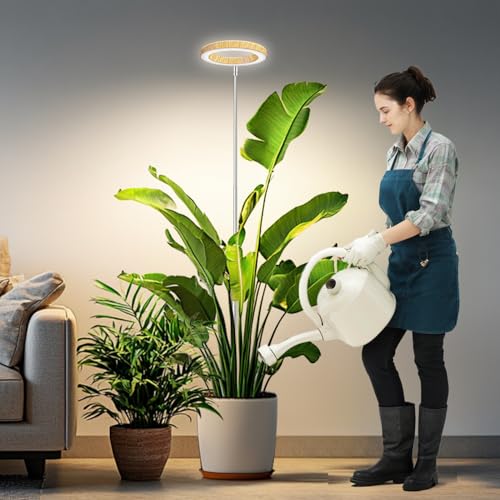
Best for stylish, decor-friendly spaces. The 10″-65″ height-adjustable halo light uses a faux woodgrain design and full-spectrum LEDs, covering 380 nm to 760 nm. It includes 5 dimming levels and 3 spectra modes (white, warm white+red, mix), plus 6/12/16 hour auto-timers. This setup is ideal when you want a single fixture that complements interior design while supporting plant health. Caution: larger footprints may be more visually prominent in small rooms.
Buying Guide: Key Considerations When Choosing Grow Lights For Houseplants
- Coverage and height: Match the fixture’s height range to your plant sizes. Tall plants benefit from adjustable stands, while compact plants work well with clip-on or halo designs.
- Full-spectrum quality: Look for lights that cover at least 380–760 nm. Red and blue chips help with flowering and vegetative growth, while white light supports overall perception of plant health.
- Adjustability: Dimming levels and multiple spectral modes let you tailor light to growth stages and plant species.
- Timers and automation: Built-in 3/9/12 hour options simplify daily care, especially for busy schedules or when you’re away.
- Mounting options: Decide between clip/clamp, soil-insert halo, or stand-alone bases. Ensure stability for taller setups.
- Power and controls: USB vs. AC power affects placement flexibility. Consider outlet availability and the need for adapters.
- Aesthetics and decor: If the fixture will be visible in living spaces, choose designs with woodgrain or sleek profiles that fit your interior style.
Frequently Asked Questions
- Q: Do grow lights replace natural sunlight completely? A: They supplement it, especially in low-light interiors or for plants far from windows.
- Q: How long should grow lights be on each day? A: Most plants benefit from 8–12 hours of light during active growth, adjusted by timer settings.
- Q: Can I mix different grow light brands? A: Yes, but ensure compatible color spectra and similar intensity to avoid uneven growth.
- Q: Is higher wattage always better? A: Not necessarily. PPFD, distance from plants, and spectrum matter more than wattage alone.
- Q: Are there safety considerations? A: Use fixtures designed for indoor use, avoid exposed wiring, and ensure proper mounting to prevent tipping.
- Q: How often should I replace grow lights? A: LED lifespan varies; replace when light output declines noticeably or color shifts occur.
For practical planning, consider pairing a halo or clip-style light for smaller or mid-sized plants with a taller, adjustable fixture for larger specimens. The chosen products here emphasize full-spectrum output, adjustable settings, and automated timers to support varied houseplant needs across rooms and seasons.