Answer: For tomatoes grown indoors, choose full-spectrum, dimmable grow lights with adjustable height or tripod stands, built-in timers, and broad coverage. The five picks below suit different setups—from floor-standing to desk-height—giving you consistent light and easy scheduling for vigorous tomato growth. Ideal buyers include: apartment gardeners needing compact setups; hobbyists seeking adjustable height; and those prioritizing energy efficiency with timers.
| Product | Best For | Key Benefit |
|---|---|---|
| LBW Grow Lights for Indoor Plants Full Spectrum with Stand | Floor-standing setups | 214 LEDs, built-in 4/8/12H timer |
| LBW Desk Grow Light, Full Spectrum | Desk or shelf setups | Adjustable height, 3/6/12-hour timer |
| VIPARSPECTRA P700 Grow Light | Medium-sized tents or shelves | High PAR, heat-dissipating design, efficient 70W |
| LBW Latest Grow Light for Indoor Plants, Dual-Head | Broad coverage, flexible layouts | 214 LEDs per head, multiple modes, timer |
| LEOTER Grow Light for Indoor Plants | Adjustable height, taller plant setups | 80 LEDs, full-spectrum with red/blue mix, auto timer |
LBW Grow Lights for Indoor Plants Full Spectrum with Stand

Best for: Large floor setups where tomatoes require steady, even lighting. The 214 LEDs deliver a full spectrum that mimics sunlight, boosting photosynthesis for fruiting stages. The 4/8/12-hour timer supports daily automation, reducing manual cycling and ensuring consistent growth cycles. The six brightness levels help tailor intensity as tomato plants mature, from seedling to fruiting. A caution: heavier tall plants may require extra support or a sturdier base to prevent tipping.
LBW Desk Grow Light, Full Spectrum Plant Light

Best for: Small to mid-size indoor tomato starts on a table or shelf. With 214 LEDs spanning 380nm–780nm, this light supports photosynthesis across growth stages. The 3/6/12-hour timers and 6 dimming levels allow precise scheduling and brightness control, helping seedlings avoid light burn while promoting sturdy leaf development. Choose this if you want a compact, adjustable desk solution. Limitation: coverage may be narrower than floor-standing models, requiring closer placement to plants.
VIPARSPECTRA P700 Grow Light

Best for: Medium-sized grow tents or dedicated plant shelves. The 70W design provides a high PAR output with a balanced 660nm red and white spectrum, closely simulating natural daylight for vigorous fruiting. A heat-dissipation approach with large aluminum heatsinks supports longer runtimes. This option is efficient for seedling-to-fruit stages in compact spaces. Limitation: as a higher-powered unit, ensure proper ventilation to maintain stable temperatures.
LBW Latest Grow Light for Indoor Plants, Dual-Head

Best for: Covering broader tomato plant areas with dual light panels. Each panel houses 214 LEDs combining white, cold white, red, and natural light for robust photosynthesis. Built-in 3/6/12-hour timers and a six-level brightness scale support staged growth and energy efficiency. The 75″ tripod height adds flexibility for taller tomato plants. Caution: ensure legs are fully extended and evenly stabilized on uneven floors to prevent wobble.
LEOTER Grow Light for Indoor Plants
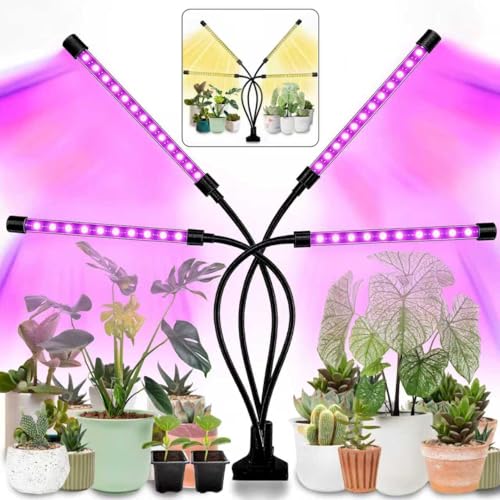
Best for: Tall indoor tomato plants needing adjustable height. This model features 80 LEDs with a full spectrum plus targeted red/blue bands to support all growth phases. An auto on/off timer and 10 dimming modes enable fine-tuning across growth stages, from seedlings to fruiting, while the adjustable gooseneck allows precise angle control. Limitation: with a smaller LED count than some competitors, coverage may be more focused; position accordingly for larger plants.
Buying Guide: Key Considerations For Tomato Grow Lights
What light spectrum do tomatoes need? Tomatoes benefit from full-spectrum light that spans blue and red wavelengths, approximating natural sunlight. Look for lights labeled full spectrum with a mix of red, blue, and white LEDs.
How much light and coverage are required? For tomatoes, aim for even coverage over the canopy, especially during flowering and fruiting. Consider lights with larger panels or dual-head designs for broader reach, and adjustable height for taller plants.
How important are timers and dimming? Timers automate daily cycles, promoting consistent growth. Dimming helps tailor intensity to plant stage and prevent leaf burn. Seek models with multiple timer options (4/8/12 hours) and several brightness levels.
What about heat and durability? Tomato plants perform best under stable temperatures. Lights with effective heat dissipation (aluminum heatsinks, venting) help prevent overheating in small enclosures.
Ease of setup and placement? Choose tripod or adjustable stands if you need flexible placement around pots and shelves. If space is tight, desk or clip-on models offer compact solutions without sacrificing light quality.
Frequently Asked Questions
- What light spectrum is best for tomato growth?
– Full-spectrum lighting that includes blue and red wavelengths supports vegetative growth, flowering, and fruiting, closely mimicking sunlight. - Do tomatoes need 12-hour light cycles?
– A typical cycle of 12–16 hours of light per day supports healthy growth, but timers can be adjusted to suit plant stage and season. - Can grow lights replace outdoor sun for tomatoes?
– They can compensate for limited natural light indoors, but strong direct sun remains optimal when possible; use grow lights as a supplement. - What should I consider when choosing height adjustments?
– Taller tomato varieties benefit from taller, adjustable stands to keep the light at an optimal distance from the canopy as plants grow. - Are dual-head lights better than single-head lights?
– Dual-head designs can provide broader coverage and more uniform light distribution for larger tomato clusters or taller plants. - Is heat a concern with LED grow lights?
– LEDs emit less heat than traditional lamps, but proper heat dissipation is still important to prevent heat buildup in enclosed spaces.