Direct answer: in cold months, a heated waterer helps keep poultry hydrated by preventing freezing, making daily refills easier and reducing water contamination. This guide compares top options for backyard flocks, small farms, and outdoor coops. Best for drawn-out winter seasons are thermostatically controlled units that maintain unfrozen water with minimal energy use. The top picks below are selected for reliability, ease of use, and suitability for different flock sizes.
| Product | Capacity | Heating Style | Best For | Notes |
|---|---|---|---|---|
| Farm Innovators Heated Chicken Waterer | 3 gallons | 100W thermostatic heater | Larger flocks, outdoor setups | Thermostatic control; durable plastic |
| Omlet Insulated Chicken Waterer | 3 gallons | Insulated design (passive cooling in heat, active freeze protection) | Cleaner water, year-round use | Anti-roost lid; BPA-free |
| Lilyang Heated Waterer | 3 gallons | 250W thermostat-controlled heater | Cold climates, reliable freeze-protection | Detachable heating plate; aluminum base |
| Premier 1 All-Season Heated Waterer | 3 gallons | Built-in 100W heater with thermostat | Unfrozen water, nipple drinkers | Hinged lid cap for quick refills |
| JELSVOP Heated Waterer | 3 gallons (11L) | Low-wattage heater with 4 nipples | Multiple drinkers, winter and summer use | Anti-freeze design; stainless nipples |
Note: All products are designed to prevent water from freezing, but use varies by climate, coop insulation, and flock size. Consider whether you need nipples or a wide-mouth dispenser, and how easy it is to refill during icy mornings.
Farm Innovators Heated Waterer For Outdoor Poultry

The Farm Innovators model uses a 100-watt thermostatic heater to prevent freezing. Its 3-gallon reservoir supports medium flocks, and a durable plastic exterior resists outdoor conditions. Best for: farmers needing a robust, continuously available water source for outdoor coops. Limitation: plastic components may wear with prolonged exposure in extreme weather; ensure secure hanging to avoid tangling or wind issues.
Omlet Insulated 3-Gallon Waterer

The Omlet unit uses insulation to keep water cooler in summer and resist freezing in winter. It’s BPA-free and designed to reduce light exposure, which helps prevent algae or slimy build-up. Best for: owners prioritizing water cleanliness and minimal algae growth. Limitation: cooling efficiency in very cold climates depends on insulation quality and coop draft management.
Lilyang 3-Gallon Heated Waterer

The Lilyang unit uses a 250W thermostat-controlled heater to maintain water above freezing, even down to -20°F. It features a detachable heating plate for flexible use and a six-and-a-half-foot cord for placement options. Best for: flocks in very cold climates needing reliable freeze protection. Limitation: higher energy use than lower-watt models; ensure weatherproofing and cord safety.
Premier 1 All-Season Heated Waterer

This unit emphasizes water cleanliness with nipple drinkers and a thermostat-controlled heater that activates below 40°F and stays off above 60°F. It includes a quick-fill hinged cap for refills in bad weather. Best for: flocks that prefer nipple drinking systems to keep water fresher. Limitation: nipples can clog; periodic maintenance is required to prevent leaks.
JELSVOP 4-Nipple Heated Waterer
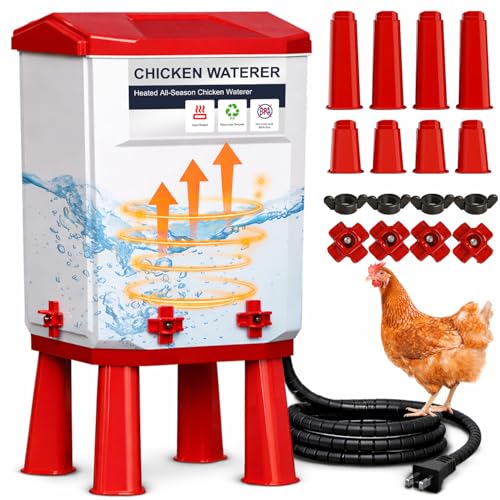
JELSVOP provides four stainless-steel nipples for simultaneous drinking, with a low-wattage heater and anti-peck cord protector. Best for: medium-sized flocks needing multiple drinking points to reduce crowding around a single source. Limitation: stainless nipples require regular cleaning to prevent mineral buildup and leaks over time.
PAUQRWIE 1.5 Gallon Heated Waterer

PAUQRWIE offers a 1.5-gallon heated unit with a thermostatic control range of 32–210°F and a flexible stand that can be placed horizontally or upright. Best for: smaller flocks or mixed-age coops needing adaptable mounting. Limitation: smaller capacity may require more frequent refills in very cold weather.
12 Inch Base Heater For 5-Gallon Drinker

This base heater is a practical add-on for existing drinkers, designed to prevent water from freezing with a 35W heating element. Best for: users who already own a 5-gallon drinker and want an affordable freeze-protection upgrade. Limitation: requires compatible existing waterer for best results.
Buying Guide: Key Considerations For Winter Watering
- What flock size are you supporting? Larger flocks benefit from 3-gallon capacities and multiple nipples, while smaller groups can start with 1.5–3 gallons to reduce refills.
- Thermal control vs. insulation: Is a thermostatically controlled heater essential, or will insulation and placement prevent freezing in your climate?
- Nipple drinkers vs. wide-mouth dispensers: Nipples stay cleaner longer but require training and occasional maintenance; dispensers are easier to refill and clean.
- Power safety: Ensure cords and outlets are weatherproof, and consider a waterproof outlet cover and drip loop to prevent shorts.
- Placement and coop conditions: Place the unit where birds can access without crowding, and insulate the coop to minimize heat loss around the waterer.
FAQ
- Do heated waterers really prevent freezing? Yes, most models use thermostats to activate the heater when temperatures drop below a set point, keeping water unfrozen.
- What is the typical power use? Heating elements vary; some models use around 100W, others up to 250W, but many are designed to cycle on only when needed for efficiency.
- Are nipple drinkers better for winter? Nipples keep water cleaner and reduce spillage; they require regular cleaning to prevent clogs.
- How often should I refill in winter? It depends on flock size and ambient temperature; larger flocks and very cold days may require more frequent refills.
- Can I use these indoors? Some can be used inside a coop with proper insulation and venting; ensure safe clearance from bedding and heat sources.
- Is insulation alone enough? Insulation helps, but in extreme cold a thermostatic heater provides reliable freeze protection for continuous access to water.