Bindweed is a persistent perennial weed that can choke out desirable grasses and disrupt lawn aesthetics. Selecting the right herbicide hinges on the weed’s growth habit, the surrounding turf, and whether you need pre-emergent or post-emergent control. The following selections target bindweed and other common broadleaf weeds, offering a mix of fast-acting and longer-term solutions. This guide compares options from trusted brands to help you choose with confidence.
| Product | Brand | Active Focus | Context |
|---|---|---|---|
| BASF Drive XLR8 Crabgrass Killer | BASF | Quinclorac; broadleaf and grasses | Effective for lawns and turf; includes bindweed among broadleaf targets |
| Syngenta Tenacity Herbicide | Syngenta | Mesotrione; pre- and post-emergent | Controls 46 species; safe for seeding and existing turf |
| Southern Ag Amine 2,4-D WEED KILLER | Southern Ag | 2,4-D amine; broadleaf control | Economical rate; broadleaf and some woody plants |
| Triclopyr 4 EC | ALLIGARE | Triclopyr 61.6%; brush and woody plant control | Useful on brushy invasives and right-of-ways; broadleaf weeds |
| Ranger Pro Glyphosate Concentrate | Ranger Pro | Glyphosate 41%; non-selective | Residential, parks, and wide weed spectrum; non-selective |
Note: This table summarizes general use cases. Always read the product label for specific application instructions, rates, and safety precautions before use.
BASF Drive XLR8 Crabgrass Killer

BASF Drive XLR8 is a water-based post-emergent herbicide designed to deliver fast results in turf settings. Its active ingredient, quinclorac, targets a broad range of grassy and broadleaf weeds, making it useful for sections of the lawn afflicted by bindweed and related species. The product offers up to 30 days of residual control and claims quick rainfastness, reducing the need for frequent follow-up applications. While highly effective on many weeds, it should be used in accordance with label directions to protect desirable grasses.
Syngenta Tenacity Herbicide

Tenacity is a versatile, mesotrione-based herbicide labeled for pre-emergent and post-emergent control in lawns and turf. It uniquely targets a broad spectrum of weeds—including pesky broadleaf species like bindweed—while allowing overseeding or seeding, which is beneficial when renewing turf. Tenacity provides both preventive and corrective control, making it a strong choice for ongoing weed management in established lawns or new seedings. Follow label directions for grasses tolerant to Tenacity and the required mixing ratios for targeted weed control.
Southern Ag Amine 2,4-D Weed Killer
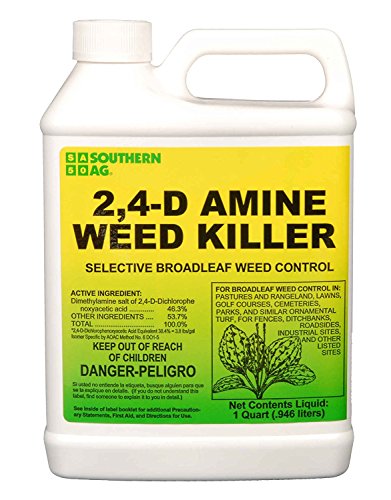
This economical broadleaf herbicide uses 2,4-D amine to control many broadleaf weeds and some woody plants. It is designed for use in turf, pastures, rangeland, ditch banks, and similar areas. For bindweed control, it is typically most effective when applied to actively growing plants. Always apply at the recommended rate and avoid applying to desirable ornamentals or turf species not listed on the label. The product is particularly attractive for large areas where cost per acre is a consideration.
Triclopyr 4 EC

Triclopyr 4 EC is a selective broadleaf herbicide effective against brush and woody plants. It’s commonly used in pastures, rangelands, right-of-ways, lawns, golf courses, and ditch banks. Triclopyr can help suppress bindweed by targeting perennial broadleaf roots while minimizing damage to grasses when applied correctly. The label suggests mixing rates and the addition of a penetrant oil can enhance uptake, especially in tougher woody weeds. Use caution in ornamental beds and non-target plant areas.
Ranger Pro Glyphosate Concentrate

Ranger Pro Glyphosate is a non-selective herbicide that can be used in various settings—residential landscapes, parks, and recreational areas. Its glyphosate-based formulation makes it effective against a wide array of annual and perennial weeds, including bindweed, when applied to actively growing plants. Because it is non-selective, caution is needed to protect desirable grasses and ornamentals. Proper timing, coverage, and handling are essential to minimize collateral damage and maximize weed kill efficiency.
Buying Guide
- Target weed biology: Bindweed is a persistent perennial; select products with systemic action for deep root penetration, or combine pre- and post-emergent strategies for extended control.
- Turf compatibility: For lawns, prefer products labeled for use on turf and those allowing overseeding or reseeding without injury. Tenacity is notable for seeding compatibility.
- Application timing: Apply when weeds are actively growing for maximum uptake. Some products offer year-round options, while others require specific seasonal windows.
- Site considerations: Choose formulations suitable for lawns, pastures, ditch banks, or right-of-ways. For large areas, economical options like 2,4-D blends may reduce costs per acre.
- Environmental and safety factors: Consider pets, children, and nearby ornamentals. Some products are safer for homes with children and pets, while others are more aggressive and require exclusion zones.
- Tank-mix and compatibility: Some items pair well with adjuvants (surfactants) to improve leaf coverage and uptake. Always verify compatibility with existing products.
- Re-entry and rainfastness: Check label guidelines for re-entry timing and rainfall after application to ensure efficacy and safety.
When choosing a product, compare the specific weed spectrum, turf tolerance, and application guidelines. For bindweed, combining a systemic option like Tenacity or Triclopyr-based products with broad-spectrum coverage can offer robust, long-lasting control, especially in mixed weed environments. Always follow label directions and local regulations to protect people, pets, and the environment.