Answering the common buying question, these high pressure water pumps are suitable for irrigation, garden watering, and domestic water transfer. This guide highlights five options that balance durability, pressure capability, and ease of use. Each pick targets a different user need—from homeowners with shallow wells to portable transfers for lawns and gardens. Use the quick-reference table below to compare core specs at a glance.
| Product | Best For | Max Pressure | Flow (GPM) | Key Benefit |
|---|---|---|---|---|
| Aquastrong 1320 GPH Shallow Well | Home gardens and domestic water supply | 164 ft head | ≈ 1320 GPH | Stainless steel, automatic pressure switch |
| ECO-WORTHY 5.5GPM | Smaller irrigation setups | 70 PSI | 5.5 | Quiet operation with safety protections |
| Red Lion RL-SPRK150 | Reliable field irrigation | 115/230 Volt dual voltage | ≈ 71 GPM | Durable cast iron housing |
| NorthStar 10926C | Long-distance or tall-head needs | ≈ 94 PSI | ≈ 135 GPM | Honda engine power, rugged seals |
| SHANGDA 1.6HP Transfer Pump | Portable irrigation transfers | 164 ft head | ≈ 1800 GPH | Stainless steel head, easy to move |
Aquastrong 115V Shallow Well Garden Pump
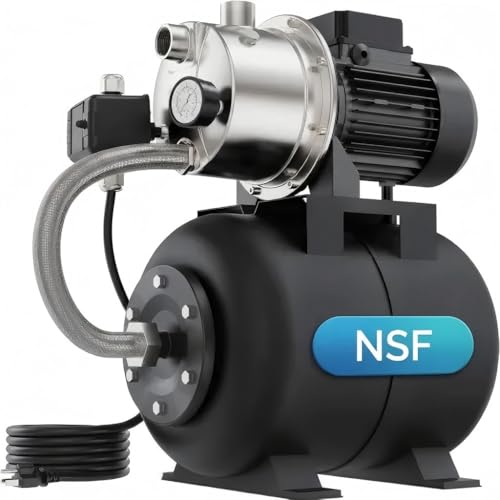
Best for homeowners seeking a robust domestic water supply and garden irrigation. This 1.6 HP stainless steel shallow well jet pump delivers up to 164 ft head and up to 1340–1320 GPH, depending on head. It includes a pressure switch for automatic operation, a compact 5-gallon pressure tank, and a built-in pressure gauge, making it suitable for steady garden watering and household use. The stainless steel housing offers corrosion resistance, and the unit is NSF certified for water safety. A potential limitation is that it is not a self-priming pump, requiring proper priming prior to use. Best for: steady irrigation between a home and yard with a shallow well setup.
ECO-WORTHY 110V Fresh Transfer Diaphragm Pump

Best for small to medium irrigation setups needing reliable on-demand flow. This diaphragm pump delivers 5.5 GPM at up to 70 PSI with self-priming capability up to about 9.8 feet. It offers a quiet, safety-conscious design with thermal protection and a switch that cuts power automatically when faucets close. It can be adjusted to fit various watering needs, but the unit is best when used with a compatible water source and when the system is primed properly. Choose this if you want a compact, dependable booster that works with modest irrigation runs.
ECO-WORTHY 33-Series Industrial Pump
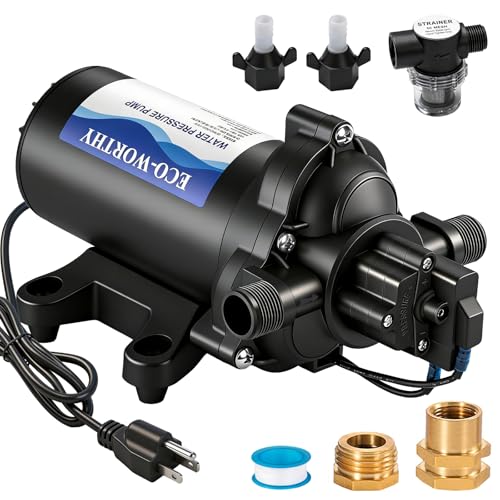
Best for RVs, boats, or light commercial needs where automatic on-demand operation is required. This 4.0 GPM diaphragm pump activates at 50 PSI and shuts off at a higher demand range, with a noise-friendly profile and self-priming capability of up to 9.8 feet. It includes a smart pressure switch and adjustable range (roughly 45–70 PSI). A limitation is that it is designed for intermittent, not continuous, heavy-duty use. Best for: small municipal or recreational water systems where space and ease of installation matter.
Red Lion RL-SPRK150 115/230V Pump

Best for durable, larger irrigation or water transfer needs. The RL-SPRK150 features a rugged cast iron housing and a thermoplastic impeller, with dual voltage capability (115/230V). It is primed for ready operation with one-time priming and a robust housing that resists harsh environments. The data notes emphasize installation alignment with the correct voltage. Limitation: wiring and voltage setup should follow manufacturer instructions to ensure safe operation. Best for: steady farm or yard irrigation where a reliable, heavy-duty pump is valued.
NorthStar High-Pressure Water Pump

Best for long-distance water delivery or tall-head tasks. This gas-powered transfer pump delivers up to 94 PSI, with a Honda GX engine offering strong performance and reliable control over pressure and flow. The unit includes rugged silicon carbide seals for durability in demanding conditions. Limitation: fuel-powered operation requires engine maintenance and fuel availability. Best for: agricultural or emergency pumping where high pressure and long reach are needed.
SHANGDA Water Transfer Pump 1.6HP

Best for portable yard irrigation and water transfer needs. It offers 1.6 HP with a max head of 164 ft and a high flow around 1800 GPH, making it suitable for transferring water from a source to a distant garden or sprinkler system. It features a stainless steel head and aluminum housing for durability and corrosion resistance, plus a waterproof on/off switch and automatic thermal protection. Limitation: not a self-priming unit, so pre-filling is required before operation. Best for: on-site transfers where portability and strong suction are prioritized.
Buying Guide: Key Purchase Considerations
- Water source and priming: Self-priming models are simpler for isolated sources; non-priming models require manual priming.
- Head and flow requirements: Match max head (ft) to the height you need to reach, and ensure GPM aligns with your irrigation area size and sprinkler head demands.
- Duty cycle and noise: For residential use, prioritize quieter operation and a pump designed for continuous or intermittent duty per your schedule.
- Material and corrosion resistance: Stainless steel or coated housings improve longevity in outdoor environments.
- Power source and efficiency: Electric pumps suit most homes; gas-powered units offer portable, high-pressure options for remote sites.
- Safety features: Look for thermal protection, automatic shutoff, and pressure switches that prevent over-pressurizing the system.
FAQ
- What is the difference between PSI and GPM in irrigation pumps?
PSI indicates pressure, important for reach and sprinkler performance, while GPM shows flow rate, indicating how much water moves through the system per minute. - Do I need a pressure tank with a high-pressure pump?
A pressure tank helps stabilize pressure and reduces pump cycling, extending pump life in many irrigation setups. - Is a self-priming pump better for lawn irrigation?
Yes, self-priming pumps are easier to install and operate when the water source is above or away from the pump. - Can these pumps handle dirty water?
Most irrigation pumps are designed for clean water; using dirty water can shorten life and clog components. Check manufacturer guidance for each model. - What maintenance is required for these pumps?
Regularly inspect seals, ensure proper priming, check wiring or fuel, and clean or replace impellers as needed per the user manual.