Looking for a reliable houseplant spray for bugs? This guide highlights five top options that target common indoor pests while protecting your plants. These products are suited for different buyer needs: ready-to-use convenience, plant-based formulas, OMRI-listed organics, and broad-spectrum insect control for indoor and outdoor use. Read on to see which spray best fits your indoor garden, whether you’re dealing with gnats, aphids, mites, or powdery mildew.
| Product | Best For | Form |
|---|---|---|
| BioAdvanced Houseplant Insect and Mite Control Spray | General houseplants; indoor/outdoor use | Ready-to-use |
| Mighty Mint Peppermint Oil Spray | Gentle, plant-based protection | Plant-based |
| BioAdvanced Organics Brand Houseplant Insect Killer | Organic options; powdery mildew control | OMRI listed |
| Kate’s Home & Garden Plant Spray (Gnat Control Bundle) | Fungus gnats and indoor pests | Plant-based |
| Garden Safe Houseplant & Garden Insect Killer | Wide pest range; edible crops allowed | Ready-to-use |
BioAdvanced Houseplant Insect and Mite Control Spray

This ready-to-use spray combines insect, mite, and disease control for indoor and outdoor use on houseplants, flowers, and herbs. It is designed to kill aphids, fungus gnats, whiteflies, lace bugs, and other listed pests when pests are contacted by the spray. It also provides fungicidal protection against powdery mildew, leaf spot, rust, and other diseases. Best for gardeners seeking an all-in-one solution for multiple problems in one bottle; note that effectiveness depends on proper coverage and contacting pests.
Best for: general household plant care, including flowering houseplants and herbs. Better for: homes needing a single product to address pests and disease. Avoid if: you prefer an organic or plant-based option.
Mighty Mint Peppermint Oil Plant Protection Spray

This plant-based spray uses peppermint oil to deter pests such as gnats, spider mites, and aphids while avoiding harsh chemical treatments. It is safe for use around people and pets when applied as directed. Choose this option if you prefer a natural, peppermint-based deterrent for routine use on indoor plants and small outdoor plantings. Limitations include potentially strong scent and limited data on long-term efficacy for heavy infestations.
Best for: plant lovers seeking a natural, non-toxic approach. Better for: lightweight, routine pest deterrence. Avoid if: you need broad-spectrum control for severe infestations.
BioAdvanced Organics Brand Houseplant Insect Killer
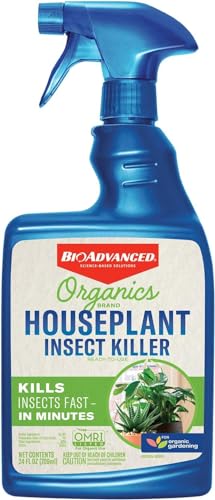
This OMRI-listed, ready-to-use spray targets insects quickly while also acting as a fungicide to manage powdery mildew on a variety of plants. It is suitable for indoor and outdoor use on houseplants, flowers, shrubs, and trees. Best for: organic-focused indoor gardeners. Better for: combining pest control with mildew management. Limitations: verify label directions for edible crops and pollinator considerations.
Kate’s Home & Garden Plant Spray for Insects & Gnats with Sticky Traps

This bundle combines a plant spray for gnats and other indoors pests with 12 sticky traps to enhance control. It kills fungus gnats, spider mites, and fruit flies, offering thorough coverage when used with traps. Choose this if you want a targeted solution for fungus gnats and a DIY trapping strategy. Limitation: product notes replacements for missing traps; ensure traps are present for full effectiveness.
Garden Safe Houseplant & Garden Insect Killer

This product claims broad effectiveness against 100+ listed insects and is designed for use in homes, home gardens, and home greenhouses. It is suitable for edible crops up to harvest. Best for: households wanting versatile protection across multiple plant types. Better for: large plant collections or mixed indoor/outdoor spaces. Limitation: check compatibility with delicate ornamentals to avoid phytotoxic effects.
Buying Guide: Key Considerations When Choosing a Houseplant Spray For Bugs
- What pests are you dealing with? Identify whether your issue is gnats, aphids, mites, scale, or fungal problems. If you have multiple pests, a broad-spectrum spray may be more convenient.
- Indoor vs. outdoor use: Ensure the product is suitable for the spaces you treat. Some formulas are safe for both, while others are designed primarily for one setting.
- Organic and safety preferences: If you prefer organic options, look for OMRI-listed products or plant-based formulas. Consider pet and child safety when applying.
- Application and coverage: Check whether the bottle is ready-to-use or requires mixing. Consider surface coverage, staining risk, and spray reach for crown, undersides of leaves, and soil surface.
- Impact on beneficials: Some broad-spectrum products may affect pollinators or beneficial insects. Apply when pollinators are not active and follow label directions.
- Plant type and sensitivity: Delicate ornamentals or edibles may react differently. Read label guidance on compatibility with specific plant categories.
Frequently Asked Questions
- Q: Can I use these sprays on edible herbs indoors? A: Yes, but verify label instructions and harvest timing for edible crops before applying.
- Q: Are plant-based sprays as effective as chemical ones? A: Plant-based options can be effective for low to moderate infestations but may require more frequent applications or complementary strategies.
- Q: How often should I spray to control powdery mildew? A: Follow the label’s recommended interval; many fungicidal sprays require repeated applications for ongoing protection.
- Q: Can I spray near pets or children? A: Choose products labeled as safe for use around people and pets when used as directed, and allow proper drying before contact.
- Q: Is spraying outdoors harmful to indoor plants? A: Use products designed for both environments if you plan to treat outdoor and indoor plants; avoid drift to unintended areas.
- Q: Should I remove visible traps after use? A: If using a trap-inclusive kit, keep traps in place for best results and replace them if missing or spent.