Find the right humic acid product to boost nutrient uptake, soil health, and microbial activity. This guide highlights five practical options for different gardening needs—whether you grow in containers, beds, or lawns. It’s ideal for gardeners seeking organic or OMRI-listed inputs, improved germination, or enhanced fertilizer efficiency. Each product is evaluated for who it’s best for, with clear pros and a caution to help you avoid common pitfalls.
| Product | Best For | Key Benefit |
|---|---|---|
| Humic Acids — Humic Acid Fertilizer & Conditioner (5 LB) | General home gardens and potted plants | Increases nutrient uptake and soil health |
| Down To Earth All Natural Granular Humic Acids | Organic growers and OMRI users | High-purity humic acids for broad applications |
| Wallace Organic Wonder, DS-80 Humic/Fulvic Acid | Fertigation and seed treatment | Very high humic/fulvic content for liquid mixes |
| Prevegenics Humic Acid Powder 0-0-10 | Root health and nutrient uptake | Soluble formula with potassium |
| Farmer’s Secret Soil Revitalizer (32oz) | Soil health boosters for all plants | Activated humic acids from organic sources |
Humic Acids – Humic Acid Fertilizer & Conditioner (5 LB)

PowerGrow Systems offers a versatile humic acid product designed to improve nutrient uptake and soil health. Best for gardeners who want a straightforward conditioner that also supports seed germination. The formulation targets enhanced microbial activity and overall soil vitality. Use in both soil and pots to improve plant access to minerals and water.
Who it’s best for: Home gardeners seeking an all-around soil conditioner that also supports seed germination and microbial activity. Caution: Avoid over-application, which can temporarily alter soil chemistry in sensitive plantings.
Down To Earth All Natural Granular Humic Acids

This OMRI-listed, all-natural granular humic acid product is designed for organic production and wide application. It is a strong choice for fields, turf, and vegetable gardens, with the potential to improve micronutrient uptake from soil. Its granular form makes it easy to mix with soil or compost and is well-suited for larger scale gardening and sustainable landscapes.
Who it’s best for: Organic growers and home landscapers who need an OMRI-listed amendment. Limitation: Granular forms may take longer to integrate into very dry soils; irrigation helps.
Wallace Organic Wonder, DS-80 Humic/Fulvic Acid (1lb)

This product emphasizes a high content of humic and fulvic acids, offering a strong choice for fertigation or seed treatment. It’s designed to blend easily with water-based solutions and compatible nutrients, promoting better nutrient availability and microbial activity in liquid fertilizer programs.
Who it’s best for: Gardeners using fertigation or liquid feeding routines. Limitation: The smaller 1 lb size is best for targeted applications; larger projects may require more product.
Prevegenics Humic Acid Powder 0-0-10
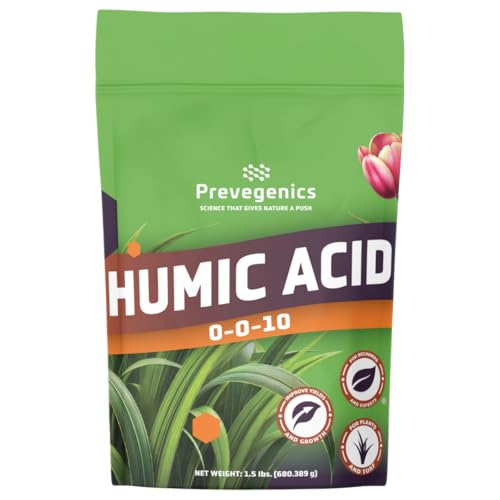
Prevegenics offers a premium soluble humic acid product with potassium, designed to boost nutrient uptake and microbial activity while supporting soil structure and water-holding capacity. The 0-0-10 formulation focuses on potassium delivery to enhance root growth and overall plant vigor.
Who it’s best for: Growers seeking a soluble option that also supplies potassium for stronger roots. Limitation: Potassium content means it’s not a pure humic supplement; balance with other nutrients as needed.
Farmer’s Secret Soil Revitalizer – Organic

Farmers Secret emphasizes soil health with activated humic acids from organic sources. The product aims to stimulate microbial activity and improve soil structure for diverse plant types. It’s positioned as a soil health booster rather than a direct plant feed, making it a fit for routine seasonal soil conditioning.
Who it’s best for: Gardeners wanting soil vitality and microbial support. Limitation: As a soil conditioner, effects may be gradual and depend on existing soil biology.
Buying Guide
Key factors to consider when choosing a humic acid product for plants:
- Form and application: Granular, powder, or liquid forms suit different setups. Choose based on mixing ease and irrigation compatibility.
- Organic compatibility: If pursuing organic growing, look for OMRI-listed or organic-certified products.
- Nutrient balance: Some products include potassium or other nutrients. Ensure it aligns with your fertilization plan.
- Soil health focus: For long-term soil vitality, prioritize products that emphasize microbial activity and soil structure.
- Target outcome: If you want seed germination support, pick products with strong humic activity; for root growth, favor formulations with soil-conditioning benefits.
- Availability and batch consistency: Consider whether you need regular supply and whether the product is consistently formulated.
Practical tips
- Start with a modest dose and monitor plant response before scaling up.
- Water thoroughly after application to help humic acids mobilize nutrients.
- Use in combination with balanced fertilizers to maximize nutrient uptake without overloading the soil.
FAQ
What is humic acid and why use it for plants?
Humic acid is a natural component of humus that helps improve soil structure, water retention, and nutrient availability by boosting microbial activity and root uptake.
Are humic acids safe for all plants?
Most humic acid products are designed for a wide range of plants, but follow label directions and avoid excessive use on delicate seedlings without prior testing.
Which form is easiest to apply?
Liquid and soluble powder forms are often easiest for even distribution in fertigation or foliar applications.
Can humic acids replace fertilizers?
No. They complement fertilizers by improving nutrient uptake and soil health, potentially reducing fertilizer waste and improving efficiency.
Should I use humic acids year-round?
Many gardeners apply seasonally or with changes in soil conditions—spring for seedling vigor and fall for soil conditioning. Adjust to local climate and soil needs.
Is there a risk of salt buildup from humic acids?
Some products may contribute salts if over-applied or used with high-salt fertilizers; always follow recommended rates and flush soil if needed.