If you’re aiming to brighten spaces that get little to no natural light, a curated set of low‑light, easy‑care indoor plants can transform your home or office. The following selections combine air purification, aesthetic appeal, and robust tolerance to dim conditions. Use them to create green focal points in bedrooms, offices, or rooms with north-facing windows.
The table below highlights five top options chosen for no‑light or low‑light viability, ease of care, and decorative impact. All are real, live plants from reputable brands and are suitable for desks, shelves, and tabletops.
| Plant | Best Use | Care Notes |
|---|---|---|
| Cat Palm | Living room, office, or entryway focal point | Low to moderate light; moderate watering; humidity helps |
| Snake Plant (Mother-in-Law’s Tongue) | Bedrooms and offices; high resilience | Very low light tolerant; minimal watering |
| ZZ Plant | Desk or shelf decor; modern spaces | Low light tolerant; infrequent watering |
| Little Fiddle Leaf Fig | Statement piece on floor or large plant stand | Bright, indirect light preferred; tolerate indoors with caution |
| Money Tree | Giftable plant for homes or offices | Low to moderate light; steady moisture, avoid overwatering |
Below you’ll find in-depth profiles of five carefully chosen plants, each with practical care considerations, to help you select the best fit for your space and lifestyle.
Cat Palm: Stylish Tropical Foliage For Any Room

The Cat Palm offers lush green fronds that instantly elevate interior decor. This live indoor plant is potted in a modern planter and is well-suited to living rooms, offices, and bedrooms. It provides a tropical aesthetic and helps soften spaces with its natural presence, while contributing to a pleasant ambiance. Though appreciably hardy, Cat Palms thrive with moderate light and consistent watering, making them a versatile choice for low-to-moderate light environments.
ZZ Plant: Easy, Fast-Growing Green Accent
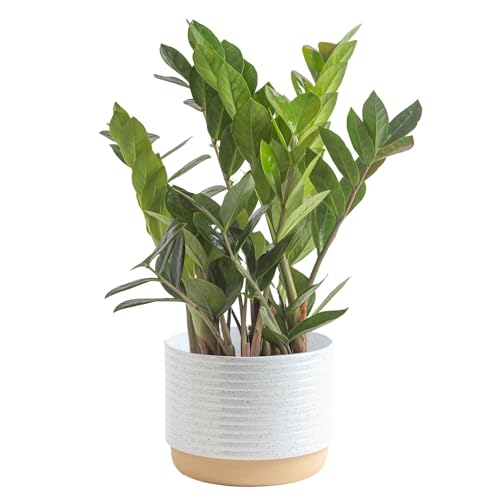
The ZZ Plant features glossy, dark leaves with a striking, low-maintenance profile. It tolerates low light and infrequent watering, making it ideal for busy households or offices with limited natural light. Its compact size fits tabletops and shelves, while its resilient nature helps it recover from occasional neglect. ZZ plants are clean air plants that add a refined, modern touch to any decor scheme.
Snake Plant: Durable Bedroom Favorite

The Snake Plant, also known as Mother-in-Law’s Tongue, is renowned for its resilience and architectural silhouette. It thrives in low light and requires minimal maintenance, tolerating occasional missed watering. The tall, upright leaves add vertical interest to desks, shelves, and corners, while contributing to improved indoor air quality. Its hardy nature makes it a reliable option for first‑time plant owners or busy spaces.
Little Fiddle Leaf Fig: Compact Statement Plant

The Little Fiddle Leaf Fig brings a tropical vibe with lush foliage and a modern pot pairing. While the Fiddle Leaf Fig makes a bold decorative statement, it prefers brighter indirect light. In low-light settings it may grow more slowly, but it remains a desirable focal point on a floor or large plant stand. Its stylish presence pairs well with contemporary interiors and can serve as a long‑term centerpiece for living spaces or offices.
Money Tree: Classic Bonsai-Inspired Indoor Plant

The Money Tree is a decorative, easy‑to‑care-for indoor plant. Its braided trunk and bright green leaves create a cheerful presence that works well on tabletops, shelves, or entryways. While it tolerates low light, it benefits from steady moisture and should not be overwatered. The Money Tree commonly serves as a thoughtful gift for housewarmings or birthdays and can elevate room decor with a touch of natural elegance.
Buying Guide: Key Purchase Considerations For No-Light Plants
Choosing the right no-light or low-light indoor plants involves balancing space, maintenance, and aesthetic goals. Consider the following perspectives to guide your purchase.
Light and placement: While these plants tolerate limited light, most still perform best with some indirect light or brighter ambient light. Evaluate your room’s light pattern and place plants on shelves, desks, or stands within reach of gentle illumination. Grouping multiple plants can create a striking green vignette that compensates for lower light levels.
Watering and humidity: Low-light plants often favor moderate, consistent moisture rather than frequent heavy watering. Ensure containers have drainage, and adjust watering schedules with seasonal changes. Some varieties benefit from higher humidity; occasionally misting or placing trays with water near the plant can help, especially in heated indoor environments.
Maintenance and growth rate: Low-light plants typically grow slower in dim conditions. Choose plants that align with your space’s scale — compact varieties for desks and shelves, or larger specimens for floor placements. Regularly remove yellowing leaves and dust foliage to maintain appearance and photosynthesis efficiency.
Toxicity and pets: If you have pets or small children, verify plant safety. Several common indoor plants are non-toxic to humans and animals, while others can be hazardous if ingested. When in doubt, prefer pet-safe options and keep plants out of reach of curious pets to minimize risk.
Indoor aesthetics and decor: Consider your existing decor style — modern, tropical, or traditional — and select plants that complement it. Flowerless greenery with strong silhouettes (like Snake Plant or ZZ Plant) can anchor a space; more lush, frilly foliage (like Cat Palm) adds texture and movement.
Care routine and commitment: Align plant choices with your routine. If you travel frequently or have a busy schedule, prioritize drought-tolerant varieties and those with lower watering frequency. Read plant labels or product descriptions to understand specific care requirements and per-plant nuances.
Giftability and versatility: Some plants make ideal housewarming or office gifts due to their decorative appeal and longevity. A well-chosen plant can survive in dim light for months and continue to thrive with minimal attention, providing ongoing value to the recipient.