Finding the right insect killer for flowers depends on the pests you face and how you garden. The following picks are suited for roses, perennials, and container flowers, offering targeted control, broad-spectrum power, or disease and mite protection. This guide highlights options for homeowners, hobby gardeners, and small landscapes who want effective, easy-to-use solutions without harming blooms.
Summary of selected products
| Product | Best For | ||
|---|---|---|---|
| BioAdvanced Rose and Flower Insect Killer (Ready-to-Use, 24 oz) | Roses and flowering plants | Up to 14 days | Kills 100+ pests on contact; simple spray |
| BioAdvanced All-In-One Rose and Flower Plant Care Spray | Integrated care for flowers | Up to 14 days | Kills insects and prevents diseases; rainproof in 4 hours |
| Sevin Insect Killer Ready to Use (1 Gallon) | General garden pests on flowers | On contact | Broad-spectrum; over 700 listed insects |
| Spectracide Triazicide Insect Killer For Lawns & Landscapes | Lawns, flowers, shrubs | Contact-kill; above/below ground | Fast-acting, broad pest range |
| BioAdvanced 3-in-1 Insect, Disease & Plant Mite Control | Flowering plants needing broad protection | Up to 14 days | Kills insects and mites; disease control |
BioAdvanced Rose and Flower Insect Killer, Ready-to-Use
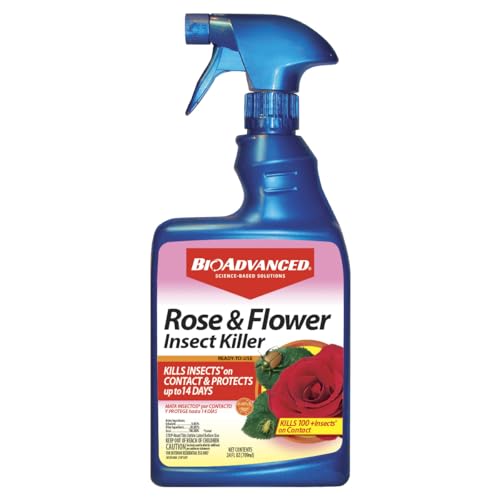
Insect Killer: This ready-to-use spray targets 100+ pests that threaten rose bushes and flowering plants, including aphids, caterpillars, and whiteflies. Best for homeowners who want quick, on-spot control on contact.
Best for: Roses, flowering ornamentals, container plants, and vegetable patches where immediate knockdown is needed after pest sightings.
Selected because: It provides fast action on common flowering pests and offers up to 14 days of protection, helping keep blooms healthy between applications.
Caution: Apply when pollinators are not active and follow label directions to avoid stressing delicate blooms.
BioAdvanced All-In-One Rose and Flower Plant Care Spray

3-IN-1 Flower Care: Combines insect control, disease control, and plant mite control in one spray. Best for gardeners who want broader protection beyond insects alone, with rainproof protection starting within hours.
Best for: Outdoor rose bushes, flowering ornamentals, ground covers, and shrubs needing integrated pest and disease management.
Selected because: It streamlines care by addressing multiple threats in a single product, reducing the number of sprays overall.
Limitation: Apply when pollinators are not present to minimize impact on beneficial insects.
Sevin Insect Killer Ready to Use (1 Gallon)

Best for: Gardeners dealing with a wide range of pests on flowering plants, especially when a larger, less frequent application is convenient.
Selected because: It provides broad-spectrum, fast-acting control that covers many pests on contact, making it a reliable option for busy gardens.
Caution: Overreliance on broad-spectrum sprays can affect beneficial insects; use targeted applications where possible.
Spectracide Triazicide Insect Killer For Lawns & Landscapes

FAST-ACTING FORMULA: Protects lawns, vegetables, fruit and nut trees, roses, flowers, trees and shrubs, making it suitable for mixed landscapes where flowering beds share space with turf.
Best for: Homes with lawns or extensive flower beds that may require broad coverage across multiple plant types.
Selected because: It kills 260+ insects by contact and covers above and below ground pests, offering a strong, all-around option for larger outdoor spaces.
Caution: Non-staining to most siding depends on age and cleanliness; test on sensitive surfaces if applying near exterior walls.
BioAdvanced 3-in-1 Insect, Disease, and Mite Control Spray
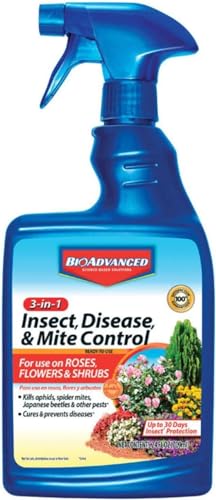
3-IN-1 PLANT CARE: Combines insect, disease, and plant mite control in one ready-to-use solution. Best for gardeners seeking a multipurpose spray with extended protection.
Best for: Outdoor roses, flowering shrubs, and ornamental trees that need both pest and disease management.
Selected because: It provides simultaneous action against pests and common plant diseases, potentially reducing the number of separate sprays.
Caution: Apply when pollinators are not present to protect beneficial insects and ensure effectiveness of disease control.
Buying Guide: Key Considerations For Flower Insect Killers
What pests are you targeting? Some products emphasize aphids and caterpillars, others cover mites, beetles, or a broad range of insects. Match the label to the pests you see most often on your flowers.
Do you need disease or mite control too? If leaf spots, mildew, or mite damage are common, consider a product labeled for disease or mite control in addition to insects.
How large is your garden? Larger beds or landscapes may benefit from concentrates or larger ready-to-use containers. For small containers, a ready-to-use spray is typically easier to apply with precision.
Is rain exposure a factor? Some formulas advertise rainproof or extended protection after the first spray. If your area has heavy rain, this can help maintain protection longer between applications.
Impact on pollinators and beneficials: Apply when pollinators are least active or select targeted products to minimize impact on bees and other beneficial insects.
Application tips: Read the label for mixing requirements, spray coverage, and re-entry intervals. Take note of plant safety guidelines for roses, perennials, and fruiting ornamentals.
FAQ
- What is the best insect killer for roses? A product labeled for roses that targets common pests like aphids and beetles, such as BioAdvanced Rose and Flower Insect Killer or the All-In-One Rose and Flower Plant Care Spray, is typically effective.
- Can I use these on edible flowers or vegetables? Some formulations are suitable for edible gardens or vegetable patches; always check the label for edible-use guidance and any restrictions.
- Do these sprays provide long-term protection? Many provide protection for up to 14 days, with some offering longer or rainproof protection. Reapply as directed after the interval or after rain.
- Are there environmental or pollinator concerns? Yes. Use when pollinators are not active, target sprays carefully, and avoid blanket applications to protect beneficial insects.
- Should I mix these products with other sprays? Do not mix unless the label explicitly allows it. Mixing can cause plant damage or reduced effectiveness.
- What should I do if a product label warns about surface staining? For products with staining notes, avoid spraying on finished siding or surfaces that may discolor; test in a small area if needed.