Roses reward gardeners with beauty, fragrance, and color, but they can fall prey to aphids, mites, and other pests. A reliable insecticide program helps protect roses from infestations and disease, supporting lush foliage and long-lasting blooms. The following selections focus on effective pest control for roses while considering safety for pollinators and the environment. Each product listing includes key features to help you compare options at a glance.
The table below highlights five top picks, summarizing each product’s purpose and primary benefits. Use this as a quick reference when planning your rosarian care routine.
| Product | |||
|---|---|---|---|
| Bonide Rose Rx Multi-Purpose | Bonide | Fungicide/Insecticide/Miticide | 3-in-1 protection for roses, controls pests and fungal diseases |
| Organic Insecticide For Roses | ARBER | Organic Insecticide | Safe for pollinators, broad pest control |
| Rose And Flower Food With Systemic Insecticide | VPG | Systemic Insecticide | Promotes growth, protects against infestations |
| Neem Oil 70% | Monterey | Fungicide/Insecticide/Miticide | Natural oil with broad disease and pest control |
| Monterey Fruit Tree Spray Plus | Monterey | Insecticide/Fungicide | Dual-action shield for fruits, vegetables, roses |
Each option below targets common rose pests and diseases while offering practical use in home gardens. Read on to explore product-by-product details, including application notes and suitability for organic gardening when applicable.
Bonide Rose Rx Multi-Purpose Fungicide, Insecticide and Miticide

Bonide Rose Rx provides a 3-in-1 solution for roses and other ornamental plants, combining fungicidal, insecticidal, and miticidal action in a single concentrate. It is designed for home gardens and can help prevent black spot, powdery mildew, and various pests such as aphids and spider mites. The product targets eggs, larvae, and adults, aiming to disrupt the pest life cycle while offering protective fungicidal benefits. Suitable for organic gardening, it is commonly used in mixed plantings beyond roses, including fruit trees and vegetables when appropriate per label directions.
Application notes suggest mixing with water for foliar sprays and applying on established plant material. Gardeners should follow label directions for dosage, re-entry intervals, and compatibility with other products. This versatile option is especially helpful when you want a single treatment that addresses multiple threats to roses in one go, reducing the need for separate pesticides and fungicides.
Organic Insecticide For Roses & Flowers – 16oz Ready-to-Spray
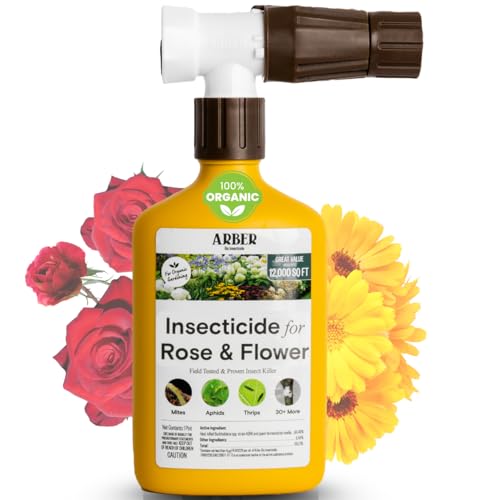
This organic insecticide from ARBER emphasizes safety for pollinators and beneficial insects while targeting more than 30 garden pests, including aphids, thrips, mealybugs, and mites. It is EPA-registered and designed for plants in and around home gardens, offering fast-acting, long-lasting protection. The formulation aims to reduce infestations quickly and maintain protection with reapplications every two weeks as needed. Being plant-friendly and bee-safe makes it a compelling option for gardeners who prioritize ecological balance in rose care.
Users should apply as directed, ensuring thorough coverage of foliage and stems. The product’s organic composition may limit certain visible residual effects on some pests, so consistent monitoring and timely reapplication are advised. It suits mixed borders where pollinator safety is a priority and where a broad-spectrum organic approach is preferred for roses and other flowering plants.
VPG 10847 Rose and Flower Food with Systemic Insecticide

VPG’s rose and flower food includes a systemic insecticide designed to promote strong roots and vibrant blooms. The product also offers rainproof protection, helping plants stay guarded during wet conditions. By delivering systemic action, it provides ongoing protection against foliar pests and some soil-dwelling threats, potentially reducing the need for frequent foliar sprays. This option is particularly appealing for gardeners seeking a growth-focused solution that doubles as pest protection.
For best results, apply according to the label, and monitor for pest activity to decide whether to reapply. Systemic products may have broader uptake within the plant, so understanding absorption and translocation helps achieve sustained protection. It’s a useful companion to traditional fungicides when roses face concurrent pest and disease pressure in gardens with variable moisture levels.
Monterey 70% Neem Oil Fungicide/Insecticide/Miticide

Monterey Neem Oil combines fungicidal, insecticidal, and miticidal properties in a single neem-based product. Neem oil helps protect roses from diseases such as powdery mildew, black spot, rust, and botrytis, while also acting against a broad spectrum of pests like spider mites, aphids, and whiteflies. Neem oil is a natural option that can be gentler on beneficial insects when applied properly and directed to affected areas.
Regular use should follow label directions, including dilution ratios and spray intervals. Neem oil’s versatility makes it a staple for organic or environmentally conscious rose care. However, efficacy can vary by pest and weather conditions, so some gardeners pair neem oil with targeted, non-overlapping treatments during peak infestations. Avoid applying during flowering if pollinator activity is high, and ensure complete coverage for best results.
Monterey Fruit Tree Spray Plus

Monterey Fruit Tree Spray Plus is a dual-action product designed to address both insects and fungal diseases on a range of plants, including roses, vegetables, and fruits. The formulation targets common pests such as aphids, mites, and beetles while also treating powdery mildew, leaf spot, rust, and other fungal issues. Its broad spectrum makes it convenient for gardeners who manage diverse plantings in a single spray program.
Application guidance emphasizes thorough coverage of foliage and fruiting structures, with attention to reapplication timing based on weather conditions and pest pressure. As with other dual-action products, users should observe for any phytotoxic effects on sensitive cultivars and adjust usage accordingly. This option is well-suited for those seeking a compromise between pest control and disease prevention across multiple plant types.
Buying Guide: Key Purchase Considerations
- Active pests and diseases: Identify the most frequent rose pests in your area (aphids, spider mites, whiteflies, scale) and tailor your choice to target those threats effectively.
- Mode of action: Consider whether you want a contact-only spray, a systemic treatment, or a multi-purpose product. Systemic options can provide longer-lasting protection but may take longer to show visible effects.
- Safety for pollinators: If roses bloom around bees, choose products labeled bee-safe or designed for pollinator protection, and apply during times when pollinators are less active.
- Organic compatibility: For organic gardening, prioritize products labeled as suitable for organic use. Neem oil and certain plant-derived formulations are common options.
- Plant coverage: For large rose beds, select products that can be applied efficiently on multiple plants with consistent coverage. Consider ready-to-use versus concentrated formats and spray equipment requirements.
- Reapplication schedule: Many garden pesticides require reapplication every 7-14 days or after rain. Plan your spray calendar around weather patterns to maximize effectiveness.
- Plant safety and image quality: Test products on a few canes or buds first to monitor for any adverse reactions, especially on fragile varieties or newly planted roses.
- Environmental considerations: Favor products with lower environmental impact and reduced non-target effects when possible, balancing disease and pest control with ecological responsibility.
With the right choice, you can maintain healthy roses while minimizing damage to beneficial insects and non-target organisms. Always read and follow the product label, including safety precautions, dilution instructions, and proper disposal guidance.