Answer: For greener, better-rooted grass, choose manual lawn aerators and sprinkler head tools that loosen soil, improve air and water penetration, and simplify routine maintenance. This list highlights tools that are practical for small to medium lawns, edging, and spot treatment. Ideal buyers include DIY homeowners seeking cost-effective, easy-to-use solutions and gardeners who want targeted soil relief without heavy equipment. Below is a quick comparison of five top options, focusing on use-case, benefits, and limitations to help you pick the best irrigation-related tool for your grass.
| Product | Best For | Why It Stands Out |
|---|---|---|
| Walensee Lawn Aerator Spike | Small lawns and edging | Three-row spikes for broader coverage with 15 sharp iron spikes. |
| DenForste Lawn Aerator Shoes | Compact lawns and pathways | Adjustable straps and durable base for steady footing. |
| KXGBARN Lawn Aerator Tool | Efficient, fast aeration | Dual-layer self-cleaning spikes reduce clogging. |
| Walensee Four-Row Spike Lawn Aerator | Spot aeration and borders | 20 spikes for deep soil channels in tight areas. |
| Sefream Sprinkler Head Trimmer Tool | Sprinkler maintenance | Stainless steel, precise around sprinkler heads without turf damage. |
Walensee Lawn Aerator Spike

The Walensee spike lawn aerator uses 15 iron spikes arranged in three rows to cover more ground per step. It loosens soil to create channels that help air, water, and nutrients reach roots, which supports healthier, greener turf. Best for small lawns, lawn edges, bare spots, and lightly compacted patches. A potential limitation is manual operation, which may require more effort than shoe-based models on larger areas.
DenForste Lawn Aerator Shoes

DenForste aerator shoes feature adjustable Velcro straps for a secure fit across a range of shoe sizes, plus a durable base made from aluminum alloy and plastic. The heavy-duty spikes promise robust penetration into various soils, making them good for homeowners needing hands-free aeration while walking around the yard. Choose this if you want a simple, walk-while-aerating solution; avoid if you prefer tool-free, lighter options for very small areas.
KXGBARN Lawn Aerator Tool
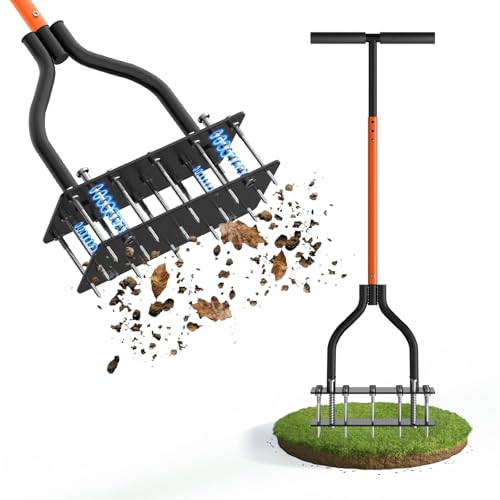
This aerator features 15 heavy-duty steel spikes and a self-cleaning dual-layer spike design that helps prevent clogging. It’s designed to improve airflow, water absorption, and nutrient delivery in compact soils. Best for homeowners seeking efficient, low-maintenance aeration with reduced need to stop-and-clean. A limitation is that manual use may still require effort on very dense or clay soils.
Walensee Four-Row Spike Lawn Aerator

This four-row model uses 20 spikes to create deeper soil channels, targeting small yards, edges, and borders. It’s especially effective for spot aeration and soil prep where larger aerators would be impractical. Best for targeted treatments; consider lighter or smaller options if you need broad-area aeration.
Sefream Sprinkler Head Trimmer Tool

This 2.75-inch stainless sprinkler head trimmer is designed to trim around sprinkler heads without damaging turf. It’s ideal for parks, golf courses, and residential lawns requiring precise edging and maintenance around irrigation points. Best for routine sprinkler maintenance; avoid if you need heavy-duty digging tools for other soil tasks.
Buying Guide
What should you consider when choosing an irrigation-related tool for grass?
- Soil type and yard size: Manual aerators work well on small to medium lawns with varied soil. For larger areas or very compact soil, models with more spikes or self-cleaning features save time.
- Targeted vs. broad-area treatment: Choose four-row or multi-spike models for spot aeration and borders; single- or dual-row tools are better for larger patches with lighter maintenance.
- Ease of use and ergonomics: Look for adjustable handles, comfortable grips, and stable footing—especially for longer sessions.
- Maintenance and clog prevention: Self-cleaning spikes reduce downtime. Materials like stainless steel resist rust, extending tool life in damp conditions.
- Irrigation compatibility: Sprinkler head tools complement aeration by simplifying head trimming without turf damage; ensure tool dimensions fit your sprinkler system.
Comparison Snapshot
Key features across top picks:
- Spikes: 15–20 spikes, steel or iron for durability and deeper penetration.
- Design: Three-row or dual-layer spike patterns enhance coverage and reduce clogging.
- Footing: Some models offer stable bases or adjustable straps to reduce fatigue during use.
- Specialty tools: Sprinkler head trimmer offers precise edging around irrigation points.
FAQ
- Q: Which tool is best for very small lawns? A: Walensee Lawn Aerator Spike or DenForste Aerator Shoes provide targeted, walkable options with good control.
- Q: Do I need to assemble these tools? A: Most come pre-assembled or require minimal setup; check product pages for specifics.
- Q: Can these tools handle clay soil? A: Yes, but expect more effort; look for heavy-duty spikes and self-cleaning features to reduce clogging.
- Q: Is an aerator enough for lawn health, or do I need sprinklers too? A: Aeration improves root access to air and water, while sprinkler-related tools assist with maintenance around irrigation heads.
- Q: Are metal tools prone to rust? A: Stainless or rust-resistant coatings help, but regular cleaning after use extends life.
- Q: Should I use these tools year-round? A: Aeration is most beneficial in growing seasons when grass roots are actively expanding.