Looking for a reliable koi pond heater to fight winter ice and keep fish breathing holes open? This guide highlights the best outdoor pond de-icers and floating heaters, selected for different pond sizes and needs. Ideal buyers include small backyard ponds needing quick, automatic ice prevention, mid-size ponds that benefit from thermostatic control, and larger setups requiring robust, energy-efficient options. The table below summarizes the five featured products and their best-use scenarios.
| Product | |||
|---|---|---|---|
| HITOP Outdoor Pond Heater | Small to mid outdoor ponds | 300W | Fast heating with floatable, mud-free design |
| K&H Thermo-Pond 3.0 Deicer | Energy-conscious ponds of various sizes | 100W | Low wattage with hole-in-ice approach |
| K&H Deluxe 1500W / 750W / 150W variants | Medium to large ponds needing strong protection | 750W / 1500W / 150W | Thermostatic control with floating or submersible use |
| TURBRO PD400A | Outdoor ponds needing long reach and safety | 400W | Long cord and robust safety features |
| Laguna PowerHeat 315W | Plastic or liner ponds in cold climates | 315W | Thermostat-controlled and LED-indicated |
HITOP Outdoor Pond Heater — 300W

The HITOP 300W pond heater is designed to heat surrounding water enough to create a melt hole in the ice, allowing fish to breathe. It is best for ponds around 80-160 gallons, with quick heating in moderate weather. The unit floats on the water, keeping contact away from mud. A key limitation is that it should not be used in plastic ponds, and outdoor temperatures can affect heating efficiency.
Who it’s best for: small to mid-sized outdoor ponds that require a fast, automatic ice-melting zone without full-water heating. Why selected: it provides rapid, localized heating and convenient floatation, helping maintain oxygen exchange without intensive energy use.
Caution: Avoid plastic ponds to prevent damage or inefficiency.
K&H Pet Products Pond Heater — 250W

This thermostatically controlled deicer offers energy-saving operation with three wattage options (check zone charts to select appropriate wattage). It can be used floating or converted to a submersible unit, providing flexibility for pond layouts. It maintains an open hole in the ice to support oxygen exchange and fish safety.
Who it’s best for: pond owners seeking flexible wattage and dual installation modes. Why selected: compact power use with reliable thermostatic control suits variable winter conditions.
Caution: Requires correct wattage choice per zone to avoid undersizing in very cold climates.
K&H Deluxe 1500W / 750W / 150W Deicers
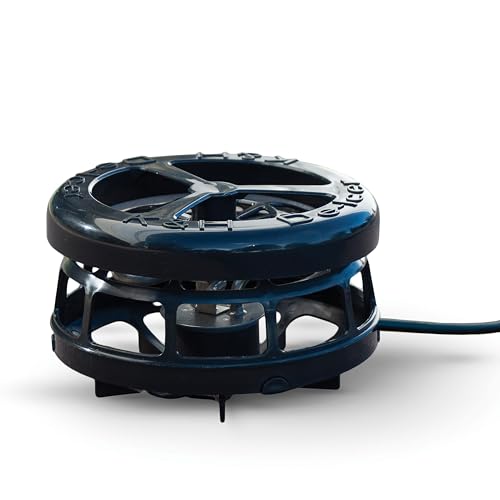
These thermostatically controlled deicers offer multiple wattage options to match pond size and climate. They can float or be used submersibly, with energy-efficient operation and safety-listed design. Best for larger ponds or households needing adjustable protection across cold seasons.
Who it’s best for: owners seeking scalable power and versatile mounting. Why selected: the range of wattages supports gradual expansion or tighter control depending on winter severity.
Caution: Higher-wattage units require careful electrical setup and adequate space for safe operation.
K&H Deluxe 750W / 100W / 1500W Variants (7in / 9in)
Similar to the 1500W series, these variants emphasize energy-saving operation with thermostatic control. They can be used floating or converted to submersible configurations, and are designed to guard ponds of various sizes through winter storms.
Who it’s best for: pond owners who want a mid-range option that can be adjusted as ice risk changes. Why selected: reliable thermostatic control provides consistent performance with flexible mounting choices.
Caution: Ensure compatibility with liner materials and pond size to prevent overuse or insufficient heating.
TURBRO PD400A — 400W Floating De-icer

With a full stainless steel casing and UL-approved cord plus GFCI leakage protection, TURBRO emphasizes electrical safety. The device uses SCR technology for precise temperature control and faster response, extending its lifespan. A long 32.8-foot power cord increases placement flexibility.
Who it’s best for: larger or irregular pond layouts where safe electrical setup and long reach are priorities. Why selected: strong safety features and extended cord reduce installation constraints.
Caution: Higher upfront cost may be a consideration compared to smaller, basic deicers.
Laguna PowerHeat 315W Floating De-Icer

Laguna’s 315W model is designed for ponds down to 20°F with a high-visibility LED indicator and integrated thermostat to prevent overheating. It’s safe for plastic and liner ponds when used as intended, making it a practical option for varied pond types.
Who it’s best for: pond owners wanting clear status indication and reliable protection against ice in mildly chilly climates. Why selected: strong thermostat control with a straightforward, pluggable design.
Caution: 315W may be undersized for very large ponds; pair with zone-aware planning in extensive setups.
K&H Thermo-Pond 3.0 — 100W

The 12-inch hole-in-ice approach maintains oxygen exchange with minimal energy use. This model is the iconic low-wattage option for small backyard ponds with limited winter risk, and floats on top while remaining safe for liners.
Who it’s best for: pond owners seeking minimal energy use and a simple solution for small ponds. Why selected: lowest wattage among the featured options, suitable for cold, low-risk climates.
Caution: Not suitable for larger ponds or severe winter conditions where more protection is needed.
Buying Guide: Key Considerations for Winter Pond Protection
- Pond size and water volume: Match wattage to pond capacity. Small ponds benefit from 100–300W models, while larger systems may need 400–1500W units or modular options.
- Location and climate: In areas with extreme cold, higher wattage or thermostatic control provides safer operation and longevity.
- Installation type: Floating, submersible, or hybrid designs affect placement and safety considerations. Floating units are easier to install but require space free of debris.
- Electrical safety: Look for UL listing, GFCI protection, and robust cords. Long cords (like 32.8 ft) increase placement options but require weatherproof setups.
- Thermostatic control: Thermostatic units automatically turn on/off to maintain a safe ice-free area. This minimizes energy use and reduces risk of overheating.
- Ice hole management: Some models keep a precise hole in the ice for oxygen exchange, while others heat around the unit to melt localized water.
- Material compatibility: Consider pond liner or plastic compatibility, especially for floating de-icers to avoid damage or unwanted reactions.
Frequently Asked Questions
- What size pond heater do I need for a 200-gallon pond? Answer: A 250–400W model is typically suitable for a 200-gallon pond, depending on climate and desired ice management.
- Do pond de-icers keep the entire pond from freezing? Answer: Most de-icers create a breathable hole in the ice and maintain a safe area around the unit rather than heating the entire pond.
- Can I use a pond heater with a plastic liner? Answer: Some models are specifically designed for plastic or liner ponds; check product specifications before use.
- Should I choose a floating or submersible option? Answer: Floating deicers are easy to install and keep ice holes clear, while submersible units offer deeper integration for larger ponds.
- How important is thermostatic control? Answer: Thermostatic control reduces energy use and helps prevent overheating by maintaining a stable ice-free zone.
- Is a longer power cord better? Answer: A longer cord increases placement flexibility but requires careful management to avoid water exposure and tripping hazards.