Bright, consistent light is essential for thriving indoor plants. This guide highlights five reliable grow lights suited for a range of spaces—from small desks to living room corners—and for different plant needs. Each option is chosen for ease of use, adjustable features, and how well it supports photosynthesis. Ideal buyers include apartment gardeners, hobbyists growing herbs, and owners with tall or large houseplants who need adjustable height and coverage. Below is a quick summary of the selected products.
| Product | Main Strength | Best For |
|---|---|---|
| GooingTop LED Grow Light | 5-level dimming with timer (4/8/12H) | Acompact desk setup or reading lamp with plant benefits |
| Kullsinss Grow Lights | Full spectrum and 3 modes with tall-plant compatibility | Decor-friendly halo design for interiors with wide coverage |
| Aokrean Plant Grow Light | 3 spectra, 10 brightness levels, 2 lighting methods | Versatile, adjustable halo for small to medium plants |
| LBW Grow Light With Stand | Large coverage and auto-timer (6/8/12/16H) | Tall plants and larger planters |
| LBW Desk Grow Light | 214 full-spectrum LEDs with 3 timing options | Desktop setups needing adjustable light broadly across plants |
GooingTop LED Grow Light Review

The GooingTop lamp uses a 6000K white light with 10 red and 74 white LEDs to mirror full-spectrum noon sunlight. Its high color rendering index (CRI) of 95 delivers soft, flicker-free lighting ideal for plant photosynthesis and potential reading areas. A USB or AC power plug offers flexible placement. The device features a 4/8/12-hour timer, making it suitable for busy households or offices where consistent daily lighting supports propagation from seed to bloom. Best for compact desks or small herb setups that need reliable, timer-based lighting.
Best for: Small to mid-size indoor herb gardens or compact houseplants requiring consistent, daylight-like exposure. Limitations: The corded power requirement may limit placement flexibility in some setups.
Kullsinss Halo Grow Light for Indoor Plants
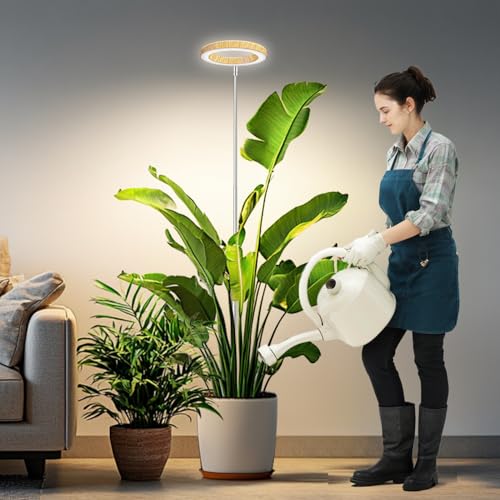
This halo-style grow light offers an elegant faux woodgrain design with all-spectrum LEDs (80 diodes) spanning 380 nm to 760 nm. It supports growth from germination to flowering and fruiting, with 5 dimmable levels and 3 spectrum modes (white, warm white + red, mix). A smart controller simplifies setting timers for 6/12/16 hours. It’s ideal for interior decor-conscious buyers who want a low-profile light that blends with furniture while delivering robust plant support. Best for decorative interiors with mid-sized plants and a need for adjustable spectrum. Caution: While stylish, the halo frame may limit mounting options on very small pots.
Aokrean 48 LED Plant Grow Light Set

Aokrean offers a 3-mode halo with 10 brightness levels and two installation methods—soil-insertion or stand-mounted—making it versatile for small to medium plants. The timer supports 3/9/12-hour cycles to maintain daily light schedules. Suitable for beginners who want straightforward, adjustable light with a simple setup. Best for small herb or succulent setups on shelves or desks. Limitation: Stand stability depends on plant pot weight; ensure a stable base for larger pots.
LBW Grow Light With Stand for Tall Plants

LBW’s stand-alone grow light is designed for larger, taller indoor plants. It provides full-spectrum 380–800 nm lighting and an adjustable height from 20 to 68 inches. The kit includes a heavy-duty metal base with non-slip pads and a 6/8/12/16-hour timer, offering consistent daily lighting. Best for monstera, fiddle-leaf figs, orchids, and tall herbs in larger pots. Better for dedicated plant corners or rooms with floor-standing layouts. Limitation: Higher footprint in room space due to tall stand.
LBW Desk Grow Light—Compact Yet Capable

LBW’s desk light packs 214 full-spectrum LEDs across a compact frame, delivering 380–780 nm coverage. It features three timing options (4/8/12 hours) and six dimming levels, with three independently controllable switching modes for tailored illumination. This makes it suitable for desks, shelves, or small plant clusters. Best for versatile desktop setups where precise timing and brightness control are essential. Limitation: May not cover very tall plants as effectively as floor-standing models.
Buying Guide: Key Factors For Selecting Indoor Plant Lamps
- Light spectrum: Look for full-spectrum options that cover 380–760 nm, closely mimicking natural sunlight to support photosynthesis across growth stages.
- Intensity and coverage: Consider how many LEDs and the overall footprint to ensure the light reaches all parts of your plants without hotspots.
- Adjustability: Height, rotation, and angle flexibility help you tailor lighting to plant size and layout.
- Timers and dimming: Auto on/off timers and multiple brightness levels reduce daily setup effort and support plant rhythms.
- Mounting style: Desk clamp, halo/clip designs, or freestanding stands affect where you can place the lamp and which plants it supports.
- Power options: USB, AC, or both offer different placement freedoms; USB is convenient for desks and small setups.
- Durability and heat management: Look for well-ventilated panels and stable stands to prevent overheating and ensure longevity.
Frequently Asked Questions
- What size of grow light do I need for a small desk plant? Answer: A compact desk grow light with a 380–760 nm spectrum and 1–2 feet of coverage is typically sufficient for a single desk plant.
- Do I need a timer for indoor grow lights? Answer: Timers help maintain consistent day/night cycles, which supports healthier plant growth and reduces forgetting to turn lights on or off.
- Can I use grow lights for all plant types? Answer: Most houseplants benefit from full-spectrum LEDs, but some high-light plants may require higher intensity or longer daily exposure.
- Is a faux woodgrain design purely decorative? Answer: Some halo-style designs prioritize aesthetics; function and spectrum should still meet your plant needs.
- Should I buy multiple lights or a single high-coverage unit? Answer: For tall or wide plants, a larger stand-alone unit can provide even coverage; for small clusters, multiple desk lamps offer flexible positioning.
- Are USB-powered lights as effective as AC-powered ones? Answer: Both can be effective; USB is convenient for desks and small setups, while AC can support larger installations.