Answering the common buyer question, these landscaping rocks improve drainage, reduce erosion, and add visual appeal to gardens, walkways, and patios. This guide highlights five practical options ideal for drainage-focused projects and explains who each product best serves. Whether you’re building a gravel path, stabilizing a slope, or creating a moisture-friendly bed, this selection helps you pick rocks that balance function and style.
| Product | Best For | Size / Type | Notes |
|---|---|---|---|
| Grey Gravel (40 LBS) by MIGHTY109 | Small-drainage beds and pathways | 3/8″ – 1/4″ | Versatile use for borders and walkways |
| Mexican Beach Pebbles (45 LB) by Quibbay | Low-maintenance ground cover | 0.4″ – 1″ | Natural river rock for decorative drainage |
| Natural River Rocks (GASPRO) | Container gardens and outdoor décor | 1″ – 1.75″ | Polished variety with glossy finish |
| Granite Gravel (40 LBS) | Durable landscape accents | 3/4″ | Bluish gray natural stone |
| Mulctun White Rocks (45 LB) | Bright edging and planter drainage | 1/4″ – 3/4″ | Polished white stones for aesthetic contrast |
40 LBS Grey Pea Gravel – Landscape Rocks

The 40-pound bag from MIGHTY109 offers a compact gravel option that supports drainage in garden beds, around trees, and along pathways. The mix typically helps soil drain faster, reducing standing water in low spots. Best for small-to-medium landscape projects where a smooth, neutral backdrop is desirable. Consider this when you want a classic, versatile look that complements greenery without overpowering color.
Who it’s best for: homeowners seeking an affordable, adaptable drainage rock for borders, paths, and planter edges. Why selected: its light color and small size create a clean, unobtrusive drainage layer that works well in many settings.
Caution: Avoid filling steep slopes too high with this fine gravel, as over-reliance on small stones can influence movement during heavy rainfall. If drainage is extreme, combine with larger aggregates to improve stability.
Quibbay Mexican Beach Pebbles

Quibbay’s 45-pound bag features natural 0.4-1 inch river rocks that are ideal for decorative drainage and walkway projects. These pebbles are untreated and free from coatings, making them a durable choice for outdoor beds and paths where moisture control is needed. The natural tone blends with a variety of plantings while maintaining a practical drainage layer.
Who it’s best for: buyers wanting a natural, low-maintenance stone that doubles as decor in garden beds and walkways. Why selected: the broad color range and natural shapes help create visually appealing, porous surfaces that balance drainage with style.
Caution: Natural pebbles can vary in size; mix consistently with other aggregates if a uniform surface is required for foot traffic or wheelbarrow access.
GASPRO Natural River Rocks
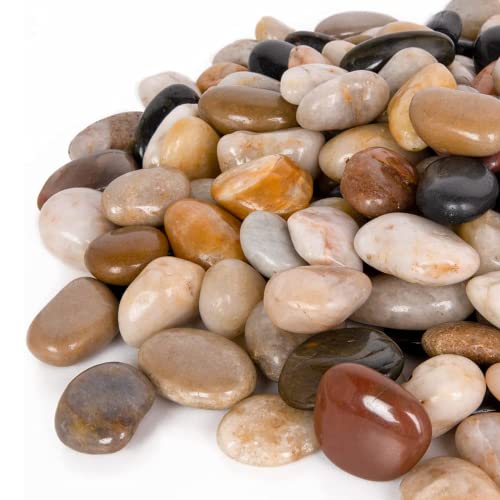
GASPRO offers 1 to 1 3/4 inch polished river rocks that provide a glossy finish and robust durability for both indoor and outdoor décor. These stones serve as a striking drainage component in pots, planters, and terrariums, and they also work well in walkways where drainage and a high-end appearance are desired. Best for: accenting containers and landscapes with a polished, refined look.
Why selected: the polished surface adds visual appeal while maintaining drainage efficiency, making them suitable for decorative hospitalities in garden spaces. Caution: polished stones can be slippery when wet in certain path configurations, so consider setting them with a stabilizing layer if used on slopes or continuous walkways.
Granite Gravel, 3/4″ (40 LBS)

This 40-pound bag from MIGHTY109 provides bluish-gray granite gravel sized around 3/4 inch, a sturdy option for drainage and accenting in gardens and pathways. Natural stone is known for durability and can form a solid base layer that helps distribute water away from planting areas. Best for: durable edging and robust pathways where a more substantial rock is preferred.
Why selected: granite’s density helps resist weathering and compaction, supporting longer-lasting drainage structures. Caution: the larger 3/4 inch size can shift under heavy trampling; combine with a stabilizing fabric or edging to maintain a tidy surface.
Mulctun White Rocks, 45 LB

Mulctun’s natural white rocks come in a 1/4″ to 3/4″ range and weigh about 45 pounds. The polished white stones bring brightness to pots, containers, and pathways while retaining moisture for plant roots. Best for: creating crisp contrasts in planter beds and elevated borders where a light, clean look is desired.
Why selected: white stones offer high visual contrast against green foliage, making them a practical choice for accenting drainage beds. Caution: lighter stones may show dirt more readily; periodic rinsing helps maintain a tidy appearance.
Buying Guide: Key Considerations For Drainage-Focused Landscaping Rocks
- Drainage needs: For heavy downpours, pair fine gravel with larger stones to create a tiered drainage system that channels water away from soil and foundations.
- Soil and slope: On steep slopes, use larger rocks or stepped layering to prevent movement and erosion. On flat beds, finer gravels improve surface drainage while keeping a smooth finish.
- Color and texture: Neutral tones (grays and beiges) blend with most plant palettes, while polished rocks offer a decorative touch. Textured rocks hide dirt better than smooth white stones, which stand out visually.
- Durability: Natural stones like granite resist weathering; polished river rocks provide a glossy look but may require maintenance in high-traffic areas.
- Edging and containment: Use landscape fabric and edging to keep rocks in place and prevent soil intrusion into the rock layer.
- Safety and accessibility: For walkways, choose appropriately sized stones with minimal sharp edges and consider slip-resistant arrangements for wet conditions.
Frequently Asked Questions
- What size gravel is best for drainage? – A mix of sizes (small gravel with some larger stones) often provides better drainage by creating multiple pore spaces.
- Are river rocks safe for pet areas? – Yes, natural river rocks are non-toxic and can be used around plants and animals, but ensure they are clean and free of sharp edges.
- Can I use these rocks in raised beds? – Absolutely. Use a drainage layer beneath soil to improve moisture management and plant health.
- Do polished rocks degrade in the sun? – Polished rocks may fade slightly over time; however, many remain durable for outdoor use with minimal maintenance.
- Should I layer rocks over fabric? – Yes, landscape fabric helps prevent soil intrusion while allowing water to pass through for better drainage.
- How do I maintain a rock drainage bed? – Periodically rinse to remove soil buildup, replenish top layers if compacted, and check edging to prevent displacement.