Looking for the best light for indoor plants? This guide highlights five reliable grow lights that mimic natural sunlight, support photosynthesis, and fit a range of indoor setups. Each option is suited for different plant sizes, room conditions, and schedules. The top picks cover clip-on, halo, stand-alone, and tall-plant designs so you can choose the right fit for your space and plant collection.
Summary table of selected products
- GooingTop LED Grow Light — Clip-on, 6000K full spectrum, 4/8/12 hour timer, USB or AC power
- Aokrean Plant Grow Light — Halo, 3 spectra, 3/9/12 hour timer, 10 brightness levels
- Kullsinss Grow Lights — 80 LEDs, full spectrum 380–760 nm, 5 dimmable levels, 6/12/16 hour timer
- yadoker Plant Grow Light — Tall adjustable with bamboo design, full spectrum 380–800 nm, height up to 61 inches
- LBW Grow Light with Stand — Standalone, adjustable height, full spectrum, 6/8/12/16 hour timer
GooingTop LED Grow Light Clip Lamp

Best for compact or desk-side setups where space is limited. This clip-on light uses 6000K white light with 10 red and 74 white LEDs to deliver full-spectrum feel similar to noon sun. The color rendering index can reach about 95, producing soft, flicker-free output ideal for reading and plant tasks alike.
- Best for: small potted plants, seed starting, and desks with limited space.
- Why selected: Flexible clip and gooseneck enable precise lighting angles for tight areas.
- Caution: USB or AC power options may require nearby outlets; ensure stable clamp on thin surfaces.
Aokrean Plant Grow Light, Halo Style

Best for small to medium indoor gardens that require adjustable light spectra. The halo design supports multiple installation methods—inserted into soil or mounted on a stand—with three spectra options and 10 brightness levels. Auto-timer modes (3/9/12 hours) help maintain consistent lighting cycles.
- Best for: beginners or spaces needing simple, adjustable spectrum control.
- Why selected: Flexible installation and broad spectrum options cover various plant stages.
- Caution: Stand stability depends on the plant pot; ensure a secure base for taller setups.
Kullsinss Full Spectrum Halo Grow Light
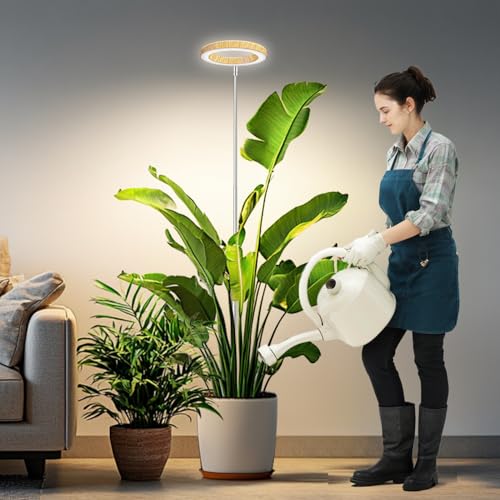
Best for decorative indoor spaces that host a mix of leafy greens and flowering plants. This halo light features 80 high-efficiency diodes delivering 380–760 nm, matching broader growth stages from germination to fruiting. It includes a smart controller with 5 dimmable levels and 3 spectra modes and supports 6/12/16-hour automatic timers.
- Best for: versatile home setups needing full-spectrum coverage and a stylish look.
- Why selected: Combines aesthetic design with robust light output and timer options.
- Caution: Installation requires a stable surface and proper height to avoid glare on plant foliage.
yadoker Plant Grow Light with Bamboo Design

Best for large indoor plants and spaces that benefit from taller, adjustable lighting. This light delivers full spectrum (380–800 nm) to support every growth stage and uses a natural bamboo exterior for a stylish, eco-friendly appearance. Height can extend from about 13.7 inches to 61 inches for broader coverage.
- Best for: tall indoor plants like rubber trees or fiddle leaf figs that need more height reach.
- Why selected: Tall adjustability ensures consistent light distribution as plants grow taller.
- Caution: Bamboo design is aesthetic and may require careful placement to avoid wobble on uneven surfaces.
LBW Stand Grow Light — Tall Plant Friendly

Best for larger home spaces with tall plants that require broad, even illumination. This stand-based light provides 6/8/12/16-hour automatic timers and 5 dimmable brightness levels, with three lighting modes. A heavy base and sturdy design help keep the unit stable beside large pots.
- Best for: indoor trees or tall planters needing height-adjustable lighting and stable support.
- Why selected: Combines full-spectrum coverage with a robust stand and wide reach.
- Caution: The footprint may be larger; ensure adequate room before purchase.
Buying Guide: Key Considerations For Choosing Indoor Plant Lights
- Light spectrum matters: Full-spectrum (roughly 380–760 nm) best supports all growth stages. Look for models that combine white, red, and blue LEDs for balanced growth.
- Adjustability and coverage: For small desks, clip-on or halo lights work well. For tall plants, consider height-adjustable stands or tall bamboo designs to maintain even coverage as plants grow.
- Timer and automation: Auto on/off timers help maintain consistent lighting, especially during travel or busy weeks. Check timer options (3/6/12/16 hours) and cycle repetitions.
- Brightness options: Multiple dimming levels prevent light burn and tailor output to plant type and growth stage. More levels offer finer control.
- Installation and durability: Clip clamps, stands, and mounting options should align with your space. Look for sturdy bases and stable materials for long-term use.
- Power source and portability: USB-powered options are convenient for desks and small setups; plug-in models suit larger or fixed installations.
- Design aesthetics: Halo or woodgrain designs complement home decor and reduce visual clutter in living spaces.
Frequently Asked Questions
- What is the right distance between the light and plants? Most indoor grow lights work best when positioned 6 to 18 inches from smaller plants and 18 to 24 inches for taller, leafier specimens. Adjust based on plant response and light intensity.
- Can I use these lights for succulents? Yes, many full-spectrum LEDs support succulents, but avoid excessive heat by using lower brightness levels in combination with longer growth cycles.
- Do I need separate lights for flowering plants? A full-spectrum light with red LEDs helps promote flowering, but ensure the fixture offers a balanced spectrum with adequate intensity for bloom stages.
- How long should indoor plants be lighted daily? Most houseplants benefit from 12–16 hours of light per day, aligning with their natural growth cycles. Use timers to maintain consistency.
- Are stand-alone lights better than clip-ons? Stands provide tall plants with broader coverage and stability, while clip-ons save space for compact setups.
- What if the light causes leaf burn? Lower brightness or increase distance from foliage, and ensure the light cycle isn’t too long for sensitive plants.