Choosing the right light meter helps optimize indoor plant growth by providing precise lux readings, easy unit switching, and quick data capture. This guide reviews five reliable meters—covering high-precision options, portable readouts, and multi-function soil testers—to help you establish the ideal lighting mix for seeds, houseplants, and edible herbs.
| Product | Brand | Key Benefit | Measuring Range |
|---|---|---|---|
| Dr.meter LX1330B Digital Illuminance Light Meter | Dr.meter | High precision, fast readings, peak data | 0–200,000 Lux |
| Light Meter Digital Illuminance Meter (URCERI) | URCERI | Ambient temperature readout, high accuracy | 0–200,000 Lux |
| Soonkoda Digital Illuminance Light Meter Tester | Soonkoda | Wide range, easy unit conversion | 0–200,000 Lux |
| Mcbazel Digital Illuminance Light Meter | Mcbazel | High precision, two-unit toggle (Lux/FC) | 0–200,000 Lux |
| Leaton Light Meter | Leaton | Compact, accurate, easy operation | 0–200,000 Lux |
style=”display:none;”>Note: This introduction summarizes select meters suitable for indoor plant care, focusing on accuracy, ease of use, and range. For soil-related measurements, consider dedicated probes or combo tools that include moisture and light sensing.
Dr.meter LX1330B Illuminance Meter For Plants

The Dr.meter LX1330B provides a broad 0–200,000 Lux range with rapid readings up to twice per second. It supports FC and LUX conversions, enabling precise readings in either unit depending on user preference. A PEAK data recording feature captures the highest pulse value, which is helpful when monitoring intermittent light sources such as seasonal sun exposure through windows or LED grow lights. This model is suitable for indoor plant setups that require fast, repeatable measurements to fine-tune light intensity for germination and vegetative growth.
URCERI Light Meter With Temperature
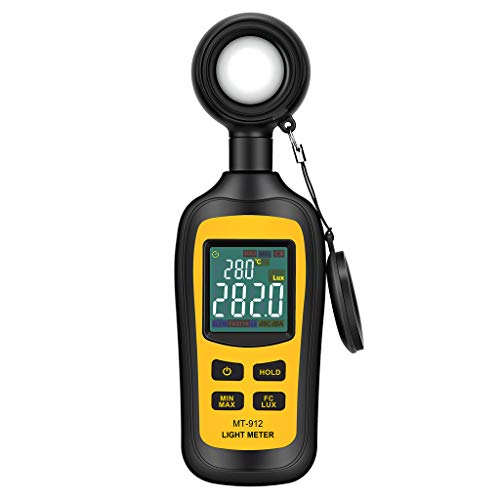
The URCERI digital illuminance meter measures up to 200,000 Lux and also records ambient temperature, which can help correlate light levels with plant temperature needs. It features a 4-digit color LCD, MIN/MAX readings, data hold, auto power off, and a low-battery indicator. The device is well-suited for hobbyists and small-scale indoor gardens where monitoring both light intensity and environmental temperature improves plant health and consistency across growth cycles.
Soonkoda Digital Illuminance Light Meter

Soonkoda offers a versatile digital illuminance meter with a wide measurement range up to 200,000 Lux and automatic range conversion. It supports unit switching between Lux and FC, enabling flexible usage in different growing environments, from sunny window sills to indoor LED setups. The device is designed for straightforward operation, making it a practical choice for gardeners who want quick, reliable readings for calibrating grow lights and ensuring plants receive adequate light for photosynthesis.
Mcbazel Digital Illuminance Light Meter

The Mcbazel light meter emphasizes accuracy with a stated tolerance of ±3% to ±4% across its range, plus a fast sampling rate of up to 2 times per second. It supports a Lux/FC dual-unit display, enabling precise comparison of indoor lighting conditions with outdoor benchmarks. The large LCD and backlit display improve readability in dim grow rooms, helping growers maintain consistent light levels for seedlings and mature plants alike.
Leaton Light Meter For General Use
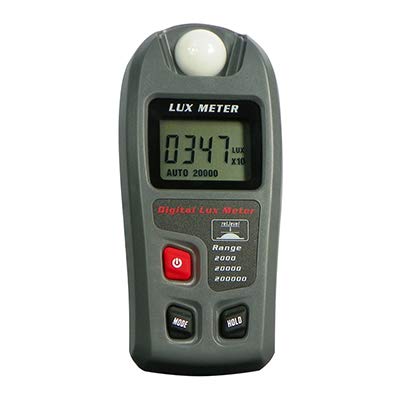
Leaton offers a compact, easy-to-use light meter with a 0–200,000 Lux range and a focus on straightforward operation. It uses a 9V battery (not included) and provides Lux and Fc units, with a resolution of 0.1 Lux/0.01 Fc. The device is suitable for quick checks in windowsill gardens, terrariums, and small indoor grow tents where space is at a premium and quick confirmation of light intensity matters for plant health.
Buying Guide
- Measurement range and precision: Most meters cover up to 200,000 Lux. A higher sampling rate (2x/second or better) provides more responsive readings during changing light, such as during sun shifts or when adjusting LED intensity.
- Unit flexibility: Look for devices that switch between Lux and FC easily. Some models also offer peak or max hold data to capture brief light spikes from sunrays or laser sources.
- Additional environmental data: Meters with ambient temperature readouts help correlate light with temperature, which is useful for optimizing plant comfort and growth.
- Display readability: Backlit LCDs and large digits improve readability in dark grow rooms or tents. Consider models with MIN/MAX readings to track light consistency over time.
- Power and portability: Most meters are battery-powered; check for auto power-off to save battery life and the availability of low-battery indicators. Compact forms are preferable for portable spot checks in different zones.
- Soil and multi-function options: If you need broader plant care data, some meters combine soil moisture, pH, and light sensing. These are convenient but may sacrifice some precision in a single function.
- Durability and warranty: Indoors, meters should be durable enough to withstand frequent handling and occasional drops. A reasonable warranty helps with long-term reliability in a growing setup.
When choosing, align the meter with your growing goals: quick spot checks for seed starting, precise controls for persistent grow lights, or multi-function devices for compact home gardens. For most indoor plant setups, a 0–200,000 Lux range with Lux/FC switching and a clear display provides the best balance of accuracy, ease of use, and value.