Choosing the right light meter helps optimize indoor and outdoor plant growth. This guide highlights reliable options that measure lux (and sometimes FC) with accuracy, quick readings, and user-friendly displays. Each product section links to its Amazon listing for quick reference and purchase.
| Product | Brand | Range | Key Feature |
|---|---|---|---|
| Light Meter Digital Illuminance Meter | URCERI | 0–200,000 Lux | Ambient temperature and auto power off |
| Dr.meter LX1330B | Dr.meter | 0–200,000 Lux | Fast response; FC/Lux conversion |
| TopTes TS-710 | TOPTES | 0.1–200,000 Lux | 180° rotating sensor; backlit display |
| Leaton Light Meter | Leaton | 0–200,000 Lux | Compact with high-contrast LCD |
| UNI-T UT383 | UNI-T | 0–199,900 Lux | Auto shutoff; max/min data hold |
Note: All models above are suitable for monitoring light conditions that affect plant photosynthesis, growth rates, and health. They offer Lux measurements and often a switching option to FC, depending on the model.
URCERI Light Meter With Lux And Temperature
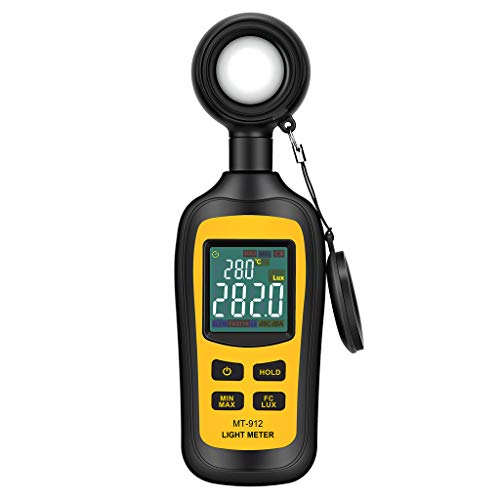
The URCERI device measures luminosity from 0 to 200,000 Lux and reports ambient temperature. It features a 4-digit color LCD display, MIN/MAX readings, data hold, auto power off, and a low battery indicator. The device is designed for quick, repeatable readings in plant environments and can help optimize light placement for indoor gardens, greenhouses, or hobby projects. Its wide range supports both dim and bright lighting scenarios encountered in grow setups.
Dr.meter LX1330B Digital Illuminance Meter

Dr.meter LX1330B offers a 0–200,000 Lux range with fast, two-per-second readings. It supports FC/LUX conversion to match user preference, and includes a PEAK data recording feature to lock in peak values from brief light pulses. This is useful for testing transient light sources in grow rooms or under variable-daylighting scenarios. The meter is designed for indoor and outdoor plant applications where accurate, rapid readings are needed.
TopTes TS-710 Light Meter

TopTes TS-710 features a 180° rotating sensor for measurements from multiple angles and a large backlit display. Its range covers 0.1 to 200,000 Lux (and 0.1 to 20,000 FC), with a stated accuracy of 3% rdg + 5 dgt. The rotating probe and quick 0.5-second sampling deliver flexible readings in grow areas, studios, or home setups. It supports common lighting sources, from LEDs to fluorescents, aiding in placement and calibration for plant health.
Leaton Digital Luxmeter
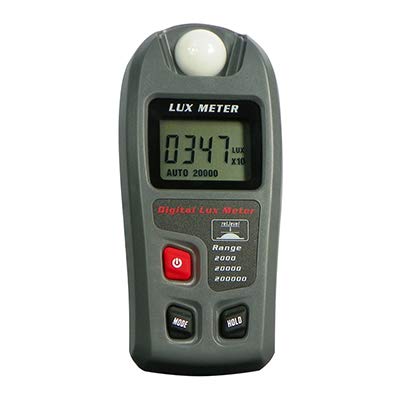
Leaton’s digital luxmeter provides measurements up to 200,000 Lux with a clear LCD display. It runs on a 9V battery (not included) and focuses on straightforward operation for gardeners needing quick checks of plant lighting conditions. The device supports Lux and Fc units and provides a simple readout for assessing whether a grow area has adequate light for photosynthesis, seedling health, and mature plant development.
UNI-T UT383 Light Meter

UNI-T UT383 is a compact, high-precision illuminance meter. It measures 0–199,900 Lux (0–18,500 FC) with a 0.5-second sampling time and features max/min data hold and auto shutdown for power saving. The large backlit LCD and overload indication aid readability in dim grow rooms or on outdoor projects. It is a practical choice for photographers and horticulturists who need reliable, quick lux readings with a simple interface.
BTMETER BT-881D Light Meter
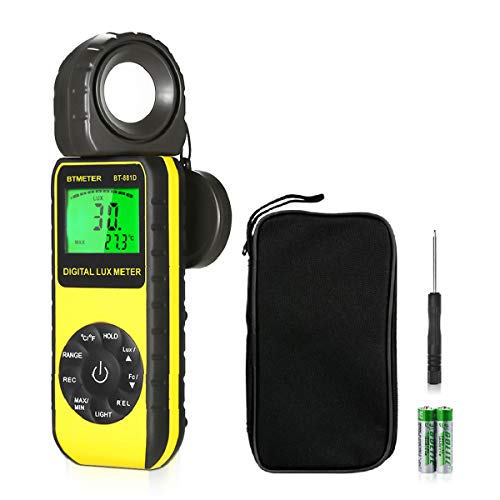
BTMETER BT-881D offers an expansive 0.01–400,000 Lux range (0.01–40,000 FC) with high accuracy, including 0.4-second response times and 2–3 samples per second. It covers a wide luminance range suitable for grow rooms with intense lighting as well as dim areas, providing precise readings for plant acclimation. Its 270° rotated sensor adds versatility for hard-to-reach spots in grow setups.
Buying Guide: Key Purchase Considerations
- Measurement range and accuracy: For most plant growth needs, a meter that covers at least 0.1 to 200,000 Lux with ±3–5% accuracy ensures reliable readings across different light scenarios.
- Unit options: A model that supports Lux and FC (foot-candles) lets you match measurement units to regional practices or specific horticultural guidelines.
- Display readability: Backlit LCDs and large digits help in low-light grow spaces. Consider a rotating sensor if you frequently measure from multiple angles.
- Data features: Min/Max, data hold, and peak or data logging are helpful for tracking light changes over time or during seasonal shifts.
- Power and battery: Auto off helps conserve power, but ensure the device takes common batteries or includes a USB option if needed.
- Durability and form factor: A compact, durable meter with a stable readout is best for frequent use in gardens, greenhouses, or photography studios.
- Extra features: Temperature readings, peak detection, and auto-range functionality can be beneficial in dynamic environments where light sources vary.
When selecting a light meter for plant care, align the device with your grow setup: indoor grow tents, greenhouses, or outdoor garden shade analysis. Consider how quickly you need readings, whether you require data logging, and if you prefer a device with a rotating sensor for flexible positioning. The options above provide a range of features to support precise light management for healthier, more productive plants.