The buyer intent for light movers is clear: maximize light coverage, reduce hot spots, and expand the illuminated area in indoor grow spaces. This guide compares five popular Light Rail options to help you choose based on the number of lights, installation needs, and operation style. The top picks are best for growers seeking reliable, USA-made hardware that supports larger canopies or multiple lamps without complex setup. Below is a quick summary table of the selected products to help you compare at a glance.
| Product | Best For | Notes |
|---|---|---|
| Light Rail 3.5 IntelliDrive Kit | Single light setups with adjustable timing | High yields with broad coverage |
| Light Rail 4.0 AdjustaDrive Kit | Flexible speed control for varied layouts | Solid USA-made option |
| Light Rail 4.20 AdjustaDrive Kit | Two-light configurations | Extends to dual-light setups |
| Light Rail Robotic Grow Light Mover Rail Hanger Brackets | Attachment hardware for tents and greenhouses | Support components, not a full mover by itself |
Note: Each product line is designed to improve light distribution by moving fixtures rather than leaving them stationary. The best choice depends on the number of lights you run, your space constraints, and how hands-on you want to be with setup and adjustments.
Light Rail 3.5 IntelliDrive Kit

The Light Rail 3.5 IntelliDrive Kit moves a single light with a motorized rail system. Features include a travel rate of about 4 feet per minute and a time delay that is adjustable from 0 to 60 seconds. This setup is best for growers who want stronger light penetration across a single canopy area and are prioritizing simpler installation. It helps reduce hot spots and shadows, expanding coverage by roughly 30% per light compared to stationary setups.
Ideal for: growers with a single high-intensity fixture seeking consistent light distribution and an easy-to-tune motion profile. Better for small-to-medium tents where one mover can cover the entire canopy. Limitation: not designed for multi-light configurations without additional kits or mounting solutions.
Light Rail 4.0 AdjustaDrive Kit

The Light Rail 4.0 AdjustaDrive Kit provides a motor with adjustable speed and a two-piece 2 meter (6’6″) rail, plus install hardware and instructions. It offers customizable speed and time delay settings to fit different grow routines and light layouts. This model is well-suited for growers who need more control over motion dynamics and plan to optimize a single light in larger spaces or multiple mounting options.
Best for: growers who want precise, flexible motion for a single light in adaptable spaces. Limitations: may require more careful alignment during setup to ensure smooth operation across the full travel length.
Light Rail 4.20 AdjustaDrive Kit

The Light Rail 4.20 kit moves two lights with a motor and rails, including a lamp kit and pre-installed extreme-duty trolley wheels. It features adjustable speed and time delay for better tuning in multi-light setups. This option is chosen when a grower wants synchronized movement of two fixtures, reducing shading and increasing canopy coverage.
Best for: rooms with two lights needing harmonized motion and reliable performance. Consideration: ensure your space can accommodate two fixtures on the same rail system and verify load compatibility with the kit you select.
Light Rail Rail Hanger Brackets
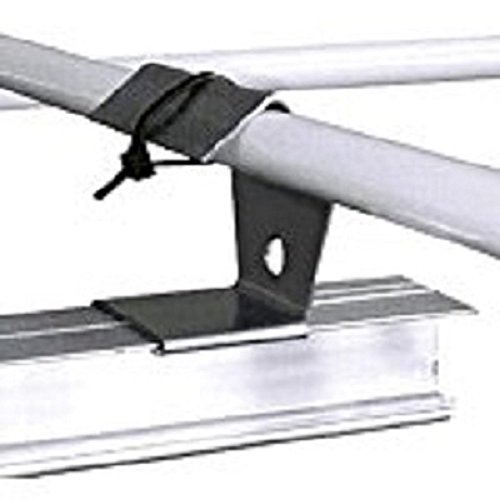
These rail hanger brackets are compatible with Light Rail systems and are produced by Gualala Robotics in the USA. They are designed to support light movers in tents and greenhouses and come in four packs. They are an accessory for mounting and stability, not a standalone mover. They are meant to support heavier lights and ensure consistent rail alignment.
Best for: growers who already own a Light Rail mover and need sturdy, compatible mounting hardware. Tips: verify tubing dimensions (up to 1.5 inches) before purchase and consider additional zip ties and installation instructions for secure setup.
Buying Guide
What should I consider when choosing a light mover?
Think about the number of lights you plan to move, the size of your grow space, and whether you prefer fixed speeds or adjustable motion. If you run a single strong fixture, the IntelliDrive or 4.0 may be sufficient. For two lights, the 4.20 is designed to move both in sync.
Single light vs. multi-light configurations
Single-light movers are often simpler and cheaper, while dual-light kits offer improved coverage for larger canopies. Ensure your ceiling height and tent width can accommodate the rail length and motor travel.
Installation and maintenance considerations
USA-made units typically emphasize robust build quality and longer service life. Look for kits with clear instructions, compatible hardware, and available spare parts. Regularly check rails and trolley wheels for wear to sustain smooth operation.
Practical tips for setup
Plan a layout that minimizes shadows at the canopy edge. Start with the light positioned toward the center, then adjust speed and delay to even out light distribution across the canopy. If you use two lights, synchronize their motion for uniform coverage.
FAQ
Q: Are light movers energy efficient? A: They optimize light distribution, which can improve canopy yields and reduce wasted light, potentially reducing energy use per gram produced. Q: Can I use a light mover with any grow light? A: Most standard rail systems work with a wide range of fixtures, but always verify weight and mounting compatibility. Q: Do movers require maintenance? A: Yes, periodic checks of rails, wheels, and motors help prevent disruptions. Q: Which option is best for a small tent? A: A single-light IntelliDrive or 4.0 kit is typically sufficient for compact spaces. Q: Can I upgrade from one kit to another later? A: Many Light Rail systems support upgrades or add-on components, but confirm compatibility with your current hardware. Q: Do these kits ship with everything I need? A: Most kits include rails, motor, and basic hardware, while some accessories are sold separately.