Looking for durable, breathable liners to keep planter boxes healthy and visually appealing? This guide highlights top options for planter liners that fit window boxes, wall planters, railings, and raised beds. Each pick is suited for different planter sizes and planting goals, from decorative ivy to flowering annuals. The best choice depends on your planter dimensions, climate, and how much drainage you need. Below, you’ll find concise comparisons and guidance to help you decide.
| Product | Best For | Key Benefit |
|---|---|---|
| Halatool 3 Pack 30 Inch Coconut Liners | Multiple standard window boxes and wall planters | Economical pack; natural coconut fiber; good drainage |
| HHTHH 30 Inch Trough Coco Liner | Large window boxes and fence planters | Thick, pre-formed liner; natural coconut fiber |
| HHTHH 24 Inch Trough Coco Liner | Medium-sized window boxes | Compact size; reinforced coir liner |
| HHTHH 36 Inch Trough Coco Liner | Extra-long planters and fence line boxes | Extra long; sturdy coir; breathable |
| Karlliu 24 Inch Trough Coconut Liners | Decorative and versatile outdoor planters | Natural coco fiber; broad applicability |
Halatool 30 Inch Coconut Liners — 3 Pack

Best for: Gardeners who want a ready-to-use, multi-pack solution for several 30-inch planters. The Halatool set provides three 30-inch liners, each designed to fit standard window boxes and railing planters. These liners are made from 100% natural coconut fiber, offering good air flow and drainage while helping retain soil moisture between waterings.
Why selected: The 3-pack delivers consistent sizing for multiple planters, simplifying replacement and seasonal refreshes. The natural fiber composition supports root health with its porous structure. Use this when you manage several planters in a single area and want a uniform look.
Caution: Coconut fiber can wear over time in very harsh climates or with heavy root intrusion; inspect for fraying and replace as needed. Slight color variation may occur due to natural material.
HHTHH 30 Inch Trough Coco Liner
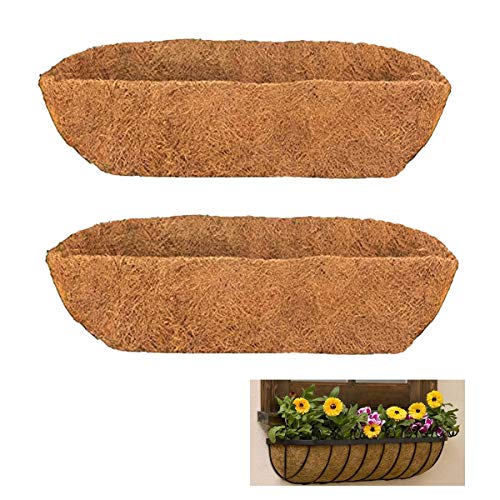
Best for: Large window boxes and wall planters that require a thick, pre-formed coconut liner for quick installation. The 30-inch trough liner is sized to cover substantial planter widths without trimming, reducing installation time for busy setups.
Why selected: This liner’s trough design anchors securely to hanging baskets and window boxes, helping to minimize soil erosion and keeping soil moisture steady. It’s ideal when you want a durable, fit-for-purpose coconut liner that stands up to seasonal planting changes.
Caution: Exact fit depends on trough depth and dimensions; verify your planter’s measurements against the listed size to avoid overhang or gaps.
HHTHH 36 Inch Trough Coco Liner
Best for: Extra-long planters or fence line boxes that require a single, continuous coconut liner. The 36-inch size helps reduce seams and movement, which can be advantageous for longer planters and outdoor corridors.
Why selected: The longer length provides consistent coverage across extended planter areas, supporting uniform moisture distribution and root health in larger plantings. It’s a strong pick for dramatic window boxes or railing gardens.
Caution: Longer liners may require more careful handling to avoid bending or kinking during installation; align edges before securing to ensure a snug fit.
Karlliu 24 Inch Trough Coconut Liners

Best for: Versatile outdoor setups including window boxes, balcony planters, and garden decor where a 24-inch liner fits the footprint. The natural coconut fiber is breathable, aiding soil aeration and moisture management.
Why selected: The Karlliu liner emphasizes breathability and moisture retention, which helps plant roots access oxygen while staying hydrated. Its broad applicability makes it a convenient option for mixed-use spaces where planter sizes vary.
Caution: Natural fibers may shed slightly during initial use; a light rinse before planting can help minimize this.
Buying Guide
What size should you choose?
Measure your planter’s length, width, and depth. Choose a liner that fits with minimal trimming, but allow a small margin for installation and to avoid compression that could hinder drainage.
Material considerations
Natural coconut fiber liners offer good drainage and aeration, helping root health. They tend to be durable for outdoor use but may wear over time in extreme weather. Consider packing multiple sizes if you manage several planters.
Drainage and moisture management
Look for liners that promote air flow and water percolation. In areas with heavy rain, ensure your planter has adequate drainage holes and avoid overwatering to prevent root rot.
Installation tips
- Pre-soak dry liners to help with expansion and fit.
- Trim carefully to avoid gaps that can let soil escape.
- Secure liners to prevent shifting in windy locations.
Durability and replacement cycle
Natural fiber liners typically need replacement every planting season or after prolonged exposure to harsh conditions. Keep a small stock on hand for quick swaps.
Maintenance and care
Remove old soil, gently brush away debris, and rinse liners before reuse or disposal. Avoid using chemical cleaners that could degrade natural fibers.
Which liner should you choose?
- Best for bulk coverage across several planters: Halatool 3 Pack.
- Best for immediate, single large boxes: HHTHH 30 Inch or 36 Inch trough liners, depending on planter length.
- Best for versatile, mid-size planters: Karlliu 24 Inch liners.
Frequently Asked Questions
- What is a liner’s main purpose in planter boxes?
To provide a breathable barrier that helps retain soil moisture and reduce soil loss while promoting healthy root growth. - Are coconut fiber liners organic or synthetic?
They are natural, organic coconut fiber, offering sustainable and biodegradable properties. - Can liners be cut to fit irregular planter shapes?
Yes, many liners can be trimmed to fit different widths and depths; ensure a snug fit for stability. - Do I need additional liners for cold weather?
In cold climates, liners may become brittle; inspect regularly and consider seasonal replacements. - How do I maintain coconut liners over time?
Rinse to remove soil buildup, air-dry between uses, and replace when fibers start showing wear. - Can liners be used in indoor planters?
Yes, they work indoors for decorative and practical planting, with proper drainage management.