This guide helps indoor gardeners choose the right liquid fertilizer for houseplants. It covers options that feed instantly, are easy to use, and work for common indoor species like pothos, monstera, snake plants, and philodendrons. The top picks favor users who want simple, ready-to-use formulas, organic feeding, or stronger growth for foliage. The quick comparison table below highlights key details for five representative products.
| Product | Type | Best For | Notes |
|---|---|---|---|
| Miracle-Gro Indoor Plant Food For All Plants | General houseplants, flowers, vegetables, herbs | ||
| Grow Queen Organic Liquid Indoor Plant Food | Organic home gardening, daily feeding | ||
| Purived 16oz All-Purpose Liquid Plant Fertilizer | Indoor and outdoor potted plants | ||
| Miracle-Gro Indoor Plant Food 8 oz 2-Pack | Versatile indoor plants, office plants | ||
| Miracle-Gro Organic Indoor Plant Food 8 oz | Organic feeding for houseplants |
Miracle-Gro Indoor Plant Food For All Plants

Best for: general homeowners who want a universal, ready-to-use liquid feed for a wide range of indoor plants. This Miracle-Gro formula supplies nutrients to help housesplants, flowers, vegetables, and herbs grow stronger when used as directed. It feeds instantly to support leafy growth and healthier overall appearance. Caution: avoid overfeeding by following the label timing and dosage instructions to prevent nutrient burn.
Miracle-Gro Pour & Feed Plant Food

Best for: container gardeners seeking a no-muss feeding option for both indoor and outdoor plants. This ready-to-use liquid fertilizer requires no mixing with water or a watering can. It instantly feeds potted plants, making it ideal for busy households. Limitation: designed for container plants; may not suit larger landscape applications without reapplication as directed.
Grow Queen Organic Liquid Indoor Plant Food
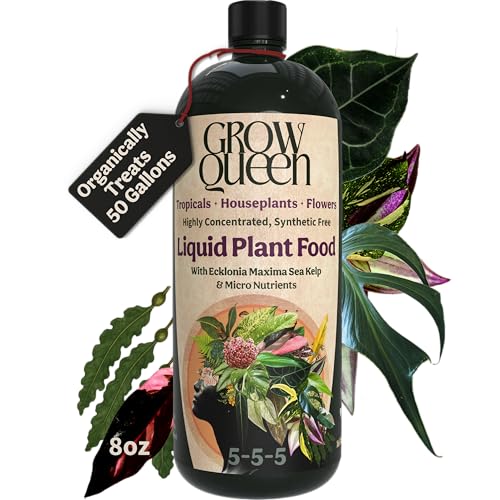
Best for: organic gardeners who want a true organic feed. This 5-5-5 liquid fertilizer is designed to be gentle on houseplants while delivering quick results. It also claims to nurture soil microbes for better nutrient uptake and longer-term vigor. Consideration: as an organic formula, its benefits may appear slightly slower than synthetic blends but offer cleaner, plant-based nutrition.
Indoor Plant Food – Liquid Fertilizer For Houseplants (TPS NUTRIENTS)

Best for: everyday feeding of common houseplants to promote lush growth and vibrant foliage. This formula is designed to be balanced for indoor use, supporting new growth and stronger roots. Caution: follow label directions to avoid overfeeding, which can lead to salt buildup and leaf tip burn.
Purived 16oz All-Purpose Liquid Plant Fertilizer

Best for: budget-conscious buyers who want a large yield from a single bottle. A capful per gallon of water feeds a wide range of indoor and outdoor potted plants, delivering fast results with an odorless, easy-to-use formula. Limitation: the label indicates general-purpose use; for specialty plants (like orchids or carnivorous species), verify compatibility before use.
Miracle-Gro Indoor Plant Food, 8 oz 2-Pack

Best for: households needing a compact, ready-to-use indoor fertilizer that covers multiple plant types. This 2-pack is convenient for kitchens, offices, or living rooms with a variety of houseplants. Caution: ensure even distribution to avoid hotspots in soil and follow feeding frequency on the label.
Miracle-Gro Organic Indoor Plant Food

Best for: users seeking an organic option that uses plant-based ingredients to feed indoor and outdoor plants. It is designed to be compatible with organic gardening practices and provides quick nutrition for healthier, resilient plants. Limitation: organic blends may have slower visible results compared to synthetic formulas, depending on plant type and growth stage.
Buying Guide
What should you consider when buying liquid fertilizer for indoor plants?
- Plant type and goals: Choose a formula that matches your plant mix (organic vs. synthetic), and whether you want instant feeding or steady, ongoing nourishment.
- NPK balance: Look for numbers like 5-5-5 or similar for balanced growth; some formulas emphasize nitrogen for foliage or phosphorus for root development.
- Concentration and mixing: Some bottles are ready-to-use; others require dilution. For beginners, ready-to-use options save time and reduce mistakes.
- Organic vs inorganic: Organic blends support soil ecology but may take longer to show growth; inorganic blends tend to provide quick results and precise nutrient ratios.
- Application scope: Ensure the product is labeled for indoor container plants if your use is indoor only.
- Odor, ease of use, and packaging: Odorless formulas and clear dosing instructions improve user experience, especially in living spaces.
FAQ
- Q: Do indoor plants need liquid fertilizer all year? A: Most indoor plants benefit from regular feeding during the growing season, with reduced or paused feeding in dormant periods, depending on species and soil conditions.
- Q: Can organic liquid fertilizers burn plants? A: Organic blends can burn if overapplied or used without proper dilution. Always follow label directions and use at recommended intervals.
- Q: Is it better to water before applying liquid fertilizer? A: Yes, apply to moist soil to help distribute nutrients and reduce root stress; avoid applying to dry, bare roots.
- Q: How often should I fertilize my indoor plants? A: Most houseplants do well with feeding every 1-2 weeks during active growth; reduce frequency in winter or for plants with slow growth.
- Q: Can I use outdoor plant fertilizer indoors? A: Some outdoor formulations work indoors if labeled for indoor use or all-purpose; avoid strong formulations intended for landscape plants unless specified safe for indoor containers.
- Q: Are there risks of salt buildup from liquid fertilizers? A: Yes, especially with overfeeding. Flush the soil with water periodically if you notice tip burn or stunted growth.