Answering the common question, which mesh netting works best to protect vegetables, fruits, and flowering plants in American gardens? This guide covers top options that balance insect barriers with air, light, and water flow. The best picks suit raised-bed gardeners, container gardeners, and hobby farmers. They are chosen for durability, ease of use, and clear suitability for different plant types and spaces. Read on to compare five strong options and find the right fit for your setup.
Summary table of chosen products
| Product | Best For | Key Benefit | Size / Set |
|---|---|---|---|
| Ultra Fine Garden Netting 4’x10′ | Raised beds and small gardens | Ultrafine 0.8mm x 1mm mesh, easy to cut and secure | 4′ x 10′ |
| 2 Pack 6.5x10ft Garden Netting | Greenhouses and beds needing repeated use | Durable PE, reusable, high permeability | 2 x 6.5′ x 10′ |
| 2 Pack Garden Netting for Raised Beds 4x2FT | Raised beds with drawstring needs | Double drawstring, clip-in setup | 2 x 4′ x 2′ |
| Garden Netting Kit for Raised Beds | Comprehensive setup with hoops | Includes fiberglass hoops and clips for quick install | 10′ x 30′ netting |
| Garden Netting Pest Barrier: 4’x10′ | Fruit trees, vegetables, berries | All-purpose, UV-resistant HDPE | 4′ x 10′ |
Ultra Fine Garden Netting 4’x10′ Product Overview

The Meuallikit Ultra Fine Garden Netting uses a 0.8mm x 1mm mesh to prevent small pests from reaching plants while still allowing air, light, and water through. It’s sized for 4′ by 10′ beds or rows and can be cut to fit irregular shapes. Best for gardeners who want a straightforward barrier without supporting structure needed in some larger systems. Caution: removal is recommended when heavy rainfall or wind increases risk of net displacement, so secure the edges well.
2 Pack 6.5x10ft Garden Netting

Alphatool’s 6.5x10ft nets come in a two-pack and are built from durable PE material designed for reuse. They provide high permeability for water and sunlight, making them a flexible choice for raised beds or greenhouses. Best for: gardeners who want a reliable, reusable barrier that’s easy to store between seasons. Caution: includes netting only; poles or frames must be purchased separately.
2 Pack Raised Bed Garden Netting 4x2FT

UYEDUJZ offers two 4×2-foot nets with a double drawstring design and included clips, specifically sized for 4×2 raised beds. Best for: compact garden beds where secure edge closure and quick installation matter most. Caution: bed measurements must align with netting footprint to avoid gaps at corners.
Garden Netting Kit for Raised Beds
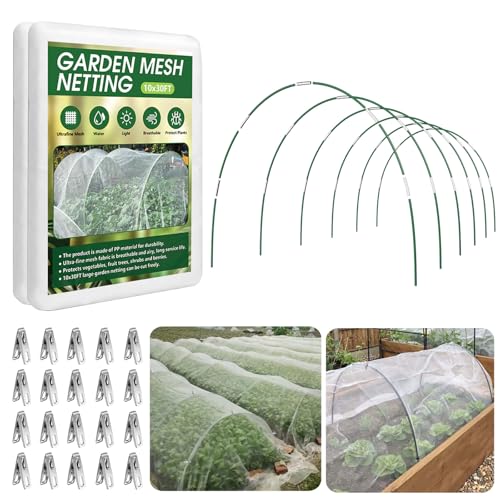
Monirsen’s kit blends 10×30 feet of ultra-fine mesh with six sets of 8-foot fiberglass hoops, pipes, and clips. It creates a complete row-cover solution for vegetables, fruits, and flowers. Best for: gardeners seeking an all-in-one installation with a sturdy hoop framework. Caution: the package requires assembly and setup; no separate support poles beyond included hoops.
Garden Netting Pest Barrier: 4’x10′
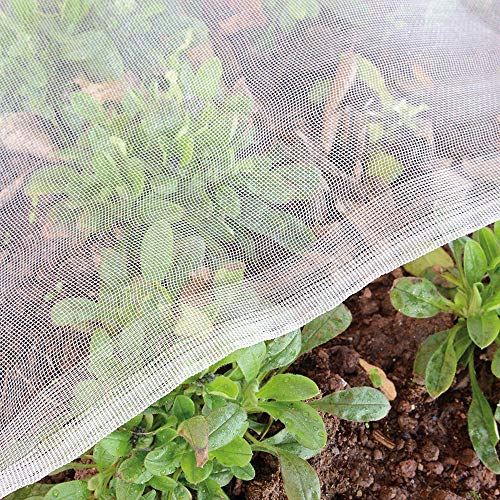
Garden Tailor’s 4×10-foot pest barrier emphasizes effective bug control with a UV-resistant HDPE mesh. It describes itself as all-purpose, suitable for gardens, ponds, and indoor use. Best for: gardeners who want a versatile barrier that can be re-purposed beyond outdoor beds. Caution: tight selvedge reduces risk of unraveling, but ensure proper securing to prevent wind displacement.
10×20 FT Ultra Fine Garden Netting Kit

ZRCHOOYM’s 10x20ft kit includes 36 fiberglass hoops and a full frame of galvanized pipes with garden clips. Best for: gardeners who want a ready-to-assemble hoop-supported netting system that covers larger beds with minimal gaps. Caution: assembly takes time; ensure you have space to maneuver during setup.
Drawstring Blueberry Netting (4 Pack)

SATXTREM offers a four-pack of 3.28×2.62-foot blueberry netting with drawstring closures. Best for: fruiting bushes like blueberries and tomato plants where a lightweight, reusable cover is enough. Caution: smaller individual bags may require multiple nets for larger bushes or trees.
Garden Netting 10x33Ft Ultra Fine Mesh
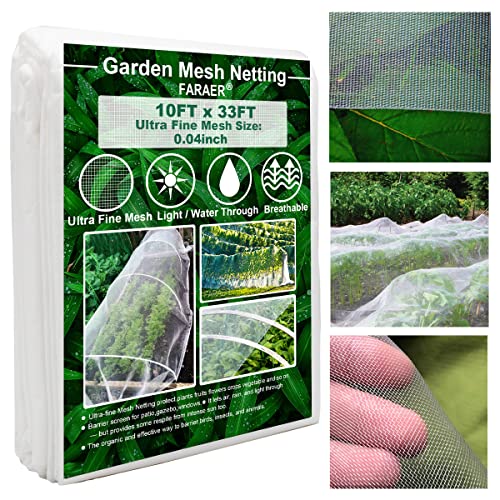
FARAER’s 10×33-foot netting features a 0.8mm x 1mm mesh and emphasizes breathability with a durable all-purpose design. Best for: homeowners needing extended coverage for larger beds or orchards without frequent net repositioning. Caution: ensure proper securing to prevent wind lofting on very windy days.
Buying Guide: Key Purchase Considerations
- Mesh size and airflow: A 0.8mm x 1mm mesh balances pest exclusion with light and water passage. Consider finer for tiny pests; slightly larger for quick watering access.
- Size and coverage: Choose nets that fit your bed dimensions, row length, or fruit trees. For irregular shapes, a cut-to-fit option is helpful.
- Durability and reuse: UV-resistant HDPE or PE materials increase lifespan. Reusable nets reduce long-term costs.
- Installation requirements: Some nets come with supporting hoops or clips; others require staking or weights. Plan for edge securing to prevent wind movement.
- Versatility: Some nets work indoors, on windows, or ponds. If you want multi-use, pick a model marketed as all-purpose.
- Maintenance: Lightweight nets are easy to clean and store. Check if they’re machine-washable or hand-washable.
- Best use-case: For raised beds, kits with drawstrings or hoop supports simplify installation and maintenance.
Frequently Asked Questions
- What is the best mesh size for general garden protection?
Ultrafine mesh around 0.8mm x 1mm provides strong insect exclusion while allowing air and moisture to pass, supporting plant health.
- Can I use garden netting over existing plants without harming them?
Yes. Most nets are designed to permit light and water through while keeping pests out. Ensure edges are secured to prevent contact with plant foliage.
- Do nets restrict pollinators?
Some nets may reduce pollinator access if coverage is heavy or continuous. For fruiting crops, consider partial coverage or removable nets during flowering.
- Are these nets reusable after weather events?
Durable materials like HDPE or PE are designed for multiple seasons, though heavy wind or hail may require edge repairs or stitching.
- What installation methods work best for raised beds?
Double-drawstring nets, clips, or hoop-based systems provide secure fit and ease of use for raised beds of various sizes.