Need reliable shade for gardens, patios, greenhouses, or kennels? This guide presents five top mesh tarps that balance sun filtration with airflow. Each option targets different shade levels, making it easy to pick the right one for vegetables, seedlings, pets, or outdoor living areas. Best for small gardens, patios, or chicken coops, these selections emphasize durability, UV resistance, and simple setup.
Summary of selected products
| Product | Shade Level | Best For | Why It Stands Out |
|---|---|---|---|
| Winemana 70% Shade Cloth (10×20 FT) | 70% | Mid-summer gardens and patios | Excellent balance of light and cooling; reinforced edges and grommets for easy setup |
| Shade Cloth for Garden, 80% Mesh (Grommets) | 80% | Patios and greenhouses | High UV blocking with good airflow; durable HDPE with long service life |
| Shade&Beyond 90% Sun Shade Cloth | 90% | Hot days, pet zones | Strong UV protection and cooling; solid edge construction |
| JOJOLEE 70% Sun Shade Cloth | 70% | Garden beds and pergolas | Thicker fabric with reinforced edges; wind-resistant |
| QLOFEI 90% Shade Cloth | 90% | Greenhouses and kennels | High-density material with durable grommets; generous shade and airflow |
Winemana 70% Shade Cloth 10×20 FT

The Winemana 70% Shade Cloth reduces summer heat while preserving light for growth. Best for gardeners who want a moderate shade that protects vegetables and flowers during peak sun without stifling photosynthesis. The 10×20 ft size suits medium garden beds, patios, or a chicken coop canopy. It uses UV-stabilized HDPE and features reinforced edges with grommets every few feet for quick anchoring. Suitable for frames, fences, or posts with zip ties or rope. Limitations: May not provide enough shade in extreme heat without layering or larger coverage.
Shade Cloth for Garden, 80% Mesh with Grommets

This 80% shade cloth delivers strong sun protection while maintaining airflow, making it ideal for patios, greenhouses, and vegetable beds. The fabric is described as high-quality HDPE with anti-aging and wear-resistant properties, designed to stand up to daily outdoor use. It blocks over 80% of sun and also shields against rain and dust, helping keep soil cooler and plants healthier. Best for gardeners needing reliable shade for mid-day heat, but avoid using it as the sole shelter in very windy locations without proper support.
Shade&Beyond 90% Sun Shade Cloth
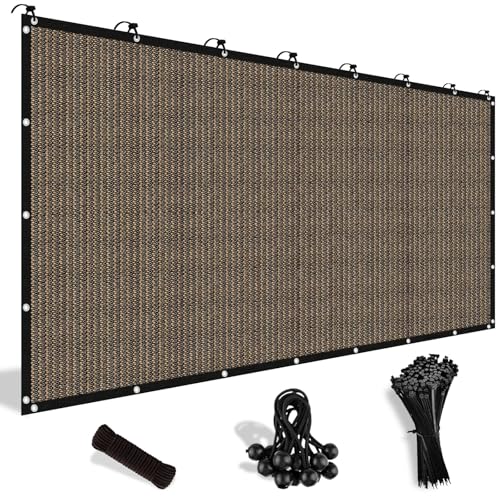
The Shade&Beyond 90% shade cloth provides strong sun protection, suitable for patios, gardens, and kennels where maximum shade is beneficial. Its HDPE fabric is designed for durability with good airflow to prevent heat buildup. Edges include grommets every two feet for uniform tension. Choose this when the goal is near-complete shade during peak heat or to protect delicate plants and pets. Limitation: Heavier shade material may require sturdier mounting in windy spots to avoid sagging.
JOJOLEE 70% Sun Shade Cloth
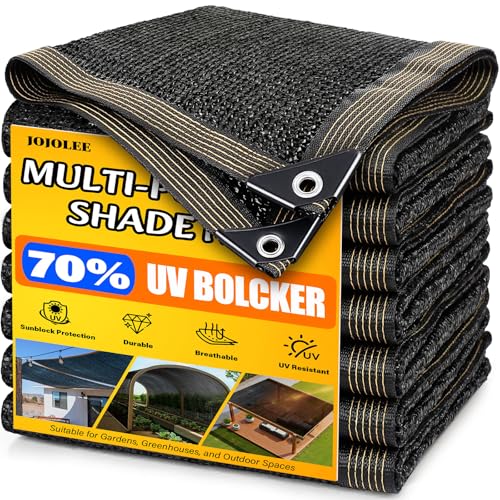
JOJOLEE offers a 70% shade cloth with thicker, heavier HDPE fabric and reinforced edges. Best for pergolas, greenhouses, or backyard shelters needing resilience against wind and wear. It cools spaces by blocking a majority of sunlight while allowing airflow and rain passage. The extended border and six rows of stitching reduce edge fraying and tear, improving longevity. Tip: In very windy areas, secure with additional anchors to prevent edge tearing.
QLOFEI 90% Shade Cloth

The QLOFEI 90% shade cloth emphasizes high shade with airflow. Made from high-density polyethylene, this fabric aims to withstand sun exposure while keeping spaces cooler. Grommets are placed along reinforced edges at regular intervals for stable mounting. This option is well-suited for greenhouses, chicken coops, and pergolas where strong shading is needed. Consideration: Higher shade requires careful placement to prevent over-darkening sensitive plants.
Buying Guide: Shade Cloth Essentials
What shade level do you need? Shade cloths range from 50% to 90% coverage. For vegetable beds and nurseries, 70% is a common target to balance light and cooling. For patios or kennels in hot climates, 90% may be preferable to reduce heat buildup and sunburn risk.
What material matters? Most durable options use UV-stabilized HDPE fabric. Look for high-density construction, anti-aging properties, and strong edge stitching. Grommets should be spaced evenly to facilitate tension and prevent sagging.
How should you install it? Choose a system that matches your space: frames, fences, carports, or pergolas. Reinforcement at the edges, such as double-stitched hems or wide borders, improves longevity in windy settings. Consider adding tie-downs or rope and mounting hardware for a clean, secure fit.
Maintenance and lifespan tips: Clean with mild water and avoid harsh abrasives. Check grommets and stitching annually for signs of wear. In extreme seasons, consider layering or combining with a secondary shade solution to extend its effective lifespan.
FAQ
- What shade cloth is best for vegetable gardens?
– A 70% shade cloth is a versatile choice that reduces heat while still providing sufficient light for growth. - Can shade cloth blocks dust and rain as well?
– Yes, many fabrics also shield against dust and light rain, but they are not waterproof and should not be used as a rain shelter. - How do you install shade cloth with grommets?
– Attach the cloth to a frame or posts using zip ties, rope, or hooks, pulling taut to minimize sagging. - Is 90% shade cloth suitable for all plants?
– It’s ideal for heat-sensitive or sun-loving extremes but may over-shade sun-tolerant species; assess plant needs first. - What is the best way to prevent tearing at the edges?
– Use reinforced hems, wider edging, and multiple attachment points to distribute tension evenly. - Can shade cloth be used for kennels or chicken coops?
– Yes, it provides cooling and sun protection, especially in hot climates, while allowing airflow.