Answering the common question “Which moisture indicator should I trust for healthy plants?” this guide highlights five reliable options to help you water accurately. Each product is chosen for different plant types and pot sizes, from small succulents to larger indoor pots. Best for busy growers, beginners, or seasoned gardeners needing clear readings and ongoing monitoring.
| Product | Best For | Notes |
|---|---|---|
| XLUX Long Probe Deep Use | Deep pots, large indoor/outdoor plantings | Long 5.5 inch probe for deep soil pockets |
| XLUX Soil Moisture Meter (2015) | General home gardens and beginners | Classic, reliable, battery-free design |
| Sustee Aquameter (Green, Small) | Small pots and succulents | Leave-in design with refillable cores |
| Antonki 2 Pack | Indoor/outdoor house plants, frequent watering needs | No battery required, quick color read |
| YAMRON 4-in-1 | All-around monitoring (moisture, pH, temp, light) | Digital display with backlight |
Buyer profiles: casual hobbyists who want quick reads; apartment gardeners with limited pot sizes; and plant enthusiasts needing deeper root-zone insights or multi-parameter data. The following sections detail five selected products to help you choose the right match for your plants.
XLUX Long Probe Deep Use Soil Moisture Meter

Best for deep pots and large planters, this XLUX model features a longer 5.5-inch probe to reach the root zone. The dial displays dry, moist, or wet across a ten-scale range for quick interpretation. It provides immediate readings once inserted and is user-friendly for both indoor and outdoor setups. Caution: prolonged soil contact may corrode the metal tip if left in place beyond five minutes.
- Pros: Long probe for deep pots, clear three-zone dial, immediate reading.
- Cons: Do not leave in soil longer than 5 minutes to prevent tip corrosion.
- Best for: Larger pots, deep potting mixes, and environments where root zones are hard to reach.
XLUX Soil Moisture Meter (Since 2015)
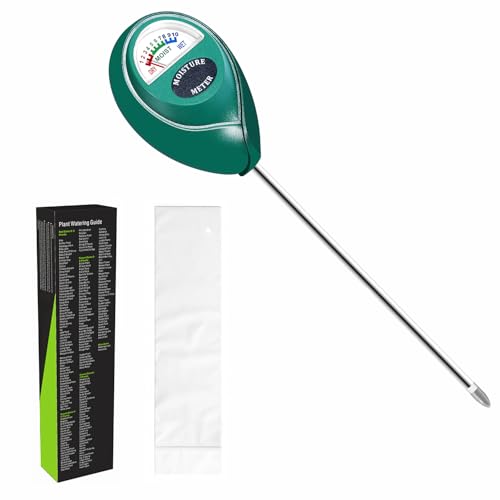
This classic XLUX meter is known for trusted performance and a durable, battery-free design. Its high-sensitivity probe reaches the root zone, and the large color-coded dial (Dry–Moist–Wet) simplifies watering decisions. It’s a strong choice for beginners and households with a variety of plant types from foliage to flowering plants.
- Pros: Proven reliability, no batteries, root-zone focus.
- Cons: May require occasional cleaning to maintain accurate readings in dense soils.
- Best for: Everyday indoor and outdoor gardening across multiple plant types.
Sustee Aquameter — Green, Small (Set of 5)
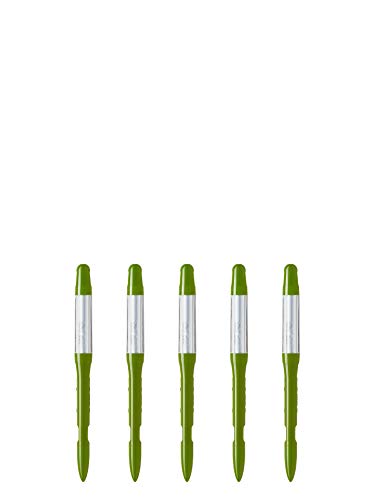
Designed for small pots and succulents, this leave-in sensor set stays in place for continuous monitoring. The kit includes five refillable green sticks with cores that can be replaced, minimizing repeated purchases. It’s best for compact arrangements where surface moisture may not reflect root-zone conditions.
- Pros: Continuous monitoring, refillable cores, compact design.
- Cons: Smaller sizing means best accuracy in shallow pots; may be less effective in very large containers.
- Best for: Small-scale arrangements, desk plants, and succulents needing steady vigilance.
Antonki 2 Pack Soil Moisture Meter

Antonki offers an instant, battery-free reading with a color-coded dial (red for dry, green for moist, blue for wet) and 10 scales. It’s easy to use in a variety of pots and emphasizes quick, on-the-spot readings near the root zone. A good pick for households seeking straightforward, no-fuss moisture checks.
- Pros: Battery-free, fast readings, clear color coding.
- Cons: Readings may be less precise in very dense soils without proper root-zone contact.
- Best for: Home gardeners wanting simple, reliable moisture checks without electronics.
YAMRON 4-in-1 Soil Moisture Meter

This meter provides a broader set of readings, combining moisture, pH, temperature, and sunlight. It features a large backlit LCD and uses batteries. It’s best for gardeners who want multi-parameter data in one handheld device to guide watering, soil care, and light exposure decisions. Note that battery maintenance is required for long-term use.
- Pros: 4-in-1 functionality, backlit display for day or night use.
- Cons: Requires batteries; more complex to read than single-parameter meters.
- Best for: Advanced plant care where moisture, pH, temp, and light data are valuable.
Buying Guide: How To Choose Your Plant Moisture Indicator
Key questions to guide your choice:
- What pot size do you predominantly water? Deep pots benefit from longer probes like the XLUX long probe.
- Do you want a simple, battery-free meter or a multi-parameter device? For quick watering, single-parameter meters often suffice; for detailed care, consider 4-in-1 options.
- Are you monitoring many plants at once? Sets from Sustee provide multiple sticks, reducing ongoing costs for a larger collection.
- Is continuous monitoring important? Left-in meters offer ongoing readings, but ensure materials are compatible with your soil and plant type to avoid root disturbance.
- How important is readability? Large color-coded dials are quick to interpret; digital displays with backlighting help in dim conditions.
Practical tips:
- In dense or clay-rich soils, readings may skew; interpret with awareness of soil texture.
- Clean probes occasionally to prevent soil buildup affecting accuracy.
- For sensitive plants, test readings over a week to establish typical moisture patterns before adjusting watering schedules.
Frequently Asked Questions
- What is the best moisture meter for beginners? A simple dial-based meter like the XLUX or Antonki is recommended for easy quick readings.
- Can I use moisture meters for outdoor plants? Yes, most models work outdoors, but consider exposure and weather resistance for long-term use.
- Do moisture meters require batteries? Some models are battery-free; others with digital displays require batteries.
- How often should I read moisture with a left-in meter? Readings can be checked during routine garden tasks; avoid leaving the probe in soil for extended periods to prevent corrosion in metal tips.
- Are multi-parameter meters worth it? If you need pH, temperature, or light data, a 4-in-1 option can replace several separate tools.
- Can I use these meters on all plant types? Most meters work across a broad range of houseplants, succulents, and garden plants, but some species with unique root zones may require more frequent monitoring.