Yes, you should rely on a moisture reader for plants to water with precision. This guide highlights five reliable soil moisture meters ideal for American homes, including indoor potted plants, outdoor containers, and garden beds. These meters help determine when to water by reaching the root zone, reducing overwatering and promoting healthier growth. The selections favor models with durable probes, easy-to-read dials, and battery-free designs when possible, making them suitable for beginners and seasoned gardeners alike. The buyer summary table below compares key attributes at a glance.
| Product | Best For | Notes |
|---|---|---|
| XLUX Soil Moisture Meter (2015) | All-purpose indoor/outdoor plants | No batteries; root-zone reading; large color dial |
| XLUX Long Probe Deep Use | Deeper pots and large planters | Longer probe; immediate readings; avoid corrosion if left in soil |
| Censinda Soil Moisture Meter | No-battery, quick checks | Simple, root-zone reading; no power required |
| Antonki 2 Pack | Value and multiple plants | Color-coded dial; quick, repeatable results |
| YAMRON 4-in-1 Soil Tester | Plants needing more data | Moisture, pH, temperature, light; digital display |
XLUX Soil Moisture Meter (Since 2015)
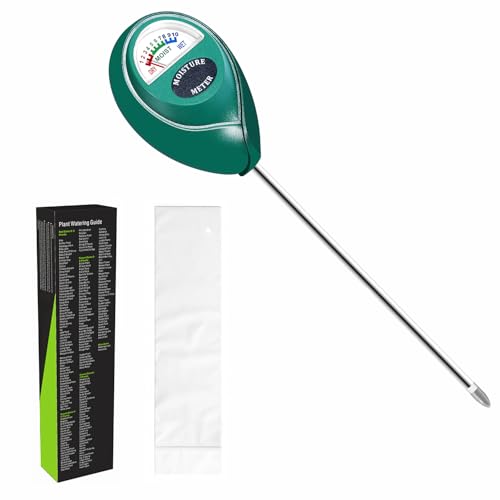
Best for: Beginners and experienced gardeners seeking a reliable, battery-free moisture reading. Why: This meter uses a durable 304 stainless steel probe and a large color-coded dial with ten scales (Dry–Moist–Wet) to show soil conditions at the root zone. The device requires no charging and provides immediate results, helping you schedule watering with confidence. Limitations: Prolonged soil contact may wear the probe; remove for extended use to extend life.
XLUX Long Probe Deep Use

Best for: Larger pots or deep garden beds. Why: The 14 cm longer probe reaches the bottom of bigger pots, giving an accurate bottom-root moisture reading. The dial is easy to read with ten scales, enabling quick decisions about watering. Caution: Do not leave the meter in soil for more than a few minutes to avoid metal tip corrosion.
XLUX Long Probe Deep Use (2 Pack)

Best for: Budget-friendly multi-plant setups with shared tools. Why: This 2-pack offers the same long-probe capability as the single model, giving you value for monitoring several pots or garden areas. Caution: As with the single version, prolonged contact with soil can cause corrosion if left inserted.
Censinda Soil Moisture Meter
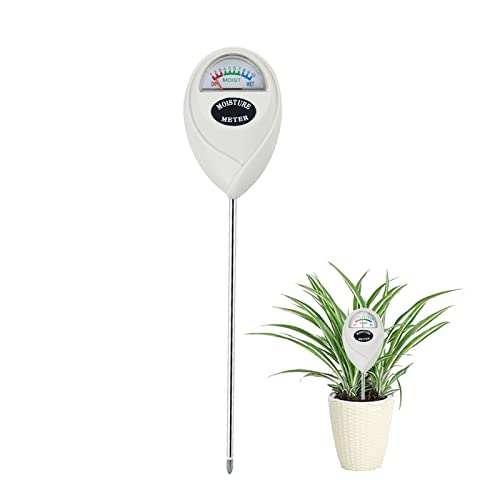
Best for: No-battery, quick checks for indoor or outdoor plants. Why: The meter provides fast readings directly in the root zone without electricity. The simple design is ideal for hands-off users, but it may lack the long-range durability of metal probes in tougher soils. Caution: Readings can be less accurate if the probe is not fully inserted to root-level depth.
Antonki 2 Pack Soil Moisture Meter

Best for: Home gardeners managing several plants. Why: This two-pack offers fast, accurate moisture readings with a color-coded 10-scale dial (red for dry, green for moist, blue for wet). It’s simple to use near-root zones. Limitation: Requires insertion near the roots; uneven watering can complicate readings if soil is compacted.
YAMRON 4-in-1 Soil Moisture Meter

Best for: Gardeners who want data beyond moisture. Why: This 4-in-1 tester measures soil moisture, pH, temperature, and light. The large backlit LCD makes readings easy in any lighting. It uses batteries, so consider battery management as a potential ongoing requirement. Caution: Digital readings can be influenced by battery level; replace batteries as needed for reliable data.
Buying Guide: Key Purchase Considerations
- Measurement depth: Choose a meter with a probe length that reaches the root zone for your pot sizes and garden beds.
- Power source: Battery-free meters are simple but may lack advanced features; digital meters offer multiple readings but require battery maintenance.
- Display readability: Look for large, color-coded dials or backlit LCDs for easy interpretation in bright or dim conditions.
- Material durability: Stainless steel probes resist corrosion better for long-term outdoor use; plastic handles keep weight light.
- Number of functions: For straightforward watering, a 1- or 2-function meter suffices; for broader care, a 4-in-1 meter adds pH and light.
- Usage guidelines: Some meters advise limited time in soil to prevent probe wear; follow manufacturer recommendations for longevity.
- Value vs. need: If you manage many plants, consider multi-pack options to cover more pots without buying extra meters.
FAQ
- What is a soil moisture meter best used for? It helps determine when the soil moisture at the root zone is dry, moist, or wet, guiding watering decisions to avoid over- or under-watering.
- Do I need batteries for these meters? Some are battery-free, while others include a digital display that requires batteries. Check the product details before purchase.
- How deep should the probe go? Probe depth should reach the root zone of the plant; for larger pots, longer probes are preferable.
- Can these meters replace watering schedules? They aid watering decisions but should be used with general plant care and weather considerations.
- Are metal probes guaranteed to last? Probes can corrode if left in soil for extended periods; remove them after use and follow care instructions to extend life.
- Which meter is best for beginners? The XLUX models with easy-to-read dials and battery-free operation are typically beginner-friendly.