Answering the needs of farmers, processors, and traders, this guide highlights reliable moisture testers for grain. Each highlighted model helps you determine moisture content quickly and accurately, reducing drying loss and storage risk. Best for farmers needing portability, best for processors seeking versatile grain types, and best for traders prioritizing fast results and data storage. Below are five top options, with clear reasons for who they suit, plus a practical buying guide and a brief FAQ.
Summary table of selected products
| Product | Best For | Key Benefit |
|---|---|---|
| Brolangt Grain Moisture Tester | Farmers, small processors | High accuracy ±0.5%, 25 grain profiles, ATC |
| GOYOJO GS25A | Field teams, traders | 25 grain types, data storage, portable |
| Agratronix MT-Pro | Producers needing multilingual readouts | 40 grain scales, carry case |
| Antstone 43-in-1 | All-in-one farm operations | 43 varieties, ±0.5%, backlit |
| AMTAST MT-25 | Diversified crops | 25 grains, moisture + temperature display |
Grain Moisture Tester Agriculture Portable Meter — Brolangt
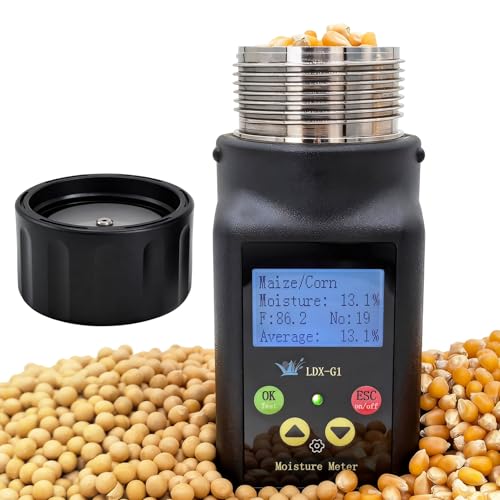
Best for: small-to-mid scale farms and local producers needing quick, reliable readings across multiple grain types. This model supports 25 crop profiles, including corn, soybean, and paddy rice, and uses automatic temperature compensation to stabilize results in varying storage conditions. An ATC feature helps prevent misreads caused by ambient temperature shifts, making it suitable for field checks and warehouse checks alike. It also provides a backlit display for low-light environments and a simple interface for straightforward operation.
Why selected: Its ±0.5% accuracy reduces the risk of overdrying and storage losses. The built-in language support makes it useful for diverse teams, and the data storage feature aids record-keeping over harvest seasons. Caution: rely on calibration checks for precise comparisons across different grain types and seasons.
Grain Moisture Tester Portable Cup-Type Meter — GOYOJO (GS25A)

Best for: field staff and traders who handle a wide variety of grains. This unit supports 25 grain types and emphasizes high precision with temperature compensation. Its portable cup-type design and straightforward LCD display facilitate in-field testing and quick decision-making during procurement or processing. It emphasizes reliable moisture data that can drive loading and storage decisions.
Why selected: The GS25A’s broad grain compatibility makes it adaptable across diverse inventories. The data storage capability aids traceability, while the rugged, lightweight form supports movement between sites. Limitation: as with many cup-type meters, repeated calibration ensures consistency when switching grain types.
AgraTronix MT-Pro Portable Moisture Tester for Grain

Best for: professionals needing a rugged tester with a broad display of grain scales and a carry case for durability in field operations. The MT-Pro offers direct readouts for 40 grain scales and an illuminated multilingual display, supporting quick interpretation in busy environments. It reads high moisture content and remains practical for on-site testing at farms or processing facilities.
Why selected: Its wide scale coverage makes it a flexible choice for mixed inventories. The carried case and multilingual display improve usability in diverse teams. Caution: ensure compatibility with your most common grains to avoid unnecessary recalibration for rare items.
AgraTronix MT-16 Grain Moisture Tester

Best for: buyers who need a simple, reliable handheld tester with 16 grain scales and automatic test averaging. This model emphasizes straightforward operation and dependable performance for routine grain moisture checks, suitable for sellers and small-scale growers who require quick turnarounds at markets or storage facilities.
Why selected: The ability to automatically average up to 99 test results supports consistent decision-making. It’s a practical choice for users who test multiple lots in a day. Limitation: fewer grain scales than some multi-grain models, which may require switching devices for very unusual grains.
GOYERRNES Professional Grain Moisture Meter

Best for: producers handling a wide spectrum of crops who require advanced measurement capabilities. This meter reports moisture content, weight, density, and temperature for over 20 grains, offering a fast 10-second read. It supports a broad moisture range with stable repeatability, making it a good fit for procurement decisions and quality checks.
Why selected: The combination of multiple measured properties and quick results support integrated quality control. Choose this if you need simultaneous data points beyond moisture alone. Caution: calibration and weight verification are important for consistent results across different grain types.
AMTAST Grain Moisture Meter MT-25
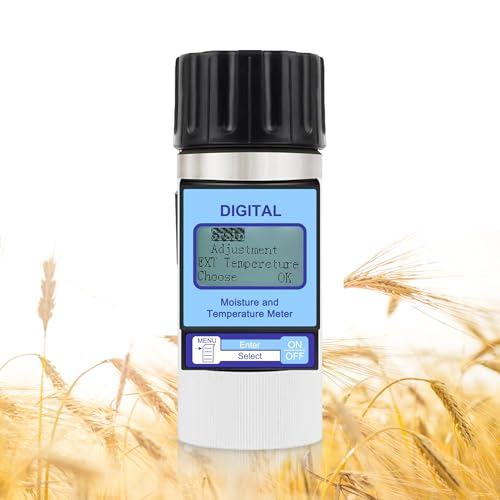
Best for: users needing a compact, versatile tester for 25 grains with both moisture and temperature readouts. The MT-25’s dual display helps operators monitor critical storage conditions alongside moisture percent, which is useful for diverse crop handling and storage planning.
Why selected: The 25-grain support and combined moisture/temperature display streamline field workflows. External temperature sensor support adds flexibility for unique environments. Caution: ensure environmental conditions don’t exceed the meter’s comfort range to avoid drift.
Buying Guide: How to Choose the Right Grain Moisture Tester
- If you handle many grain types, prefer testers with 25+ grain profiles or 40 scales for future-proofing.
- accuracy and consistency: Look for ±0.5% accuracy and features like automatic temperature compensation and test averaging to reduce variability.
- display and readability: Backlit displays and multilingual options help in low-light settings and diverse teams.
- portability and durability: Field tests require handheld, rugged designs with carry cases or protective housings.
- data handling: Data storage, test averaging, and easy export support better traceability and compliance.
- special features: External temperature sensors, density and weight measurements, or adjustable scales add versatility for procurement and storage decisions.
Frequently Asked Questions
- What moisture range should I expect from a grain tester? Most testers measure a typical range from about 5% to 40%, depending on grain type. Check the product specs for your crops.
- Is ±0.5% accuracy reliable for storage decisions? Yes, this accuracy is common for in-field grain testers and helps minimize overdrying and spoilage when used with proper calibration.
- Do testers require calibration? Many models include calibration features or require calibration with a standard weight or reference material to maintain accuracy across batches.
- Can I test multiple grains with one device? Several models support 25–40 grain profiles, which is ideal for farms handling various crops.
- What is the benefit of temperature compensation? Temperature compensation reduces readings drift caused by ambient conditions, improving consistency across days and locations.
- Are data storage features important? Data storage helps track moisture history for batches, aiding inventory management and compliance.