Answering the question for succulent lovers: choose a natural or gentle fertilizer designed for cacti and succulents that feeds slowly, supports root growth, and avoids overfeeding. This guide highlights five top options that balance nutrients, are easy to apply, and suit common indoor or outdoor setups. Ideal buyers include beginners seeking simple feeds, hobbyists wanting steady color, and those growing in well-draining mixes like pumice or perlite. Use the table below to compare key features at a glance and pick the best match for your collection.
- Product Focus: slow-release or liquid feeds formulated specifically for succulents and cacti.
- Best For: convenience, consistent nutrition, or organic options depending on the user’s preference.
- Application: granular, spray, or direct soil dosing to minimize salt buildup.
Compare quick facts
| Product | Type | Best For | Notable Benefit |
|---|---|---|---|
| The Grow Co Succulents & Cactus Plant Food | Granular/ Liquid Alternate | Low-maintenance setups | Long-lasting, 9 months |
| Miracle-Gro Indoor Plant Food for Cactus and Succulent | Liquid | Instant feeding for indoor setups | Instant nutrient delivery |
| Miracle-Gro Succulent Plant Food | Liquid | Two-week feeding cycles | Direct soil pumps |
| Down To Earth Organic Cactus & Succulent Mix | Granular Organic | Organic gardeners | Low nitrogen, high potassium |
| TPS NUTRIENTS Succulent Fertilizer | Liquid | Balanced growth | Compact growth support |
The Grow Co Succulents & Cactus Plant Food

The Grow Co offers a balanced mix with low NPK to gently feed cacti and succulents. It supports root development, color vibrancy, blooms, and stem growth in pots with typical succulent mixes. This product is a practical choice for growers who prefer a long-lasting solution and can apply as a granular or liquid alternative. Best for growers who want less frequent feeding while maintaining steady health.
Who it’s best for: beginners and busy plant owners who want a simple, long-lasting feeding option. Limitations: may require careful application to avoid concentrated pockets in very small pots.
Miracle-Gro Indoor Plant Food for Cactus and Succulent

This Miracle-Gro formula is designed to promote resiliency against environmental stressors and to feed instantly. Its formulation emphasizes phosphorus and potassium, helping succulents and cacti thrive in indoor environments. It’s a strong pick for homes with regular watering where quick, visible nutrition helps maintain vigor between repottings.
Who it’s best for: indoor succulent enthusiasts seeking rapid results. Limitation: liquid feeds can require more frequent applications to maintain steady nutrition.
Miracle-Gro Succulent Plant Food

Miracle-Gro’s succulent-specific liquid food provides quick nutrition with simple dosing. The product is designed for two-week feeding cycles and includes easy pump application. It’s ideal for those who prefer straightforward, repeatable care for compact, resilient growth in potted succulents and cacti.
Who it’s best for: users who want a simple, pump-style liquid feeding routine. Limitation: can be more prone to overfeeding if misapplied in very small pots.
Down To Earth Organic Cactus & Succulent Mix
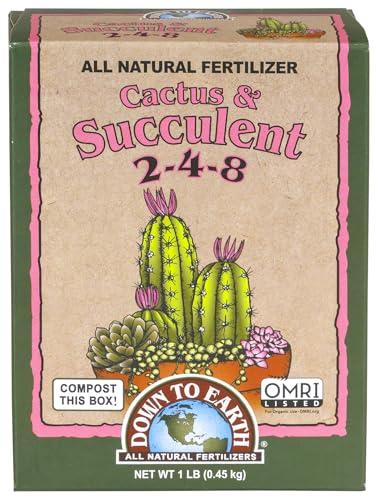
This organic blend is low in nitrogen and high in potassium, designed to support compact, healthy growth and flowering. It’s OMRI-listed and safe for organic gardening, providing a gentle feeding approach for sensitive desert plants in well-draining soils. Best for organic gardeners who want a natural option with balanced nutrients.
Who it’s best for: organic or hobby gardeners prioritizing gentler nutrition. Limitation: can require more careful soil preparation and may not deliver rapid growth like some synthetic formulas.
Succulent Fertilizer – Liquid Plant Food

This TPS NUTRIENTS formula focuses on balanced nutrition to promote compact growth with vibrant color. It emphasizes gentle nutrition suitable for potted succulents, supporting steady root development and firm leaves without encouraging leggy growth. It’s a solid option for growers wanting predictable, controlled nutrition in a liquid format.
Who it’s best for: practitioners seeking steady, balanced growth. Limitation: may require more frequent feeding in very dry, hot conditions for best results.
Buying Guide
- What type of fertilizer suits your potting mix? Granular options are long-lasting and low-maintenance with well-draining soils. Liquid feeds offer quick results but may require more frequent applications.
- Are you growing indoors or outdoors? Indoor setups often benefit from balanced, lower-NPK formulas to prevent salt buildup in limited roots. Outdoor or sunny climates may tolerate a wider range of feeding strengths.
- Organic vs synthetic? Organic blends are gentler and OMRI-listed, ideal for organic gardens. Synthetic or semi-synthetic liquids can deliver faster responses but require careful dosing to avoid burn in small pots.
- Frequency and pot size? Smaller pots need lower concentrations and more frequent monitoring. Long-lasting granules are advantageous for busy owners. Pumps and ready-to-dose liquids simplify routine care.
- Plant health goals? If you want more flowering, pick formulas with higher potassium. For root development, look for balanced micronutrients like calcium and magnesium as part of the mix.
FAQ
What is the best fertilizer frequency for succulents?
Many succulents respond well to feeding every 2–4 weeks during active growing seasons, with reduced or stopped feeding in winter dormancy for temperate plants.
Can I use household fertilizers for succulents?
Household fertilizers are not recommended unless they are specifically labeled for succulents or have a low nitrogen content suitable for drought-tolerant plants.
Should I avoid fertilizing succulents in pots with cactus soil?
Yes. If your soil already contains slow-release nutrients or minerals from cactus potting mixes, additional fertilizer should be applied carefully to prevent salt buildup.
Are organic succulents fertilizers safer for pets?
Organic formulas tend to be gentler, and many are safer for homes with pets. Always check product labels for pet-safety information and keep applications away from curious pets.
What signs indicate over-fertilization?
Yellowing leaves, leaf burn, or unusually rapid but weak growth can indicate excess salts or nutrients. Flush the soil with water if you suspect overfeeding.