Begin with the right natural wetting agent to fix hydrophobic soils, improve water uptake, and support healthier root growth. This guide compares five top all-natural or plant-based products best suited for homeowners, hobbyists, and professional landscapes seeking sustainable soil moisture management. Each option is evaluated for its suitability, practicality, and potential limitations so you can choose the right match for your yard, garden, or turf.
Summary table of selected products:
| Product | Best For | Why It Stands Out | Notes |
|---|---|---|---|
| GS Plant Foods Yucca Extract Wetting Agent (8 oz) | Dry, hydrophobic soils; stressed plants | All-natural yucca saponins enhance wetting and nutrient uptake | Concentrate; targets soil waxiness |
| that Yucca Stuff (32 oz) | Organic gardens and sustainable setups | 97% Yucca Schidigera extract; OMRI-listed | Citrus and humic acids add soil conditioning |
| that Yucca Stuff (8 oz) | Smaller projects and potted plants | Same 97% Yucca base; compact bottle | OMRI-listed; easy dosing for limited spaces |
| GS Plant Foods Wetting Agent (1 gallon) | Lawns and larger landscapes | All-natural yucca-based wetting aid; better for larger areas | Concentrate; versatile application |
| Turf Titan Hydro Holder Soil Wetting Agent (32 oz) | Lawns with dry, compacted soil | Hydro Holder system supports even moisture distribution | Includes hose-end sprayer compatibility |
GS Plant Foods Yucca Extract Wetting Agent

Best for hydrophobic soils in home lawns and garden beds. The product uses yucca Schidigera extract (about 60% saponin) to act as a natural surfactant, helping water penetrate the soil and aiding nutrient uptake. It can reduce the amount of water needed to flush mineral buildup and support deeper moisture absorption in stressed plants. Limitations include reliance on plant-derived components; effectiveness may vary with soil type and climate. Best for buyers seeking an all-natural solution without synthetic additives.
that Yucca Stuff (32 oz)

Best for organic production and larger soil conditioning tasks. This product features 97% Yucca Schidigera extract with citric and humic acids to maximize water penetration and retention, while supporting stronger roots. It’s OMRI-listed, making it appealing to organic gardeners and sustainable operations. A limitation is the higher concentration; use as directed to avoid over-application in sensitive plants.
that Yucca Stuff (8 Oz)
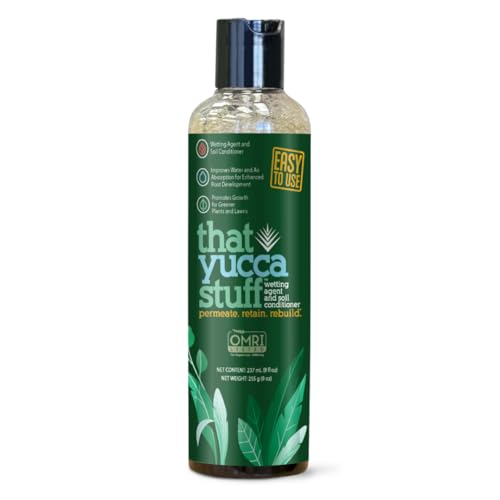
Best for small-scale projects, potted plants, and spot-treatments. Like the 32 oz version, this product uses 97% Yucca Schidigera extract with a focus on improving water movement androot-zone hydration. It’s a compact option with the same organic formulation. Choose this if you need precise dosing for containers or tiny plots; limitation is the smaller volume per bottle.
GS Plant Foods Wetting Agent

Best for larger lawn areas and deeper soil treatment. This all-natural yucca-based wetting agent improves water uptake, penetrates waxy soil coatings, and supports healthier leaves and roots. It helps to flush mineral buildup by reducing water requirements for soil saturation. Limitation: results depend on soil structure and existing hydrophobic layers; may require repeated applications for optimal performance.
Turf Titan Hydro Holder Soil Wetting Agent

Best for lawns that need quicker moisture distribution with minimal runoff. This product is designed to work with a hose-end sprayer, promoting even moisture delivery in dry and compacted soils. It helps lawns stay green longer in heat by suspending moisture in the soil and reducing surface runoff. A potential limitation is that performance depends on proper sprayer use and application rate.
Buying Guide
What should I look for in a natural soil wetting agent?
- Active ingredient: Prefer yucca-based extracts or other plant-derived surfactants for natural wetting and improved absorption.
- Form and size: Choose based on project scope—smaller bottles for containers, larger containers for lawns or beds, and compatible sprayer systems for large areas.
- OMRI or organic certification: If you’re gardening organically, OMRI-listed products align with your standards.
- Soil type compatibility: Hydrophobic soils need stronger surfactants; compacted or clay soils may benefit from higher concentrations and repeated applications.
- Safety and environmental impact: Look for biodegradable, plant-based formulas safe for people, pets, and the environment.
Application considerations: Always follow label directions for dilution and timing. When in doubt, start with a lighter application and observe plant response before increasing the rate. For larger lawns, consider products that are compatible with hose-end sprayers to ensure even distribution.
What scenarios should guide my choice?
- Hydrophobic soils in lawns or beds: A yucca-based wetting agent is typically effective for breaking waxy barriers and improving penetration.
- Organic gardens: Favor OMRI-listed Yucca products with natural ingredients and soil-conditioning additives like humic acids.
- Limited space or containers: A smaller bottle with clear dosing is practical and economical.
- Large landscapes: A gallon concentrate with a compatible sprayer reduces labor and improves uniformity.
FAQ
- Do natural wetting agents work on all soil types? They work best on hydrophobic or compacted soils but results vary with soil texture and organic matter.
- Can these products replace watering? They improve penetration and retention but do not replace regular irrigation; they reduce water waste by improving efficiency.
- Are OMRI-listed products safe for vegetables? OMRI-listed items are designed for organic production, but always follow label directions when used near edible crops.
- How often should I apply? Frequency depends on soil condition, weather, and plant stress; start with conservative applications and monitor results over several weeks.
- Will these affect beneficial soil organisms? Plant-based wetting agents are generally gentle, but observe soil biology and avoid over-application.
- Which is best for potted plants? Smaller bottles or concentrated products suitable for containers allow precise dosing and quick assessment of effectiveness.