Whether you’re protecting a coop run, a garden, or a temporary poultry enclosure, the right net fencing can keep predators out and your flock in. This guide highlights five top options that balance durability, portability, and ease of use. It’s ideal for backyard owners, small farmers, and homesteaders who want reliable chicken fencing without complex installation. Read on to compare features, ideal uses, and practical buying tips.
| Product | Best For | Notable Feature | Material |
|---|---|---|---|
| ORIVOGAS Plastic Mesh Fence | Gardeners and small flocks needing a temporary barrier | Upgraded reinforced edges, tangle-free setup | HDPE mesh |
| PPOLB Electric Poultry Fence Netting | Predator-prone farms, larger runs | Electric netting with humane deterrence | Conductive poly netting with fiberglass rods |
| RentACoop Non-Electric Fence Netting | Portable, non-electric solutions for backyards | Very flexible, easy to relocate | Plastic mesh |
| PotatoLife Plastic Mesh Fence | Temporary projects, construction sites, gardens | Reusable with zip ties; simple storage | Plastic mesh |
| FEED GARDEN Deer Fence Netting | Multi-target protection for larger plots | Complete protection kit with stakes and ties | Polyethylene deer netting |
ORIVOGAS Reinforced Plastic Mesh Fence

This 4×75 ft fence combines heavy-duty 55gsm HDPE weave with reinforced, tangle-free edges and ropes for quick installation. The 5/8-inch square mesh creates a clear barrier that deters deer, dogs, and other animals, making it suitable for gardens, poultry runs, and pet enclosures. It’s best for homeowners seeking a durable, versatile temporary barrier that’s easy to install and remove. Use this when you need a reliable, non-electric option for protecting plants and small animals. A caution: for very windy sites, extra staking may be required to prevent sagging.
Best for: Garden plots, backyard runs, and pet-safe perimeters that don’t require electricity.
Why selected: Strong, high-tensile weave with easy setup and multipurpose use.
PPOLB Electric Poultry Fence Netting
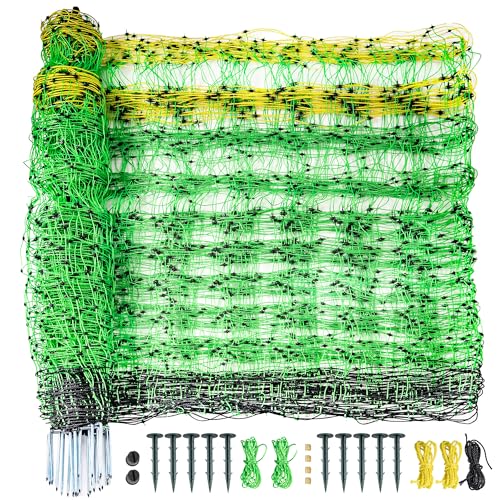
This 164′ long by 47.5″ high electric netting provides a humane, low-impedance shock to deter predators while allowing chickens to explore a designated area. It uses 14 horizontal strands with built-in fiberglass rods for solidity, and includes triple-braided stainless steel wire. It’s best for larger runs or areas with frequent predator pressure. Limitations: electric fencing requires an energizer and ongoing maintenance to ensure safety and effectiveness.
Best for: Predator-heavy environments and larger poultry runs where humane deterrence is desired.
Why selected: Combines portability with an effective deterrent mechanism.
RentACoop Non-Electric Chicken Fence Netting

This 48″ x 100′ portable plastic mesh fence is designed for quick setup, easy relocation, and flexible use. It’s ideal for backyards, coops, and gardens where a temporary boundary is needed without electricity. Best for: users who want a simple, movable solution and the option to customize length by cutting. A limitation: this option is non-electric and may require more frequent adjustments to maintain tension in windy conditions.
Best for: Temporary runs, garden boundaries, and flexible space planning.
Why selected: Highly portable and easy to configure for various layouts.
PotatoLife Plastic Mesh Fence Kit

This 4×100 ft roll includes 100 zip ties and is designed as a reusable temporary netting solution for gardens, construction zones, and animal barriers. It’s best for users who want a cost-effective, reusable fence that’s straightforward to deploy and store. Caution: long runs should be secured at multiple points to prevent sagging in wind or under weight of rain.
Best for: Reusable, versatile fencing for gardens and light-duty animal barriers.
Why selected: High flexibility with included zip ties for quick installation and reuse.
FEED GARDEN Deer Fence Netting Kit

This 7×100 ft kit uses a 3/4-inch mesh to block deer, birds, squirrels, and rabbits while allowing sunlight and airflow. It includes stakes and zip ties for immediate installation, making it a complete solution for larger plots. Best for: protecting expansive fruit trees, shrubs, and garden beds from multiple pests. Caution: larger mesh openings may allow some smaller pests to bypass if not properly staked.
Best for: Large garden beds and fruit plots needing broad pest protection.
Why selected: All-in-one package with stakes and ties for quick, scalable setup.
Buying Guide: Net Fencing For Chickens
What matters most: material, height, and mesh size
Choose high-density polyethylene (HDPE) or reinforced plastic for durability and UV resistance. For poultry safety, a height of 47–65 inches covers most chicken runs. Mesh size should be large enough to prevent entry by predators but small enough to prevent escape; 3/4 inch and 5/8 inch are common options.
Electric vs. non-electric fencing
Electric netting provides strong predator deterrence at the cost of needing an energizer and maintenance. Non-electric fences are simpler, quieter, and easier to manage but may require sturdier staking in windy locations.
Portability and setup
Portable fences are ideal for seasonal flocks, rotating pastures, or temporary runs. Look for rolled nets with ground stakes or fiberglass posts for stability. Include zip ties or clips if the package lacks them.
Durability and reuse
UV protection extends the life of plastic materials. Reusability saves money and reduces waste; choose fences designed for multiple seasons with easy disassembly and storage.
Safety and pet considerations
Ensure the fence does not have sharp edges and that any electric components are clearly labeled and used according to safety guidelines. For families with kids, non-electric options minimize risk while still providing containment.
Installation tips
- Stake the corners first to establish tension paths.
- Check for sagging after heavy rain and adjust with additional stakes or ropes.
- Use proper ground anchoring around posts to prevent movement by strong winds.
Frequently Asked Questions
- What fence height do I need for chickens? – For most chickens, 4 to 5 feet is sufficient to deter escape and deter some predators, but flatter runs may require taller or more secure setups in predator-prone areas.
- Is electric fencing safe for my chickens? – Yes, when used with proper energizers and safety guidelines. It deters predators while allowing chickens to move within the fenced area. Avoid wiring that could cause injury.
- Can I use fencing designed for deer for chickens? – Yes, but ensure the mesh size and height are appropriate to prevent escape and protect against predators. Reinforcement may be needed for long runs.
- How long does a plastic mesh fence typically last? – Durability depends on UV exposure and weather, but many high-quality nets last multiple seasons with proper care and storage.
- Do I need to electrify every section? – Not necessarily. You can mix electric and non-electric sections based on predator risk, terrain, and mobility needs.
- What’s the best way to store fencing between seasons? – Clean, dry, and roll up in a cool, shaded area to prevent mold and material degradation.