When selecting a non-toxic bug spray for plants, choose formulas that deter or kill common pests without harsh synthetic chemicals. This guide highlights five plant-friendly options, suitable for indoor and outdoor use, and explains who benefits most from each product. The top picks favor homeowners with pets or children, urban gardeners, and anyone seeking easy, ready-to-use sprays that minimize residue on foliage and furniture.
Buyer overview at a glance:
| Product | Best For | Key Benefit |
|---|---|---|
| Mighty Mint Peppermint Oil Plant Protection Spray | General home gardens; houseplants | Plant-based pest deterrent with peppermint oil |
| Natria Neem Oil Spray | Houseplants and home gardens | Insecticide and fungicide in one; ready-to-use |
| Bonide Captain Jack’s Insecticidal Super Soap | Outdoor plants and mixed landscapes | Contact and ingestion kill; broad pest range |
| Mighty Mint Peppermint Oil Insect Repellent Spray | Indoor and outdoor spaces | Extra-strong peppermint protection |
| VermExon Peppermint Oil Insect & Pest Control Spray | Home and kitchen use | Plant-based, fast-acting pest control |
Mighty Mint Peppermint Oil Plant Protection Spray

Brand: Mighty Mint
Features: Plant-Based Pest Protection using peppermint oil to deter gnats, spider mites, aphids, and other pests. Safe when used as directed for households with pets and people.
Best for: Indoor and outdoor gardeners who prefer a natural, peppermint-based approach. This spray is chosen for its gentler plant care profile and ease of use, making it a strong general-purpose option.
Limitations: Peppermint formulations may be less effective against heavy infestations; best as a preventive or supplementary treatment when pests are low in number.
Natria Neem Oil Spray for Gardening

Brand: Natria
Features: A dual-action spray that acts as an insecticide and fungicide. Ready-to-use with a trigger sprayer; controls aphids, whiteflies, spider mites, and more while addressing powdery mildew and other diseases.
Best for: Gardeners seeking an all-in-one solution for both pests and fungal issues on houseplants and in home gardens.
Limitations: Neem oil efficacy can vary with temperature and plant type; must be applied according to label directions for best results.
Bonide Captain Jack’s Insecticidal Super Soap

Brand: Bonide
Features: An outdoor-ready spray that targets a broad range of pests including adelgids, aphids, caterpillars, and spider mites. Works through contact and ingestion, and is suitable for use on many garden plants and in greenhouses.
Best for: Outdoor gardens, ornamentals, and edible crops where a versatile, soap-based insecticidal option is preferred. It’s useful when multiple pest types are present.
Limitations: As an outdoor-only product, it may require reapplication after rain or irrigation; watch for leaf burn on sensitive plants during hot conditions.
Mighty Mint Peppermint Oil Insect Repellent Spray
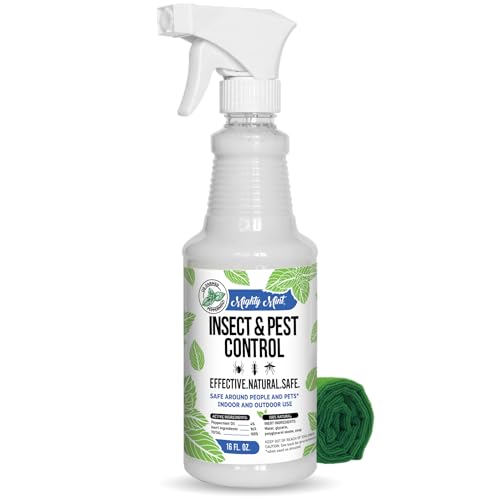
Brand: Mighty Mint
Features: Extra-strength peppermint oil formula designed for indoor and outdoor use. Safe for pets and people when used as directed; effective against spiders, ants, roaches, and more.
Best for: Homes needing a robust peppermint-based repellent for high-traffic areas like entryways and baseboards, as well as patios and living spaces.
Limitations: Strong peppermint fragrance can linger; consider using in areas with good ventilation and avoid applying on delicate fabrics where staining is a concern.
VermExon Peppermint Oil Insect & Pest Control Spray

Brand: VermExon
Features: Peppermint oil-based spray with rapid contact kill for ants, mosquitoes, roaches, spiders, and more. Emphasizes natural, family-safe ingredients and stable, residue-free formulation.
Best for: Homes seeking a plant-based solution with fast action and low residue on furnishings and fabrics. Suitable for kitchen and living areas when used as directed.
Limitations: Effectiveness may depend on pest type and exposure; for heavy infestations, additional measures may be needed.
Buying Guide: Non-Toxic Plant Pest Control Essentials
What should you consider when choosing a non-toxic plant spray?
- Pest target: Identify common pests in your space (aphids, gnats, spider mites, whiteflies, etc.). Some formulas target a broad range, while others excel against specific pests.
- Plant safety: Check directions for use on delicate plants. Some oils can cause leaf burn if misapplied or used in high concentrations.
- Indoor vs outdoor use: Outdoor products tend to be more robust for garden-wide applications; indoor formulas are often formulated to minimize fragrance and residue.
- Plant health benefits: Some products combine insecticidal and fungicidal actions, offering disease control alongside pest management.
- Application method: Ready-to-use sprays with trigger sprayers are convenient for quick coverage; consider nozzle type and spray pattern for thorough coating.
Frequently Asked Questions
- Are peppermint oil sprays safe for pets? Some peppermint-based sprays are labeled as pet-safe when used as directed. Always follow the label and keep pets away during application until the area is dry.
- Can I mix these sprays with other garden chemicals? Do not mix unless the label specifically allows it. Mixing can alter efficacy and increase risk of plant damage or adverse reactions.
- Will these sprays kill all bugs? They target many common pests but may not be effective against all insect species. For heavy infestations, integrated pest management is recommended.
- How often should I reapply? Reapply according to the product’s label, especially after rain or watering. Some formulas have longer residual effects while others require frequent use.
- Are these sprays safe for edible plants? Read the label regarding harvest intervals and any restrictions. Some products specify waiting periods before harvesting treated crops.
- Do these sprays leave residues on surfaces? Most plant sprays are designed to dry cleanly, but peppermint and essential oils can leave a faint scent or minor residue on soft fabrics; test on a small area first.