Answering the question “what nutrients are best for garden soil?” begins with choosing soil amendments that feed the soil biology, not just the plants. The right products boost microbial activity, improve structure, and supply essential elements for roots. This guide highlights five practical options—organized for quick comparison—so you can pick the right nutrient supplements for your garden, whether you’re growing vegetables, flowers, or container plants. The buyer profile for each product is noted to help you decide who benefits most from each option.
| Product | What It Does Best | Best For | Notes |
|---|---|---|---|
| Farmer’s Secret Soil Revitalizer | Activated humic acids to stimulate soil microbes | Soils needing microbial boost and faster compost-like effects | OMRI Listed; organic source |
| FoxFarm Soil Liquid Trio Pack | Three liquid fertilizers for growth, bloom, and fruit | All stages of plant development | Versatile for many plants |
| Miracle-Gro Organic Outdoor Potting Mix | Organic potting mix with quick-release fertilizer | Outdoor containers and mixed media | Feeds up to 2 months |
| Miracle-Gro Shake ‘N Feed Tomato, Fruit & Veg | Long-lasting balance of nutrients including calcium | Vegetables, tomatoes, and fruiting crops | Feeds up to 3 months |
| House & Garden Soil A&B | Base nutrients with humic and fulvic acids | Detailed nutrient program for root-to-plant transfer | Liquid nutrients, no bulking agents |
Farmer’s Secret Soil Revitalizer – Organic

Best for soil that needs microbial stimulation. This liquid soil amendment uses activated humic acids derived from organic sources and is OMRI certified, ensuring organic handling. It encourages microbial activity similar to composting but faster, helping soils with poor biology or low organic matter. Apply monthly during the growing season for best results. Suitable for a wide range of plants, including vegetables, ornamentals, and grasses.
Who it’s best for: gardeners seeking an organic, soil-first approach to boost soil life and nutrient cycling without synthetic additives. Caution: data indicates it’s a monthly treatment; avoid applying more frequently than recommended to prevent overstimulation of microbes.
FoxFarm Soil Liquid Trio Pack

Best for a complete nutrition program across growth stages. The trio includes Tiger Bloom, Grow Big, and Big Bloom, designed to support vigorous growth, bud development, and abundant fruit. This set is versatile for a variety of plants, including roses, tomatoes, houseplants, and vegetables. Best used as a coordinated feeding plan to maximize nutrient uptake and plant performance.
Who it’s best for: gardeners who want a ready-to-use, stage-specific feeding system in liquid form. Better for those managing multiple plant types or container gardens. Caution: ensure proper dilution and timing to avoid nutrient burn on sensitive plants.
Miracle-Gro Organic Outdoor Potting Mix

Best for container gardening with a ready-to-use organic base. This mix contains a quick-release fertilizer to feed plants for up to two months and is made with responsibly sourced peat. It’s suitable for outdoor container plants such as flowers, vegetables, herbs, annuals, and perennials. Choose this if you want a convenient base mix that supports initial growth and container performance.
Who it’s best for: container gardeners and those starting leafy or flowering plants in pots. Limitation: the quick-release fertilizer provides short-term nutrition; you may want to supplement with slow-release options for sustained feeding.
Miracle-Gro Shake ‘N Feed Tomato, Fruit & Veg

Best for long-term feeding of vegetable crops, including tomatoes and fruiting plants. This plant food nourishes above and below the soil for up to three months and includes calcium to help form stronger cell walls, contributing to better quality and longer-lasting fruits. It’s suitable for in-ground, container, and indoor setups.
Who it’s best for: gardeners focusing on vegetables, tomatoes, and fruiting plants who want extended feeding without frequent reapplication. Caution: avoid overuse on seedlings or very small plants, as concentrated calcium can affect growth if not properly diluted or timed.
Rapitest Soil Test Kit
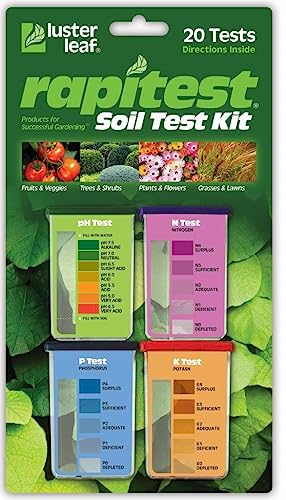
Best for at-home soil analysis. This kit measures soil pH, nitrogen, phosphorus, and potassium using color comparators and a capsule system. It includes components for up to 20 tests and helps you tailor amendments based on actual soil chemistry. Use this when you want to verify soil readiness before applying nutrients.
Who it’s best for: gardeners who prefer data-driven decisions and want to calibrate fertilizer programs to soil conditions. Limitation: results are approximate and may require follow-up testing for precise recommendations.
House & Garden Soil A&B Base Nutrient 1L

Best for a precise base nutrient program. Soil A&B base nutrients are liquid and contain no bulking agents, facilitating efficient transfer from the root zone to the plant. The formulation includes humic and fulvic acids along with Eddha-Fe and other trace elements for enhanced nutrient availability.
Who it’s best for: experienced gardeners who follow a structured nutrient plan and want clean, efficient base nutrients. Caution: this is a two-part system requiring careful mixing and timing for optimal results.
Buying Guide
What to consider when choosing soil nutrients
- Soil health goals: If soil biology is weak, start with products that boost microbes (like humic acids) or add organic matter.
- Plant type: Vegetables may benefit from calcium-rich feeds; flowering plants may require balanced nitrogen, phosphorus, and potassium.
- Delivery method: Liquids provide quick uptake; solids or potting mixes offer longer-term support; consider container vs. in-ground gardening.
- Organic vs synthetic: OMRI-listed products appeal to organic gardens; synthetic base nutrients can be more precise for certain crops.
- Frequency and timing: Follow label directions to avoid over-fertilizing or nutrient burn; some products are monthly, others last several months.
How to build a simple nutrient plan
- Test soil pH and baseline nutrients with a kit if possible.
- Choose a base mix to improve soil structure and biology (humic acids or organic compost boosters).
- Supplement with stage-specific feeds during growth phases (growth, bloom, fruiting).
- Monitor plant response and adjust feeding intervals or concentrations accordingly.
FAQs
- What nutrients are essential for garden soil?
- When should I use a soil test kit?
- Are organic soil amendments preferable?
- Can I mix multiple nutrient products?
- How long do nutrients last in the soil?
- Is testing necessary for every garden?
Key nutrients include nitrogen, phosphorus, potassium (NPK), calcium, magnesium, sulfur, and trace elements. Soil biology and organic matter help make these nutrients available to plants.
Use a soil test kit before planting and periodically during the season to tailor amendments to soil needs.
Organic amendments improve soil structure and microbial life, but may act more slowly than synthetic options. OMRI-listed products support organic gardening.
Yes, but follow label directions and avoid over-concentration. Some products are designed to be used together (like a grow/bloom trio) while others should be staggered.
Retention varies by product type. Quick-release fertilizers work for weeks, while slow-release or liquid programs can extend feeding to months with proper intervals.
Testing provides precise guidance for soil amendments, especially for large or high-value plantings, but casual gardeners can rely on symptom-based adjustments and labeled product cycles.