When choosing oil for a lawn mower, select a 4-stroke engine oil that matches your mower’s needs and climate. This guide highlights five compatible options that balance wear protection, temperature performance, and ease of starting in various seasons. Best for standard push mowers, riders, and outdoor power equipment, these oils help keep engines cooler, cleaner, and longer-lasting. The buyer’s table below summarizes key details to compare at a glance.
| Product | Brand | Viscosity | Size |
|---|---|---|---|
| STP Premium Small Engine 4 Cycle Oil Formula SAE10W-30 | STP | SAE 10W-30 | 32 oz |
| Lucas Oil 11314 SAE 10W-40 Lawn Mower Oil | Lucas Oil | SAE 10W-40 | 1 Quart |
| Lucas Oil 11313 SAE 10W-30 Lawn Mower Oil | Lucas Oil | SAE 10W-30 | 1 Quart |
| TRIAX Power 4-Stroke SAE 30W Full Synthetic | Triax | SAE 30W | 1 Gallon |
| Briggs & Stratton 100074 5W30 Synthetic Engine Oil | Briggs & Stratton | SAE 5W-30 | 32 oz |
STP Premium Small Engine Oil 10W-30

Best for general-purpose small engines, including lawnmowers, generators, and tractors. This 32-ounce bottle is a synthetic blend designed for all-weather starts and high-temperature resistance. It is formulated to resist thermal breakdown, supporting engine longevity in seasonal use. Best for homeowners with diverse outdoor equipment who prefer a single oil option for multiple machines. A potential limitation is that some users may prefer full synthetic for extreme heat, though this blend balances cost and protection.
STP Premium Small Engine 4 Cycle Oil Pack (2)

Better for buyers who want bulk oil for multiple small engines in one purchase. Each 32-ounce bottle is the same all-weather formula as single packs, offering consistent wear protection and easier starts. Choose this if you own more than one mower or outdoor tool and want uniform oil across devices. Caution: Per-pack data is listed, so verify total ounces if filling multiple machines at once.
Lucas Oil 11314 SAE 10W-40 Lawn Mower Oil
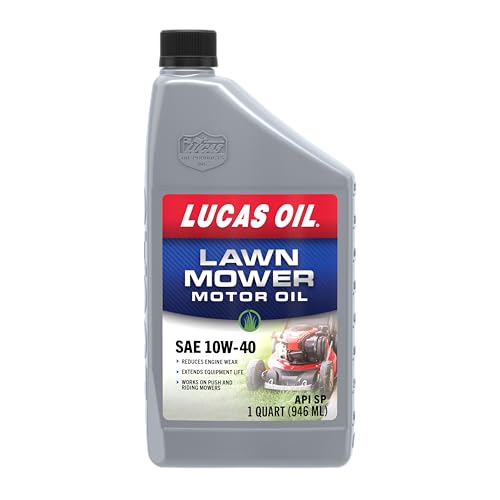
Best for engines operating under higher thermal stress or in warmer climates. The 10W-40 viscosity provides robust protection against wear and overheating, helping extend equipment life for both push and riding mowers. If your mower’s manual calls for 10W-40 or you face hotter seasons, this option is advantageous. Limitation: Some zero-turn or lighter-duty engines may run well on 10W-30 as well, so check your manual before switching viscosities.
Lucas Oil 11313 SAE 10W-30 Lawn Mower Oil
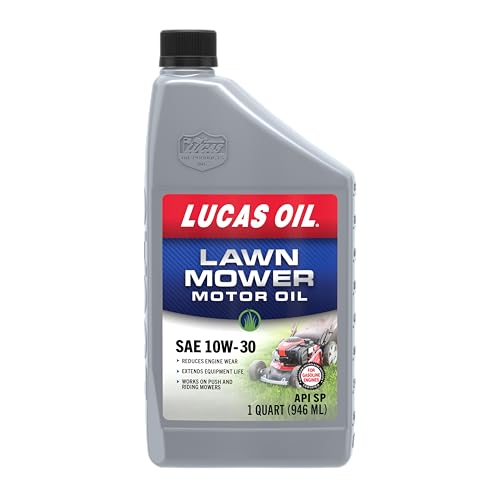
User-friendly choice for standard lawn mower maintenance. The 10W-30 viscosity supports year-round use in temperate climates and provides reliable wear protection for both push and riding mowers. Best for buyers who want a familiar, widely available oil with balanced cold-weather starting and hot-weather protection. Caution: Some high-performance engines may benefit from different weights during extreme conditions.
TRIAX Power 4-Stroke SAE 30W
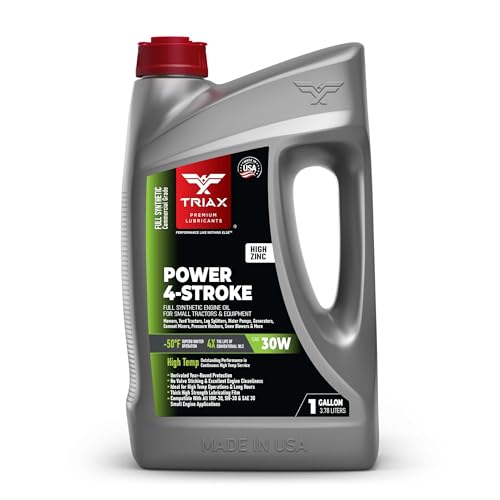
Best for engines needing strong wear protection and long-life performance under heavy loads. This 1-gallon full synthetic 30W oil is designed for high-zinc content to reduce wear in small engines, with all-season performance from -40°F to 130°F. Suitable for mowers, generators, and other equipment operating under extended workloads. Limitation: The higher viscosity may not be ideal for very cold starts in extremely cold climates if not warmed up.
Briggs & Stratton 100074 5W-30 Synthetic Oil

Best for air-cooled four-stroke engines requiring synthetic protection. The 5W-30 grade offers good cold-start performance and strong protection in milder cold seasons, with high-temperature stability for hot afternoons. Choose this if your mower or small engine manual specifies 5W-30 or you prefer synthetic formulations for longevity. Limitation: Some older engines may require different viscosity; always match to manufacturer guidance.
Buying Guide: Key Considerations For Small-Engine Oils
- Viscosity compatibility: Match the oil weight to your climate and mower manual. Lower numbers (like 5W-30) aid cold starts; higher numbers (like 10W-40) help in heat and heavier use.
- Oil type: Synthetic blend versus full synthetic vs mineral. Blends offer good protection at lower cost; full synthetics provide enhanced protection in extreme conditions.
- All-season performance: Look for formulas designed for easy starts across seasons and resistance to thermal breakdown in high temperatures.
- Wear protection: Oils with additives like zinc and detergents help reduce engine wear and keep deposits from forming.
- Engine compatibility: Always follow the mower’s manual. Some engines tolerate broader ranges, while others require a specific viscosity.
Frequently Asked Questions
- How often should I change oil in a lawn mower? Answer: Follow the manufacturer’s recommended interval; a typical range is every 25–50 hours of use or at least once per mowing season.
- Can I mix different brands of oil? Answer: It’s best to avoid mixing brands or viscosities. If necessary, ensure compatibility and aim for a single specification for consistency.
- What does 10W-30 mean? Answer: It indicates the oil’s viscosity. The first number (10W) is for cold starts; the second (30) is for operating temperature.
- Is synthetic oil necessary for my mower? Answer: Not always, but synthetic blends or full synthetic oils offer better protection under heat and heavy use and may extend engine life in demanding conditions.
- Which oil is best for cold climates? Answer: Oils with lower cold-temperature viscosity, such as 5W or 10W, improve cold starts in winter conditions.
- Should I use oil with high zinc content? Answer: Oils with higher zinc can improve wear protection for small engines, especially under heavy loads.