Choosing the right organic compost can boost soil vitality, improve moisture retention, and support robust vegetable yields. This guide highlights five top organic compost products ideal for vegetable beds, raised gardens, and container Veg plots. Each option emphasizes natural ingredients, nutrient density, and low odor where applicable to suit both outdoor and urban setups.
Summary table of selected products:
| Product | Brand | Key Benefit |
|---|---|---|
| Michigan Peat Compost And Manure Blend | Garden Magic | Odor-free blend with nutrients and minerals for soil vitality |
| Back to the Roots 25.7 Qt Organic Premium Compost | Back to the Roots | Peat-free, moisture-friendly mix for raised beds and pots |
| Charlie’s Compost Odor Free Organic Fertilizer | Charlie’s Compost | Low-odor, soil conditioner with added biochar |
| R&M Organics Premium Organic Compost | R&M Organics | All-purpose, high-nutrient compost ideal for fruits, vegetables, and lawns |
| Old Potters Organic Compost | Old Potters | Plant-based, 100% organic soil amendment for stronger growth |
Each option below is evaluated for suitability in vegetable gardens, ease of use, and overall value for organic growing.
Michigan Peat Compost And Manure Blend

The Garden Magic blend combines organic compost with animal manure to enrich garden soil and raised beds. It provides essential nutrients for plant growth and soil vitality while maintaining an odor-free profile suitable for home gardens. This ready-to-use mixture is designed to improve soil structure, promote healthy root systems, and support vegetables, flowers, and grasses. Its comprehensive nutrient profile helps plants access the minerals they need during key growth stages.
Back to the Roots Organic Premium Compost

This 100% organic, peat-free mix uses upcycled plant matter and wood fines sourced in the USA. It’s designed for raised beds and container planting, delivering a balanced nutrient base to support herbs, vegetables, and fruits. The blend includes yucca extract for moisture control, dolomitic limestone for pH balance, and gypsum to improve water absorption, helping plants cope with varying weather while reducing maintenance in the garden.
Charlie’s Compost Odor Free Organic Fertilizer

Charlie’s Compost emphasizes odor-free performance, making it suitable for urban and indoor gardens. It serves as both a soil conditioner and seed starting mix, enriching soil structure and microbiology for healthier root systems. The product also aligns with organic gardening standards by supporting microbial activity essential for sustainable soil health and ongoing plant vigor.
R&M Organics Premium Organic Compost
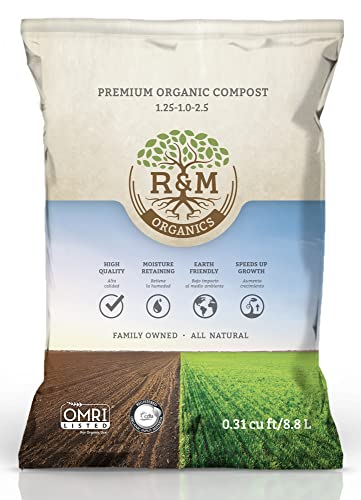
R&M Organics highlights all-purpose use with a focus on nutrient-dense inputs derived from dairy cow manure. Suitable for fruits, vegetables, flowers, lawns, and trees, this compost is designed to be applied in thin layers to existing gardens or mixed into new soil. The product emphasizes a low-odor, aerated composting process that reduces the risk of harmful bacteria and weed seeds while delivering essential nutrients for steady plant growth.
Old Potters Organic Compost

Old Potters offers a plant-based, 100% organic compost designed to boost soil health and nutrient availability. It’s formulated to improve aeration and water retention, helping plants access essential nutrients more efficiently. The sustainable packaging and materials support eco-friendly gardening practices, making it suitable for both outdoor vegetable plots and indoor containers that rely on steady soil structure.
Buying Guide
Key purchase considerations for organic compost in a vegetable garden:
- Source and ingredients: Look for compost that emphasizes natural materials (manure, plant matter) and minimal synthetic additives. Peat-free formulas tend to be more sustainable.
- Odor and suitability for indoor use: Odor-free options are preferable for urban gardens and indoor seedlings.
- Texture and drainage: A well-balanced mix improves aeration and moisture retention, supporting root development in various bed sizes.
- Nutrient profile: Ensure the product contains a balanced mix of essential nutrients (nitrogen, phosphorus, potassium) to support vegetables through growth stages.
- Application method: Consider whether the product is ready-to-use or needs mixing with existing soil. Raised beds, pots, and seed starting mixes may require different formulations.
- Safety and certifications: OMRI-listed or USDA organic-listed products provide assurance for organic gardening requirements.
- Environmental impact: Peat-free options and locally sourced ingredients reduce ecological footprint and support sustainable gardening practices.
When choosing, align the compost with your garden type (raised beds, in-ground plots, or containers) and your maintenance preferences. Cross-reference product features with garden goals such as root vigor, yield potential, and long-term soil health. A well-chosen organic compost program helps maintain soil structure, improves water efficiency, and supports continued harvests across seasons.