Find the best organic fertilizer for hydroponics to boost vegetative growth, root development, and healthy yields. This guide prioritizes products that are effective in water-based systems, easy to mix, and built around living biology. Best for home growers, apartment setups, and small to medium hydroponic operations seeking natural nutrient sources. The top five picks below are selected for balance, practicality, and clear nutrient support in hydroponic environments.
| Product | Best For | Key Benefit |
|---|---|---|
| Nature’s Way Soil Organic Hydroponic Nutrients | Budget-conscious hydroponics | Fermented duckweed, kelp blend for nutrient efficiency |
| FoxFarm Grow Big Hydroponic Plant Food | Vegetative growth | Earthworm castings, micronutrients |
| HiThrive 32oz Aeroponics & Hydroponics Liquid Plant Food | Consistent feedings | 4-3-6 NPK, up to 96 feedings |
| MARPHYL All-Purpose Plant Food | Balanced nutrition | Organic macro/micronutrients, soil and hydroponics |
| Organic Sea Kelp Fertilizer | Smart growth boost | Seaweed-based, soluble, supports nutrient uptake |
Nature’s Way Soil Organic Hydroponic Nutrients
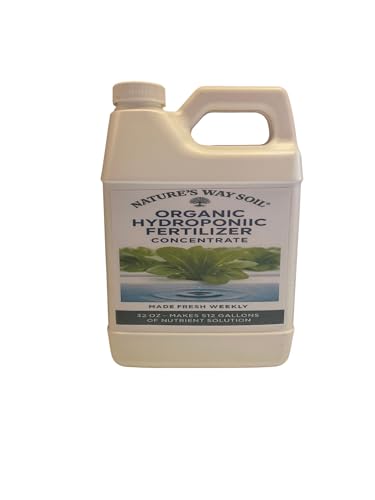
Best for growers seeking a low-cost, organic liquid for hydroponic and soil systems. The concentrate includes worm castings and fermented duckweed to support living biology in nutrient solutions. It feeds 64 gallons per bottle when used as directed, providing steady nourishment without synthetic additives. Suitable for vegetables, herbs, and leafy greens in DWC, drip, coco coir, or living soil setups.
Best for: budget-conscious hydroponic growers needing a foundational organic nutrient that still delivers effective growth. Limitation: dilution requires careful measurement to maintain consistent strength across large reservoirs.
FoxFarm Grow Big Hydroponic Plant Food

Best for vegetative growth in hydroponic systems. This liquid concentrate is formulated with a 3-2-6 ratio and includes earthworm castings plus micronutrients to support plant size, structure, and rapid nutrient uptake. Choose this for lush foliage and sturdy stems during the growth phase. Limitation: not a complete nutrient package; may require supplementary nutrients during flowering.
HiThrive 32oz Aeroponics & Hydroponics Liquid Plant Food

Best for steady, instant feeding in indoor hydroponic systems. The product offers a 4-3-6 NPK with essential micronutrients and is designed to nourish aeroponics and hydroponics with immediate uptake. It supports continuous growth and healthy harvests. Limitation: larger reservoirs may require more frequent adjustments to maintain nutrient balance.
MARPHYL All-Purpose Plant Food

Best for a balanced, all-purpose organic nutrient solution suitable for indoor and hydroponic setups. It provides macro and micronutrients to support healthy roots, foliage, and blooms. The blend works in hydroponic reservoirs as well as soil, making it versatile for mixed growing environments. Limitation: not a pure concentrate; may require more frequent dosing in high-demand periods.
Organic Sea Kelp Fertilizer

Best for overall plant vigor and nutrient uptake. This water-soluble kelp-based fertilizer supplies natural polymers and sea minerals to enhance root strength and resilience. Great as a supplement to other organic nutrients in hydroponics. Caution: product potency can vary; test in small doses when introducing to a new reservoir.
Buying Guide – Organic Nutrients For Hydroponics
What should you consider when selecting an organic nutrient for hydroponics?
- System compatibility: Ensure the fertilizer is designed for hydroponic use (DWC, NFT, aero, or drip) and compatible with your growing medium.
- NPK balance: Look for a formula that supports your growth stage—higher nitrogen for vegetative growth, balanced or phosphorus-heavy blends for flowering.
- Biology and additives: Prefer products with beneficial microbes, kelp, or worm-derived components that support nutrient uptake and plant health.
- Concentration and dosing: Check recommended dilution and reservoir capacity to avoid under- or over-feeding.
- Ease of use: Consider liquid concentrates for quick adjustments and ease of mixing in hydroponic setups.
How to Choose By Grow Type
- DWC and recirculating systems: Favor liquid nutrients with ready-to-use concentrations and fast uptake.
- AeroGarden and aeroponics: Prioritize instant-feeding formulas that dissolve quickly and prevent residue in misters.
- Soil-to-hydroponics transitions: Use organic blends that support living biology and soil-like microbial activity.
Practical Feeding Schedule Tips
- Start with a lower dose and monitor plant response; adjust gradually.
- Alternate between organic nutrient blends to avoid salt buildup and ensure diverse micronutrient supply.
- Keep pH and EC within target ranges for hydroponic crops to maximize nutrient uptake.
Frequently Asked Questions
- What makes an organic fertilizer suitable for hydroponics?
– It should be water-soluble, support living biology, and work well in water-based systems without causing clogging or residue. - Can organic nutrients replace synthetic formulas entirely in hydroponics?
– Some growers use a combination, but organic blends can provide balanced nutrition when dosed properly and monitored for pH and EC. - Which nutrient is most important during vegetative growth in hydroponics?
– Nitrogen is critical for vegetative growth and leaf development; look for blends with adequate nitrogen levels for this stage. - How often should I feed hydroponic plants with organic nutrients?
– Follow the product’s dosing schedule and adjust based on plant response, system type, and growth stage. - Are organic kelp-based fertilizers beneficial for hydroponics?
– Yes; kelp provides natural growth regulators and micronutrients that support nutrient uptake and resilience. - Is it okay to mix multiple organic fertilizers?
– It can be, but ensure compatibility, avoid over-application, and monitor EC and pH closely.