Anyone growing vegetables, herbs, or flowers in raised beds should choose organic soils that nurture microbes, improve drainage, and retain moisture. This guide highlights five top options that balance fertility with soil structure, helping both beginners and seasoned gardeners. Each pick is chosen for raised-bed success, ease of use, and clear advantages for different plant types. Read on to find which soil is best for your bed size, climate, and planting goals.
Summary of selected products
| Product | Best For | Why It Stands Out |
|---|---|---|
| BACCTO Raised Bed Soil | Vegetables, Herbs, Mixed Plantings | Rich in organic matter; includes compost, manure, and earthworm castings for slow release nutrients |
| Coast of Maine Castine Blend | Nutrient-rich beds with good drainage | Mycorrhizae, biochar, lobster/crab meal for robust growth |
| FoxFarm Raised Bed Planting Mix | All raised-bed crops | Earthworm castings and oyster shell in a ready-to-use blend |
| True Organic Raised Bed Food | Herbs, Flowers, Vegetables in beds | Organic seabird guano and shell meals for consistent nourishment |
| Miracle-Gro Organic Outdoor Potting Mix (2-Pack) | Outdoor pots and raised beds with container-style soils | Quick-release fertilizer and moisture-friendly mix |
BACCTO Raised Bed Soil With Organic Compost

BACCTO Raised Bed Soil is ready to use right from the bag, making it ideal for gardeners who want quick, low-effort planting. The mix is rich in organic matter from compost, composted manure, and earthworm castings, which introduce beneficial microbes and slow-release nutrients. This soil aims to improve moisture retention and long-term soil health, supporting a wide range of plants in raised beds, including vegetables, herbs, and flowers.
Best for: New beds and quick setups where you want a balanced, nutrient-dense base. Better for: home vegetable plots and herb beds that need steady moisture retention. Choose this if you want an all-in-one raised-bed soil with multiple organic inputs. Caution: As with any organic blend, nutrient availability can vary by batch and climate; consider top-dressing with compost if needed.
Back to The Roots Organic Coir, 51 Quart Expanding Soil

This expanding coir-based soil is a strong pick for starter seeds and lighter plantings. It expands to over 2 cubic feet and has a balanced pH, making it versatile for pots, containers, and many raised-bed applications. It is peat-free and OMRI-listed, aiding organic production standards. Best for: seed starting and new transplant setups in raised beds or containers where you want a clean, light base that expands when hydrated.
Limitation: Coir-based mixes can require more frequent moisture checks in hot climates; monitor irrigation closely to prevent drying out seedlings or shallow-rooted crops.
Michigan Peat 40-Pound Garden Magic Potting Mix

Garden Magic Potting Mix is a ready-to-use option suitable for raised-bed planting and container gardens. It emphasizes moisture retention and drainage, with a soil blend involving peat and sand to support healthy root structure. Best for: general-purpose raised beds where a straightforward mix is preferred for diverse plantings. Better for: gardeners seeking a familiar, bagged potting option without additional amendments. Caution: Peat content may be restricted by some organic programs; verify local guidelines if you follow strict certifications.
True Organic Raised Bed Food

True Organic Raised Bed Food is optimized specifically for raised beds, offering a premium blend of seabird guano, shell meals, and other proven components to nourish plants and enrich soil. It provides consistent nourishment with an easy-to-use formula requiring application every two months during the growing season. Best for: raised bed setups where ongoing, predictable feeding is desired. Limitations: the composition is designed for sustained release, so results depend on regular application timing and soil baseline.
FoxFarm Raised Bed Planting Mix

FoxFarm Raised Bed Planting Mix is a ready-to-use formula designed specifically for raised beds and containers. It includes earthworm castings and oyster shell, supporting moisture retention and structured drainage. Best for: gardeners seeking a balanced, all-in-one mix that avoids extra amendments. Better for: vegetable, herb, and ornamental beds where root health and long-term soil structure matter. Caution: While it is ready-to-use, some plants may prefer slower nutrient release depending on growth stage and weather.
Coast of Maine Castine Blend Soil
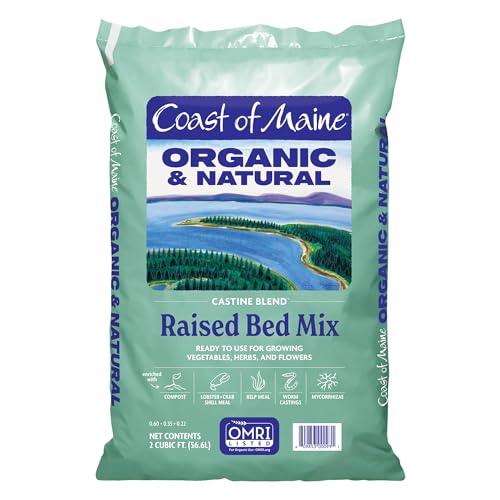
Coast of Maine Castine Blend is a nutrient-rich option with mycorrhizae, biochar, kelp meal, and crustacean meals. It is designed to enhance drainage, water retention, and root health, delivering a robust growing environment for raised beds. Best for: beds that require improved soil biology and water considerations. Choose this if you want a premium blend with multiple organic inputs. Caution: Higher complexity means variable results depending on existing soil baseline and crop type.
Miracle-Gro Organic Outdoor Potting Mix (2-Pack)

Miracle-Gro Organic Outdoor Potting Mix in a two-pack offers a quick-release natural fertilizer and sustained feeding for up to two months. It is peat-sourced and suitable for outdoor container plants, including vegetables and ornamentals. Best for: raised beds or container gardens needing a reliable, store-bought fertility boost. Limitation: quick-release fertilizer means nutrient availability can spike, so monitor growth and avoid over-fertilizing during peak heat.
Buying Guide: Key Considerations For Raised Beds
- Soil composition: Look for a mix with organic matter, amendments like compost or manure, and inputs such as worm castings or mycorrhizae to support soil biology.
- Moisture management: Choose soils that balance drainage with moisture retention to prevent root rot and drought stress in raised beds.
- Plant compatibility: Match soil blends to target crops—vegetables often benefit from richer, nutrient-dense mixes; flowers may require lighter, well-draining blends.
- Amendments and feeding: Consider whether you need a pre-mixed solution or plan for periodic feeding with organic fertilizers to maintain nutrient levels throughout the season.
- Climate considerations: In hot climates, blends with good aeration and water retention are advantageous; in cooler regions, consistent nutrient release supports slower growth phases.
Frequently Asked Questions
- What is the best soil for raised beds with vegetables?
– A nutrient-rich organic mix with compost and worm castings is generally ideal for vegetables, supporting healthy root systems and steady growth. - Do raised-bed soils need fertilizer?
– Some blends include organic nutrients, but many gardeners apply periodic organic fertilizers to maintain nutrient levels through the growing season. - Is peat-free soil important for raised beds?
– Peat-free blends are preferred by many seeking sustainable options, though peat-containing mixes can still perform well if sourced responsibly. - Can I use potting mix in raised beds?
– Yes, especially as a top layer or when expanding soil volume, but consider blends designed specifically for raised beds to ensure appropriate texture and drainage. - How often should I amend raised-bed soil?
– Many organic blends benefit from seasonal top-dressing or reworking annually, depending on crop type and soil health.