Paper pots for plants offer a convenient, eco-friendly way to start seedlings and reduce transplant shock. This guide highlights five top options ideal for beginners, hobby gardeners, and small-scale growers. Each product emphasizes biodegradability, root-friendly designs, and practical drainage. Use this overview to compare which kit fits your seed-starting routine, space, and plant types.
| Product | Size | Best For | Key Benefit |
|---|---|---|---|
| CLEANGOR 70Pcs Biodegradable 3.15” Pots | 3.15 inches | Herbs, Vegetables, Flowers | 70 pots with labels; biodegradable in soil |
| JERIA 50-Pack 3.15 Inch Pots | 3.15 inches | Seedlings, Small Herbs | Biodegradable; includes labels |
| DSUWAZU 60 Pcs 3.15 Inch Pots | 3.15 inches | General seed starting | 4 drainage holes; biodegradable |
| JNYONG 120 Packs 4 Inch Pots | 4 inches | Row crops and larger seedlings | 4 drainage holes; many labels |
| ModaSin 131 Pcs Organic Pots | 3.15 inches | Bulk seed starting | 131 plant labels; breathable pulp |
Choosing paper pots can reduce root disturbance, simplify transplanting, and support sustainable gardening practices. The following five options are selected for clear usability, consistent biodegradability, and practical labeling to keep your seed-starting organized.
CLEANGOR 70Pcs Biodegradable 3.15” Pots Kit
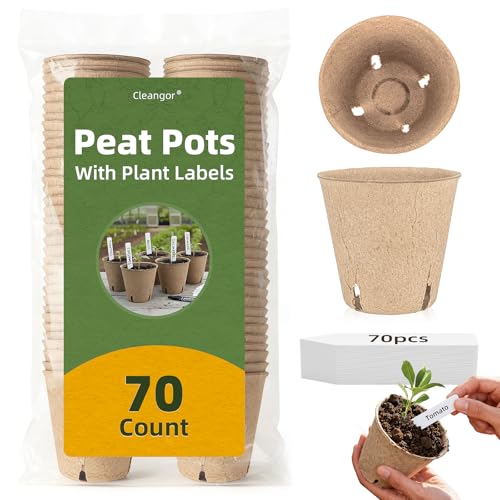
The CLEANGOR kit combines 70 peat pots with 70 plant labels. The pots are made from 100% recycled pulp and are fully biodegradable, allowing the entire pot to be planted directly into the soil. This helps avoid root disturbance and transplant shock. The kit’s built-in drainage and breathable walls support better moisture management for herbs, vegetables like tomatoes, and flowers.
Best for gardeners who want a large starter batch with organized labeling. Avoid if you need very large pots or non-biodegradable options for long-term root systems.
JERIA 50-Pack 3.15 Inch Pots

The JERIA kit offers 50 peat pots with labeled identification. The pots are molded from recycled pulp and are designed to breathe, promoting healthy root development. They biodegrade in soil, returning nutrients to the system, and are suitable for starting flowers, herbs, and vegetables.
Best for compact setups and simpler labeling. Choose this if you want a straightforward, mid-sized option with clear labeling. Limitations include a smaller quantity than some kits, which may require restocking sooner.
DSUWAZU 60 Pcs 3.15 Inch Pots

DSUWAZU includes 60 biodegradable peat pots with 20 plant labels. Each pot features four drainage holes, helping prevent overwatering and supporting steady soil moisture. Made from recycled pulp and natural fibers, these pots biodegrade and enrich the soil when planted.
Best for hobbyists who want reliable drainage and clear labeling. Consider this option if you need consistent drainage while avoiding transplant shock, but be aware of the slightly smaller kit size compared with some 70+ pot sets.
JNYONG 120 Packs 4 Inch Pots

The JNYONG 4-inch pots kit includes 120 pots and 100 plant labels. The larger size suits bigger seedlings and vegetables. Four drainage holes support efficient water movement and air exchange, while the biodegradable pulp material ensures easy soil integration after transplantation.
Best for gardeners who need larger starter pots and extensive labeling. If space is limited, this kit may take more tray space, and the larger size may not suit tiny herbs well.
ModaSin 131 Pcs Organic Paper Pots

The ModaSin kit provides 131 pots and a large set of labels. Made from natural recycled pulp, these pots are breathable and designed to transfer directly into the soil without disturbing roots. The 4-drain-hole design helps maintain soil aeration and prevents waterlogging.
Best for bulk projects or classrooms and multi-plant setups. Better for growers needing a generous supply, but larger kits require more storage space and organization.
Buying Guide: Paper Pots For Plants
- Material and biodegradability: Look for pots made from recycled pulp or plant fibers that break down quickly after planting and enrich the soil.
- Size and plant type: Smaller pots (around 3.1 – 3.15 inches) suit herbs and small vegetables; larger pots (around 4 inches) support bigger seedlings.
- Drainage design: Pots with multiple bottom drainage holes promote healthy moisture levels and prevent root rot.
- Labeling: Kits that include plant labels simplify seed identification and care tracking during germination.
- Transplant impact: Plantable pots minimize root disturbance; this is especially helpful for delicate seedlings prone to transplant shock.
- Storage and quantity: Consider shelf space and whether you prefer bulk sets for ongoing projects or smaller batches.
- Environment and waste: Biodegradable pots reduce plastic use and support sustainable gardening practices.
Common Questions
- What is a paper pot, and how does it work? Answer: A paper pot is a biodegradable seed-starting container made from recycled pulp or plant fibers that can be planted directly into soil, letting roots grow through naturally.
- Are paper pots better for transplanting seedlings? Answer: Yes, they reduce root disturbance and transplant shock by allowing direct soil insertion with minimal handling.
- What size should I choose for tomatoes? Answer: A 4-inch pot is commonly suitable for early seedlings before transplanting to a larger bed or container.
- Do paper pots degrade quickly in the garden? Answer: Degradation time varies by soil conditions, but they are designed to break down once planted, adding organic matter.
- Should I remove labels before planting? Answer: No; plant labels can stay until seedlings are transplanted, after which you can reuse or compost them as appropriate.