If you’re battling pests on houseplants, you need reliable options that target insects without harming your plants. This guide focuses on ready-to-use sprays and granules ideal for indoor and nearby outdoor plants, with choices suited for beginners and more experienced gardeners. The top picks below are selected for clear labeling, direct pest targets, and user-friendly application. Each product is best for specific scenarios—choose accordingly to protect foliage, roots, and soil health without overuse.
Summary of chosen products:
- Bonide Systemic Houseplant Insect Control — systemic granules for container plants; long-lasting root absorption.
- BioAdvanced Houseplant Insect and Mite Control Spray — combined insect and disease control; indoor/outdoor versatility.
- Dr. Killigan’s Doom & Bloom — contact spray for rapid knockdown; effective against multiple pests.
- Natria Neem Oil Spray — dual-action insecticidal and fungicidal spray; broad pest coverage.
- Miracle-Gro Plant Care Gnat Control Plus — targets fungus gnats and provides plant nutrition.
Bonide Systemic Houseplant Insect Control: Granules

Best for: containerized houseplants where a systemic, long-lasting defense is preferred. The granules are absorbed through the roots and move within the plant to deter pests like mealybugs, aphids, and scale for up to eight weeks. This option is ideal when you want ongoing protection that isn’t washed away by watering.
Why selected: The systemic action provides internal protection, reducing visible feeding damage and helping plants recover. It’s best for owners who want a low-odor, ready-to-use solution that minimizes repeated applications.
Limitations: Not effective against pests that do not feed on the plant. Check plant sensitivity to systemic treatments and avoid application on non-targeted species if advised by the label.
BioAdvanced Houseplant Insect And Mite Control Spray

Best for: indoor and outdoor houseplants that need simultaneous insect and disease control. This spray kills pests such as aphids, whiteflies, and mites and also targets powdery mildew and other diseases with a ready-to-use formula.
Why selected: Combines insect control with fungicide action in one product, simplifying care for diverse plant needs. Suitable for plants that frequently encounter both pests and fungal diseases in variable environments.
Limitations: As with most sprays, uniform coverage is crucial; avoid runoff onto non-target surfaces and follow label directions for safe use around people and pets.
Dr. Killigan’s Doom & Bloom Pest Spray

Best for: immediate pest knockdown on both indoor and outdoor gardening tasks. This spray targets aphids, spider mites, thrips, and more through contact action, providing quick relief from visible pests.
Why selected: The mechanical action helps disrupt pest physiology, which can be effective where pests show quick resilience to other products. It’s a strong choice for get-rid-of-pests scenarios that require fast results.
Limitations: It is a contact killer, so thorough coverage is essential. Reapplication may be required for persistent infestations, and it may not offer lasting systemic protection.
Natria Neem Oil Spray for Gardening

Best for: a versatile, non-synthetic option suitable for pesticide-sensitive environments, both indoors and in home gardens. Neem oil provides insecticidal and fungicidal activity across multiple pests including aphids, whiteflies, and mites, while also helping prevent powdery mildew.
Why selected: Neem oil offers a broad, plant-friendly approach that minimizes toxic residues. It’s well-suited for routine preventive care and for homes with curious pets or children when used per label directions.
Limitations: Neem oil can cause phytotoxicity on some plants if used at the wrong temperature or concentration. Always test on a small leaf area first and follow dilution guidelines if required by the product label.
Miracle-Gro Plant Care Gnat Control Plus
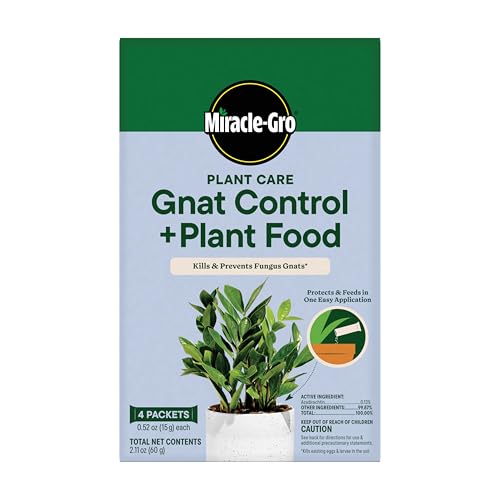
Best for: indoor plants suffering from fungus gnats while also providing essential nutrients for growth. This product kills existing eggs and larvae in soil and supports plant health with fertilization.
Why selected: It tackles a common indoor pest (fungus gnats) through soil-targeted action while offering a nutrient boost, which helps overall plant vigor. It’s particularly useful for potted plants with persistent gnats in damp soil.
Limitations: Primarily aimed at soil-dwelling pests; surface-dwelling pests may require an additional spray product for comprehensive control.
Buying Guide: Key Considerations For Choosing Houseplant Pest Control
What pest are you fighting?
Identify the target pests first. Some products excel at insects that feed on leaves (aphids, whiteflies), while others are better for soil-dwelling pests (fungus gnats). If you face both, consider a product with broad spectrum action or combine a soil treatment with a foliar spray.
Indoor vs. outdoor use
Check labeling for indoor versus outdoor suitability. Some formulations are designed specifically for houseplants, while others are safe for both environments. For sensitive indoor settings, opt for odor- and residue-conscious options.
Systemic vs. contact action
Systemic treatments protect from within the plant and last longer, which is helpful for ongoing infestations. Contact sprays act quickly but may require more frequent reapplication to maintain protection.
Safety and plant compatibility
Always follow label directions, test on a small leaf area first, and be mindful of phytotoxicity. Neem oil and plant-based sprays are generally gentler, but some plant species may react to certain oils or concentrates.
Application frequency and coverage
Consider the application interval and coverage requirements. Granules that are root-absorbed offer longer intervals between treatments, while sprays usually require closer adherence to label timing for optimal results.
Non-target safety
Be mindful of beneficial insects and pets. Some products may affect non-target pests or beneficial predators. Where possible, apply during times when pollinators are less active and consider barrier methods to limit exposure to non-target organisms.
Storage and odor
Choose formulations with low odor for indoor use and store them away from children and pets. Ready-to-use bottles simplify handling and reduce mixing errors for beginners.
Frequently Asked Questions
- Can I use multiple pest control products on the same plant? Yes, but avoid overlapping active ingredients. Space applications according to label directions and consider alternating products to reduce resistance risk.
- Are plant-based treatments as effective as chemical options? Plant-based options can be effective for routine prevention and mild infestations, especially for sensitive environments, but severe infestations may require stronger or systemic treatments.
- How often should I treat for fungus gnats? For gnats, soil-targeted products or a combination of soil treatment plus surface spray is common. Follow label guidance, typically every 1–2 weeks during active infestations.
- Is it safe to apply these products near edible herbs? If using indoor herbs, verify label safety. Some products are labeled for use on edible plants; always follow harvest interval recommendations and wash herbs before consumption if required.
- What should I do if a product causes leaf burn? Rinse the affected area with water if advised on the label and discontinue use on that plant species. Reassess plant sensitivity and adjust concentration or choose a milder product.
- Do I need to rinse leaves after spraying? Most labels do not require rinsing after application, but always follow product-specific instructions to avoid reducing effectiveness or causing residue issues.