Answer: For most home gardeners, a comprehensive pH control kit that covers both pH up and down, plus testing supplies, is essential to maintain nutrient availability and healthy plant growth. The top picks below are selected for hydroponics, soil gardens, and mixed setups. Each product is best suited for specific growing styles—hydroponic systems, soil beds, or mixed environments—so you can choose what fits your setup and budget.
Buyer-oriented summary table:
| Product | Best For | Why It Stands Out |
|---|---|---|
| General Hydroponics Ph Control Kit | Hydroponics and beginner kits | All-in-one kit with pH Up/Down liquids, indicator, and accessories |
| FOLLOWIN pH Up & Down Kit | Indoor growers and compact setups | Concentrated, extended-use kit with simple dosing |
| Bloom City pH Up + Down Kit | Balanced nutrient uptake | Clear, precise pH control for steady nutrient availability |
| GIDIGI pH Adjuster Kit | All-in-one, affordable kits | Value-packed with testing supplies and easy adjustments |
| VIVOSUN pH Up & Down Kit | All growing systems, many scenarios | High concentration with reliable materials for consistent results |
General Hydroponics Ph Control Kit

The General Hydroponics Ph Control Kit is an all-in-one solution designed for measuring and adjusting pH in hydroponic reservoirs. It includes 8 oz pH Up Liquid, 8 oz pH Down Liquid, 1 oz Test Indicator, a test tube, an eyedropper, and a pH level chart. Best for beginners and hobbyists who want a complete, ready-to-use package. The kit emphasizes reliable results and quick readings, making it a solid starting point for hydroponic setups and small-scale grows.
Best for: Hydroponic growers who want a straightforward, complete testing and adjusting system. It’s also suitable for classrooms or new setups where simplicity matters. Caution: It uses liquid reagents; handle with care and follow labeling to avoid spills.
FOLLOWIN pH Up and Down Control Kit
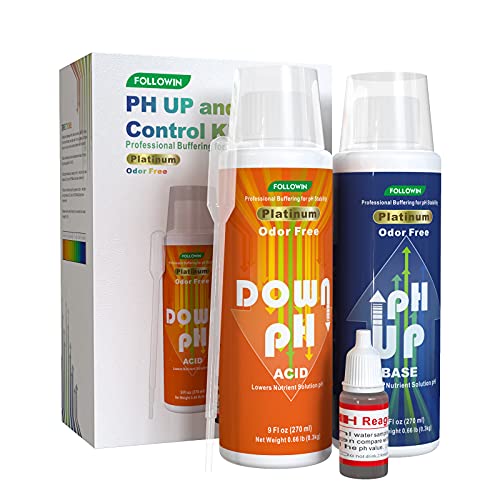
The FOLLOWIN kit provides 9 oz each of pH Up and pH Down plus a 1 oz pH indicator, a dropper, and a test vial. It targets precise pH control within the ideal 5.5–7.0 range, useful for hydroponics, soil gardens, coco coir, and aquariums. The concentrated formula offers extended use with minimal waste. Best for indoor growers and mixed systems where durable, long-lasting supplies are desired. Caution: Strong concentrate—use the included droppers to avoid over-adjustment.
Bloom City Professional pH Up + Down Kit

The Bloom City kit includes separate pH Up and pH Down solutions designed to support optimal nutrient uptake. It emphasizes precise pH control, which helps maintain balanced nutrition and steady growth. Best for growers who want clear, controlled adjustments and reliable results across hydroponic and soil-based systems. A limitation: It may not include testing tools, so pairing with a separate pH tester can improve accuracy.
GIDIGI Hydroponics pH Adjuster Kit

GIDIGI’s kit includes both pH Up and pH Down solutions, plus a testing component (strips) and chart for quick monitoring. It’s marketed as a complete, super-concentrated solution for homestead to commercial setups. Best for budget-conscious growers who want a full kit with trim, and for those who prefer a compact, all-in-one package. Caution: Test strips provide a quick read but can be less precise than a meter in very tight tolerances.
VIVOSUN pH Up & pH Down Kit

VIVOSUN’s kit includes 1 quart each of pH Up and pH Down with a focus on precise regulation within 5.5–6.5. It’s designed to support optimal nutrient uptake and root growth. Best for growers seeking a robust, versatile kit for varied media and systems, including hydroponics, soil beds, and aquaponics. Caution: The labeling emphasizes concentration, so start with small doses to avoid overshooting pH.
Buying Guide
What should I consider when choosing a pH adjuster kit?
- Growing environment: Hydroponics, soil, coco coir, or aquaponics—some kits perform better in liquid systems, others in soil-based setups.
- Included tools: Look for a kit with pH Up and pH Down, an indicator or test strips, a measurement cup or dropper, and a pH chart for quick reference.
- Concentration and dosage: Higher concentration can reduce waste but requires careful dosing to avoid overshooting pH; consider how easy it is to measure small amounts.
- Testing method: Liquid test indicators and test strips offer quick readings; a digital meter provides precise control but may require calibration.
- Size and frequency: Home growers will prefer smaller bottles for flexibility; commercial setups may need larger volumes for long-term use.
- Safety and handling: Some solutions are acidic or caustic; store away from children and follow safety instructions on the label.
How to use these kits effectively?
- Test your nutrient solution’s current pH before adjustments.
- Make small pH adjustments and re-test until you reach the target range.
- Document pH changes to understand how your environment affects your plants over time.
Key purchase considerations
- Target pH range: Most plants thrive around 5.5–6.5; your choice may adjust depending on species.
- Compatibility: Ensure the kit’s liquids are compatible with your existing nutrients and media.
- Ease of use: For beginners, kits with all-in-one components reduce setup time.
- Future needs: If you anticipate expanding your garden, choose a kit with ample supply and robust support materials.
FAQ
- Q: Do I need both pH Up and pH Down? A: Yes, most systems require both to fine-tune pH as nutrients are added.
- Q: Can I use water test strips on hydroponics? A: Yes, test strips provide quick readings, but meters offer higher precision for sensitive crops.
- Q: How often should I test pH? A: Check regularly, especially after nutrient changes, water changes, or environmental shifts.
- Q: Is liquid concentrate safer than powders? A: Liquid concentrates are common and easy to dose; powders are less common for home kits but can be effective.
- Q: What’s the best pH range for most plants? A: A typical range is 5.5–6.5 for many hydroponic and soil-based setups, but some plants prefer different ranges.
- Q: Can pH adjustment cause nutrient lockout? A: Yes, excessive pH shifts can limit nutrient availability; gradual adjustments help prevent this.