Answering the common question, which winter plant bags actually protect outdoor greenery without harming growth? This guide highlights five reliable options that suit varying plant sizes and climates. Whether you have potted ornamentals, small trees, or fruiting bushes, these frost blankets are designed to block frost, deter pests, and preserve moisture and light. Best for: gardeners with diverse plant inventories, homeowners seeking reusable covers, and those who want easy on/off installation during cold snaps.
Overview of top picks chosen for cold-season protection:
| Product | Best For | Key Benefit | Size Range |
|---|---|---|---|
| Perthlin 6 Pcs Winter Plant Covers | Medium to large plants | Clear film for light transmission and insulation | 70 x 110 cm (27.6 x 43.3 in) |
| EAONE 12 Pack Plant Covers | Multiple plants on a budget | Breathable, waterproof non-woven fabric | 47 x 32 in (approx. 120 x 81 cm), 162 cm cycle |
| Eunika 6 PCS Plant Covers | Seasonal protection with ease | Zipper and drawstring for quick coverage | 31.5 x 47.2 in (80 x 120 cm) |
| Agfabric Plant Covers | Medium to tall plants | Light transmission with frost protection | Fade-free white 44″-48” high |
| PURPLE STAR 2 Pack Large Covers | Very large plants or trees | Zipper and drawstring for secure fit | 94 x 79 in (approx. 239 x 201 cm) |
Perthlin 6 Pcs Winter Plant Covers

The Perthlin set includes six transparent plastic covers designed to shield medium and large plants from frost. Each piece measures about 70 x 110 cm (27.6 x 43.3 inches), making them suitable for trees or sizable pots. Best for gardeners who want quick, visible light transmission while protecting against freezing temperatures. The plastic film is lightweight, rainproof, and durable, providing reliable insulation without heavy equipment. A potential limitation is that entirely shielding very large specimens may require multiple covers or larger standalone options.
EAONE 12 Pack Plant Covers
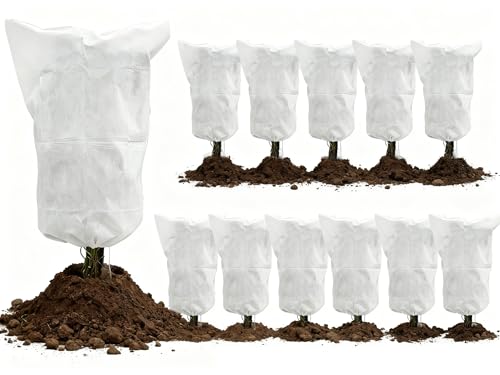
EAONE offers a large 12-pack of frost cloths, each about 32 inches wide and 47 inches long (approx. 81 x 120 cm), with a cycle length around 162 cm. This set is ideal for gardeners protecting multiple plants, from potted patio specimens to outdoor trees. The fabric is non-woven, breathable, and waterproof, blocking rain and snow while allowing air circulation. It also resists pests such as birds and rabbits. Choose this if you plan to cover several plants or want a light, breathable option. A caution: ensure coverage height matches your tallest plant to avoid gaps.
Eunika 6 PCS Plant Covers

Eunika provides six covers sized about 31.5 x 47.2 inches (80 x 120 cm) with a zipper and drawstring opening. The non-woven fabric is lightweight yet durable, designed to preserve warmth down to 14°F and resist harsh winter conditions. The zipper feature reduces stress during application, and the side drawstring ensures a snug fit to protect against wind. Best for gardeners who want quick, one-hand operation and reusable protection. A limitation: more modest heights may not fully cover very tall plants without bending or overlap.
Agfabric Plant Covers

The Agfabric frost covers are designed for medium-sized plants, with a recommended height range around 44-48 inches and circumference around 106-110 inches. They use heavy-weight polypropylene fabric with 30%-50% light transmittance and provide frost protection in the 3°-8°F range. The drawstring at the opening allows quick adjustment, and the breathable fabric helps maintain a dry microclimate in wet conditions. Best for gardeners seeking a robust, longer-season protection. Caution: ensure fabric thickness suits your climate; lighter climates may not need heavy weight for frost.
PURPLE STAR 2 Pack Large Covers

This option includes two oversized covers, each measuring approximately 94 x 79 inches (about 239 x 201 cm). The design features a side zipper and bottom drawstring for secure, quick enclosure of tall trees and large shrubs. Best for very large plants or trees that require substantial protection from frost, wind, and pests. A potential limitation is the large size may be less portable for frequent moving or storage in small spaces.
Buying Guide: Winter Plant Bag Considerations
What to evaluate when choosing winter plant covers:
- Plant size and height: Match cover height to the tallest plant to avoid gaps and overheating.
- Material and breathability: Non-woven fabrics and transparent plastics balance warmth, light transmission, and airflow to prevent mold and scorch.
- Insulation level: In very cold regions, thicker fabrics or heavier films offer stronger frost protection but may limit light; consider your climate needs.
- Ease of use: Zippered openings, drawstrings, and simple fits save time during frequent cold snaps and wind events.
- Reusability and maintenance: Look for durable materials that withstand multiple seasons and easy cleaning or dry storage.
- Coverage versatility: If you have a range of plant sizes, a mix of single-size and multi-size covers can provide flexibility.
Practical Tips for Using Winter Plant Covers
- Place covers on dry evenings to reduce moisture buildup and plant stress.
- Secure edges with soil or weights to prevent wind displacement.
- Ventilate on sunny days to prevent heat buildup on sunny days while still protecting at night.
- Check for pests periodically and repair any tears promptly.
FAQs
- How do I know which size to buy? Look at the plant height, canopy spread, and whether you need to cover branches or entire plants. Choose a cover that is taller and wider than the plant at peak growth.
- Are winter plant covers reusable? Most options are designed for multiple seasons, provided they are dried and stored properly between uses.
- Do these covers block sunlight? Most fabrics and films allow a percentage of light through; if you need maximum photosynthesis, select a breathable option with higher light transmission.
- Can covers protect against pests as well as frost? Many covers deter birds, rabbits, and insects, but verify the product mentions pest protection in its features.
- Will covers harm my plant if left on during mild days? If temperatures rise, remove or ventilate to prevent overheating; use breathable fabrics to mitigate heat buildup.