What matters most for cucumbers is steady nutrient delivery that supports vigorous vines, strong roots, and crisp fruit. The following five products are well-suited for cucumber growers, including home gardens and container plantings. They vary in formulation, from granular to liquid, and can suit different watering and growing setups. This guide helps you choose the best fit based on your cucumber type, growing system, and maintenance preferences.
| Product | Why It Stands Out For Cucumbers |
|---|---|
| Miracle-Gro Shake ‘N Feed Tomato, Fruit & Vegetable Plant Food (1 lb) | Long-lasting feeding up to 3 months; calcium helps stronger cell walls for better fruit quality; versatile for in-ground or container cucumbers. |
| Burpee Organic Tomato & Vegetable Granular Plant Food (4 lb) | Organic option with a slow-release formula; supports continuous feeding over a season and can cover larger beds. |
| Gardenera Liquid Power Cucumbers Fertilizer (8 oz) | Liquid concentrate tailored for cucumber productivity; balanced nutrients and organic acids improve uptake and soil health. |
| Greenway Biotech Cucumber Fertilizer 8-16-36 (1 lb) | Specialized vine crop formula focused on cucumbers and related gourds; high potassium for fruit quality and shelf life; chelated micronutrients. |
| Liquid Power Cucumber Fertilizer Spray (8 oz) | Ready-to-use foliar spray for fast uptake; excellent for boosting growth and yield with minimal effort. |
Buyer tip: If you prefer a low-maintenance option, go for a slow-release or granular feed. If you want fast uptake or foliar feeding, a ready-to-use spray or liquid concentrate may be best.
Miracle-Gro Shake ‘N Feed Tomato, Fruit & Vegetable (1 lb)

Best for: Home gardeners who want up to 3 months of feeding with a single application. Why selected: It feeds both above and below soil, supports calcium intake for stronger fruit walls, and is suitable for in-ground and container cucumbers. It is a practical all-around option for non-organic gardens. Limitation: Not labeled as organic, so certifications may matter for some growers.
Burpee Organic Tomato & Vegetable Granular Plant Food (4 lb)

Best for: Organic growers seeking a long-lasting granular feed. Why selected: Provides a continuous nutrient supply for cucumbers over months and emphasizes organic input. Limitation: Large bag may be more than needed for small gardens or container setups.
Gardenera Liquid Power Cucumbers Fertilizer (8 oz)

Best for: Gardeners who want a fast-acting liquid formula tailored to cucumber productivity. Why selected: Designed to boost vine growth, flowering, and high-yield fruiting with a balanced NPK and organic acids for better uptake. Limitation: Liquid concentrates require mixing and regular application according to schedule.
Greenway Biotech Cucumber Fertilizer 8-16-36 (1 lb)

Best for: Serious cucurbit growers who want a specialized vine crop balance with micronutrients. Why selected: High potassium supports fruit quality and texture, while chelated micronutrients improve nutrient availability across pH ranges. Limitation: Some users may prefer organic options or different nutrient ratios for growing conditions.
Gardenera Liquid Power Cucumber Fertilizer Spray (8 oz)
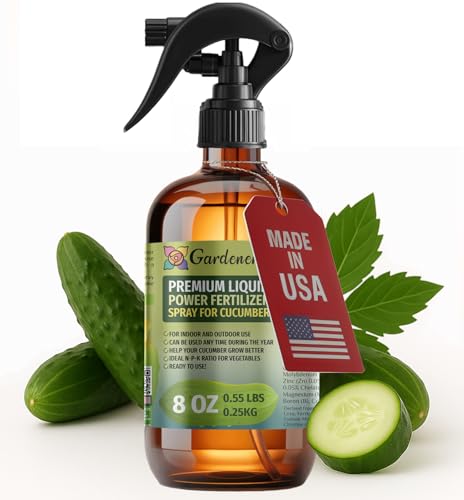
Best for: Growers who want ready-to-use foliar feeding to supplement soil nutrition. Why selected: Premixed spray provides direct leaf and stem feeding, promoting faster visible improvements in growth and yield. Limitation: Foliar feeding requires timely, recurring applications for best results rather than a single treatment.
Buying Guide
What should you consider when choosing cucumber plant food?
Types of fertilizer
Granular vs. liquid vs. foliar sprays. Granular feeds offer slower release and less frequent application, while liquids and sprays provide quicker uptake, useful during peak growth stages or when leaves show nutrient stress.
Nutrient balance for cucumbers
Look for a formula with adequate nitrogen for vine growth, phosphorus for roots and flowers, and potassium for fruit quality. For cucumbers, higher potassium and available micronutrients help prevent bitter fruit and promote crisp texture.
Organic vs. synthetic
Organic options (like Burpee Organic) appeal to those seeking natural inputs and soil biology benefits. Synthetic blends can deliver predictable NPK ratios and rapid results. Consider your growing system and certification needs.
Soil and pH considerations
Some products include chelated micronutrients and acids to improve nutrient availability. Be mindful of your soil pH, since nutrient availability changes with pH and can affect uptake.
Application practicality
Choose based on your setup: containers may benefit from soluble or ready-to-use sprays, while larger beds may be better suited to granular feeds. Consider your irrigation method and whether you prefer calendar-based feeding or plant-need-based feeding.
Safety and compatibility
Always follow label directions. Some products are designed for specific plant groups; ensure the product is appropriate for cucumbers and compatible with your irrigation type (drip, NFT, soil drench, etc.).
Maintenance schedule
Plan feeding around key cucumber stages: transplanting, rapid growth, flowering, and fruit setting. Maintain a steady nutrient supply without over-fertilizing, which can lead to leaf burn or fruit quality issues.
FAQ
- What fertilizer is best for cucumbers in containers? A balanced liquid or ready-to-use spray that can be applied through the soil or foliar feeding is convenient for container setups and quick nutrient uptake.
- How often should I fertilize cucumbers? Depending on the product, apply every 2–6 weeks or follow the product label’s schedule. For granular slow-release, fewer applications are required.
- Can I use general all-purpose plant food for cucumbers? Yes, but ensure the NPK ratios suit cucumbers and adjust feeding to avoid excessive nitrogen that may promote leaf growth at the expense of fruit.
- Is organic fertilizer better for cucumbers? Organic options support soil biology and sustainability; they can still produce strong yields when used correctly and consistently.
- Should I alternate fertilizer types during the season? Mixing types can address changing needs (soil nutrients vs. foliar uptake). Use a plan that aligns with growth stages and cultivar requirements.
- What signs indicate nutrient deficiency in cucumbers? Yellowing leaves, stunted growth, poor fruit set, or bitter tasting fruit can indicate nutrient imbalances. Address promptly with the appropriate fertilizer.