Elephant ears thrive with balanced, targeted nutrition. This guide highlights five effective plant foods ideal for large-leaf tropical plants. The selections favor ease of use, clear benefits, and compatibility with both outdoor beds and indoor pots. The buyers best suited are those seeking stronger stems, lush foliage, and reliable growth for Alocasias and Colocasias. Below is a quick summary table of the chosen products to compare key points at a glance.
| Product | Type | Best For | Notes |
|---|---|---|---|
| Elephant Ear Fertilizer – Liquid 8 oz (TPS NUTRIENTS) | Liquid | Small to medium containers, patio pots | Balanced nutrition for steady growth |
| Elephant Ear Fuel Plant Fertilizer (Wellspring Gardens) | Water-soluble mix | Indoor and outdoor elephant ears | Fast-absorption, easy feeding; eco-conscious |
| Elephant Ear Fertilizer – Liquid 32 oz (TPS NUTRIENTS) | Liquid | Large containers, vigorous growth | Similar benefits to 8 oz version with higher volume |
| Wellspring Gardens Elephant Ear Food (2 lb) | Water-soluble 20-10-20 | Seasonal feeding; robust foliage | Good balance of primary nutrients |
| Tropical Plant Fertilizer – Liquid 8 oz (TPS NUTRIENTS) | Liquid | Large-leaf tropicals including birds of paradise | Fast-absorbing, promotes lush foliage |
Elephant Ear Fertilizer – Liquid Plant Food for Bigger Leaves, 8 oz

Best for smaller setups and beginners, this liquid plant food from TPS NUTRIENTS is designed to support large leaves and strong stems. It delivers balanced nutrition suitable for steady tropical growth without overstimulation. It’s ideal for garden beds, container gardens, and indoor collections. Choose this if you want straightforward feeding with predictable results and a compact bottle size. Caution: avoid over-fertilization by following recommended dosages.
Elephant Ear Fuel Plant Fertilizer – Wellspring Gardens

Best for hands-off feeding, this water-soluble formula is designed for quick uptake through roots. It supports robust growth and vibrant foliage while offering precise feeding control to reduce overfeeding risk. It is suitable for both indoor pots and outdoor beds, making it versatile. Limitations include the need to measure and mix for each feeding session, which some users may find less convenient than ready-to-use options.
Elephant Ear Fertilizer – Liquid 32 oz (TPS NUTRIENTS)

Best for larger operations or households with multiple elephant ear plants, this 32 oz version provides the same balanced nutrition as the 8 oz bottle but in a higher volume. It’s chosen for bigger containers, patios, or greenhouse setups where frequent feeding occurs. Better for those who want fewer refills and consistent growth across several plants. Caution: store in a cool, dry place to maintain efficacy over time.
Wellspring Gardens Elephant Ear Food – 2 Pounds
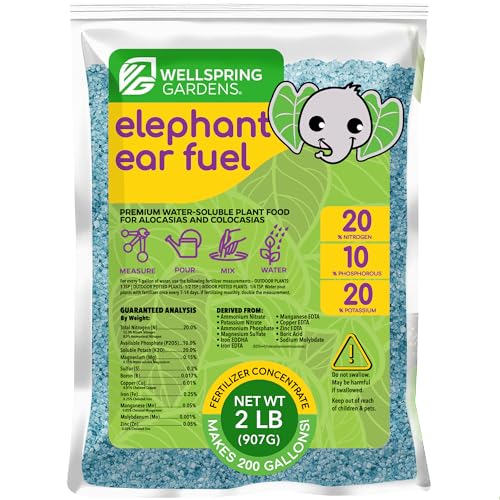
Best for serious enthusiasts feeding multiple plants, this 20-10-20 blend is water-soluble for rapid absorption. It supports healthy growth and vibrant foliage while providing greater nutrient density per application. Choose this if you want a robust, long-term feeding solution and don’t mind measuring portions. Limitation: higher potassium may require moderated use on sensitive varieties or during peak heat to avoid leaf burn.
Tropical Plant Fertilizer – Liquid 8 oz (TPS NUTRIENTS)

Best for birds of paradise and similar large-leaf tropicals, this liquid formula supports lush foliage and steady growth. It is fast-absorbing, allowing quick nutrient delivery to roots. Choose this if you want a tropical-specific option that emphasizes leaf development. Limitation: effectiveness depends on consistent watering to support nutrient uptake.
Miracle-Gro Pour & Feed Plant Food

Best for quick, on-the-spot feeding of potted plants, this ready-to-use option requires no mixing. It feeds all indoor and outdoor container plants, providing immediate results. Choose this if you want a no-fuss feeding method for a mixed collection of indoor plants. Caution: not all turmeric-based soils may respond equally; follow directions to avoid over-fertilization.
Buying Guide: Key Considerations for Elephant Ear Plant Food
What should I look for in elephant ear plant food?
- NPK ratio: Elephant ears benefit from balanced or slightly higher nitrogen to promote leaf growth. Look for formulas around 20-20-20 or similar balanced blends.
- Solubility and delivery: Water-soluble products offer rapid uptake; liquids are easier to use than granular blends for container plants.
- Targeted vs all-purpose: While general plant foods work, products labeled for tropicals or elephant ears tend to address specific nutrient needs for large-leaf species.
- Container vs garden feeding: Bottles with tap or ready-to-use options suit containers; dilute concentrates are better for larger plantings.
- Frequency and dosage: Follow product directions to avoid over-fertilization, which can lead to leaf burn or slower growth.
How to Apply Elephant Ear Plant Food Effectively
For liquid fertilizers, mix according to label directions and water your plants as usual after feeding unless the product specifies otherwise. For water-soluble formulas, dissolve in water before application and ensure even distribution to the root zone. Avoid applying fertilizer directly to plant leaves to prevent burn. Monitor plants for signs of nutrient overload, such as leaf tip burn or dark, damp soil after application.
Frequently Asked Questions
- Q: How often should I feed elephant ears? A: Most tropical plant foods are applied every 2–4 weeks during active growth, depending on the product and plant size.
- Q: Can elephant ears be over-fertilized? A: Yes. Excess nutrients can lead to leaf burn and weak growth. Always follow label instructions.
- Q: Is a 20-10-20 blend better than a balanced 20-20-20? A: A higher potassium helps with flowering and overall vigor, but for foliage-focused growth, a balanced mix is often suitable.
- Q: Are water-soluble formulas better for indoor plants? A: They generally offer faster nutrient availability, which is useful for indoor plants with slower root expansion.
- Q: Can I use all-purpose plant food on elephant ears? A: Yes, but tropical-focused formulas may yield better results for large-leaf varieties by addressing their specific needs.
- Q: Should I alternate fertilizers? A: Rotating products with different NPK ratios can help prevent nutrient lockout and support balanced growth over a season.