Answering the common question “which pot is best for pond plants?” this guide highlights durable, breathable pond plant pots that keep soil from washing into water while giving roots steady access to moisture. The top picks below suit pond hobbyists, water gardens, and existing water features. Each option emphasizes air-permeable fabric or mesh, ease of placement, and strong handles for repositioning. The buyer’s choice depends on plant type, pond size, and how often you plan to rearrange plants.
Summary table of chosen products:
| Product | Key Benefit | Best For |
|---|---|---|
| DECOHS 12 Pack Aquatic Plant Pots | Breathable fabric, reusable, with handles | Multiple aquatic plants, easy rearrangement |
| Aquascape 98500 Fabric Plant Pot (2 Pack) | Fine porous material, flexible placement | Ponds and water features with tight spots |
| Aulock 8-Pack Lily Grow Bags | Thick nonwoven fabric, strong handles | Water lilies, lotus, and larger plants |
| Meckerni 6 Pcs Lily Plant Pots | Breathable, handles, versatile use | Water lilies, lotuses, vegetables |
| Norme 8 Pcs Aquatic Plant Pots | Robust fabric, long-lasting | Multiple pond plants, durable option |
DECOHS 12 Pack Aquatic Plant Pots for Pond

Best for gardeners who want a versatile set for many plants. These 12 breathable pots support lilies, water lilies, lotuses, and even terrestrial plants. The handles simplify relocation for seasonal changes. The fabric promotes water access while preventing soil from entering the pond.
Who it’s best for: hobbyists building a mixed-display pond and those who need a budget-friendly bulk option. Why selected: the combination of breathability, reusability, and portability makes this set ideal for arranging multiple plants without compromising pond clarity.
Limitation: while durable, the set relies on fabric pots that may wear with heavy abrasion in rough pond edges over long timeframes.
Aquascape 98500 Fabric Plant Pot (2 Pack)

Best for ponds with tight placement spots. These 12″ round x 8″ deep pots use fine porous material that allows water in while preventing soil from entering the water feature. Their flexible design helps you position them where plastic pots won’t fit.
Who it’s best for: pond owners needing a high-visibility, effective root space for larger plants. Why selected: the material’s porosity combines water access with soil containment, supporting healthy root growth in restricted spaces.
Limitation: not stated here, but fabric pots may require more frequent maintenance to avoid sagging with large plants over time.
Aulock 8-Pack Lily Grow Bags for Pond

Best for expanding lily and lotus plantings in larger ponds. The 11.8″ bottom diameter and 8″ height offer ample root room while the thick nonwoven fabric supports long-term use. Handles enable easy rearrangement around water features.
Who it’s best for: gardeners prioritizing lily and lotus stability with straightforward transport. Why selected: strong construction and easy handling make this a solid choice for frequent plant updates.
Caution: ensure the bag is fully opened and free of folds before planting to maximize drainage and root spread.
Meckerni 6 Pcs Lily Plant Pots for Pond
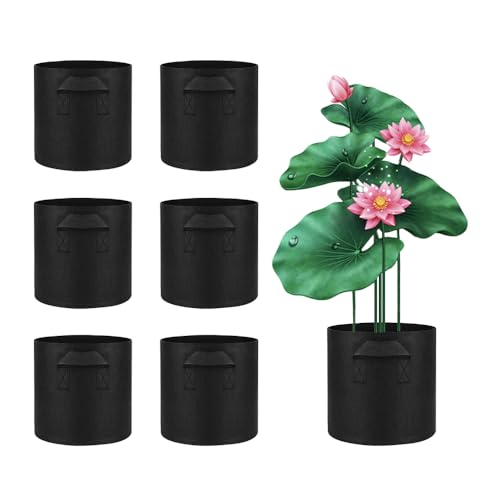
Best for flexible aquatic plant setups that include water lilies, lotuses, and edible crops like potatoes or onions. These breathable grow bags with handles simplify repositioning and maintenance across courtyard, balcony, and garden ponds.
Who it’s best for: homeowners who want a versatile, reusable bag that can handle a mix of aquatic and terrestrial plants. Why selected: breathable fabric supports consistent moisture and root health while the handles aid in quick changes.
Limitation: depending on plant density, fabric wear may occur with frequent re-use over many seasons.
Norme 8 Pcs Aquatic Plant Pots for Pond

Best for bulk needs with reliable fabric. These eight black pots provide breathable design to keep roots hydrated and reduce soil loss. The thicker non-woven fabric promises longer use and ability to hold multiple plants simultaneously.
Who it’s best for: pond owners stocking several plant varieties without buying single pots repeatedly. Why selected: value-conscious buyers gain durable, reusable options suitable for a busy water garden.
Limitation: fabric pots can degrade with sun exposure over very long periods, so seasonal rotation is advisable.
Buying Guide: Key Considerations For Choosing Pond Plant Pots
- Breathability vs containment: Look for fabric or mesh that lets water flow to plant roots while preventing soil from entering the pond.
- Size and depth: Choose pots matching your plant type. Lilies and lotuses often need deeper, wider spaces to spread roots.
- Durability: Reusable fabric pots are cost-effective but check for reinforced seams and sturdy handles for regular movement.
- Placement: Consider pond shape and accessibility. Pots with handles help you swap plants without disturbing the water surface.
- Maintenance: Fabric pots can require cleaning and drying between uses. Ensure you can store them compactly when not in use.
- Compatibility: Some pots support terrestrial plants as well as aquatic ones. If your garden features both water and dry planting zones, prioritize versatility.
FAQ
- What makes a pond plant pot breathable?
– Breathable pots use fabric or mesh that allows water to reach roots while keeping soil from washing into the pond. - Are these pots suitable for large water lilies?
– Yes, many options have sizes around 8-12 inches in diameter and depth to accommodate water lilies and lotus varieties. - Can I reuse fabric pots year after year?
– Many are designed for reuse, but inspect seams and handles periodically for wear and tear. - Should I use a pot with handles?
– Handles simplify moving plants for seasonal changes or maintenance without disturbing pond water. - Do these pots affect water quality?
– They help minimize soil loss, which reduces sediment buildup and potential nutrient spikes in the water. - Which pot is best for beginners?
– A bulk pack like the DECOHS set offers versatility and value, making it ideal for newcomers building a mixed pond planting scheme.