Yes, a plastic compost bin can efficiently turn kitchen scraps into nutrient-rich soil. This guide highlights five top, durable plastic compost bins ideal for American gardens, with clear reasons who they’re best for and practical cautions. Whether you’re a weekend gardener, a busy apartment dweller with a balcony, or a seasoned landscaper, one of these bins helps you reduce waste and improve soil health. The table below summarizes the key picks.
- Redmon Outdoor Compost Bin — 65 Gallon
- Goplus 80 Gallon Large Outdoor Compost Bin
- VEVOR Garden Compost Bin — 80 Gallon
- Hourleey 43 Gallon Dual-Chamber Tumbling Bin
- Miracle-Gro 18.5 Gallon Single-Chamber Tumbling Bin
| Product | Capacity | Best For | Key Benefit |
|---|---|---|---|
| Redmon Outdoor Compost Bin | 65 gal | Medium yards, kitchen to garden cycle | Four-door access for easy turning and loading |
| Goplus 80 Gallon | 80 gal | High-volume composting, steady output | Large capacity with simple assembly |
| VEVOR Garden Compost Bin | 80 gal | Anyone needing good airflow | Four-sided ventilation for faster breakdown |
| Hourleey 43 Gallon Dual-Chamber Tumbling | 43 gal | Small to mid-size spaces, quick batches | 360° tumbling for easy mixing |
| Miracle-Gro 18.5 Gal Tumbling | 18.5 gal | Compact spaces, fast batch turnover | Single-chamber tumbler with aeration |
Redmon Outdoor Compost Bin with Lift Off Lid

The Redmon 65-gallon bin is built to weather outdoor conditions while reusing materials. It uses 80 percent recycled materials and includes a lift-off lid plus four-door access. Best for homeowners who want an accessible, sturdy bin for steady output and easy bagging or turning of finished compost. Caution: larger capacity means more space required in the yard or patio area.
Goplus 80 Gallon Large Outdoor Compost Bin
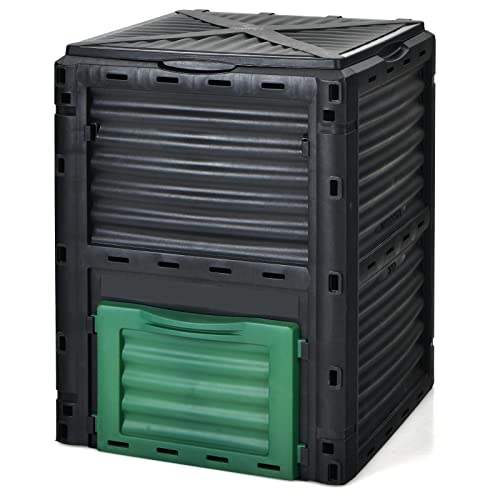
This 80-gallon unit offers ample capacity for daily kitchen waste and yard scraps. It’s BPA-free and designed to withstand outdoor conditions, with bottom exit features for easy removal of finished compost. Best for households generating a steady stream of material and seeking a simple assembly process. Choose this if you need fewer fill cycles and larger batches. Limitation: assembly requires aligning four sides with the lid, which may take a few minutes for first-time users.
Goplus 80 Gallon (Black) Outdoor Compost Bin

Similar in size to the other 80-gallon models, this bin emphasizes BPA-free materials and UV resistance to preserve integrity in sunny climates. Best for larger yards or urban gardens with frequent composting needs. A caution: ensure adequate space for access and turning when loaded with material.
Hourleey Dual-Chamber Tumbling Compost Bin

The Hourleey tumbler uses a dual-chamber design with 43 gallons of capacity, making it ideal for households prioritizing separate stages of composting. It features a 360° tumbling action for easier mixing and faster breakdown. Best for small to mid-sized spaces or households wanting quick turnover. Limitation: smaller capacity means more frequent filling and unloading.
EPICA Countertop Compost Bin Kitchen

Although designed for indoor use, the Epica 1.3 gallon bin shows how compact, odor-controlling design can complement outdoor options by pre-processing scraps before they go outside. Best for kitchens with limited space seeking a convenient, odor-minimizing solution. Caution: not suitable as a primary outdoor bin due to limited capacity.
Miracle-Gro Compost Tumbler – 18.5 Gallon
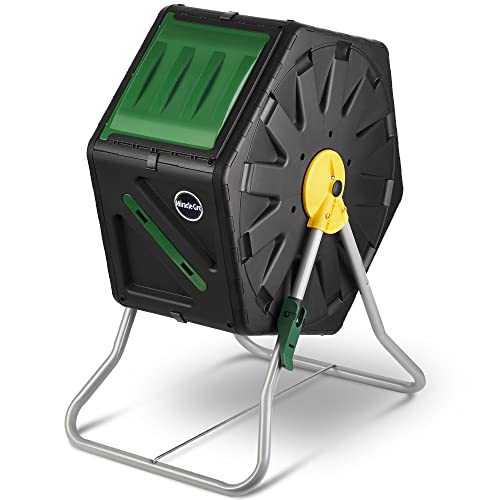
The Miracle-Gro tumbler provides a compact 18.5-gallon option with an easy-turn design and internal mixing aids. Best for small gardens or balcony setups where space is at a premium and rapid batch turnover matters. Caution: smaller capacity means more frequent emptying and refills when batch sizes are large.
Buying Guide: Key Factors To Consider
- Capacity vs. space: Choose capacity that matches your waste output and available outdoor space. Larger bins reduce emptying frequency but require more room.
- Airflow and material: Four-sided ventilation and UV-stable plastics accelerate composting and resist weathering. BPA-free materials are a plus for safer compost.
- Access and ergonomics: Lift-off lids, side doors, or bottom doors facilitate loading, turning, and unloading finished compost. Tumbling designs minimize manual turning.
- Durability and weather resistance: Outdoor bins should withstand rain, sun, and temperature fluctuations. Recycled-material builds are common and eco-friendly.
- Assembly and maintenance: Some models require tool-free assembly; others need more steps. Consider how easy it is to clean and remove finished compost.
- Best-use scenarios: Tumbling bins are often best for quick batches; multi-chamber designs suit ongoing cycles; smaller bins fit apartments or tight spaces.
Frequently Asked Questions
- What size compost bin do I need for a family of four? – A bin around 60–80 gallons typically handles daily kitchen waste and yard scraps for a small family, while larger households may benefit from 80 gallons or more.
- Are plastic compost bins safe for long-term outdoor use? – Yes, when they are UV-stabilized and BPA-free; these materials resist weathering and leaching into compost.
- Is a tumbler easier to use than a standard bin? – Tumblers simplify turning and aeration, leading to faster decomposition, but they may offer less capacity than stationary bins.
- How important is airflow in composting? – Proper airflow reduces odor and speeds up microbial activity, helping produce finished compost more quickly.
- Can I compost meat or dairy in a plastic bin? – It’s generally discouraged for outdoor bins due to odor and pest attraction; focus on fruit/vegetable scraps, coffee grounds, and yard waste.
- Do I need to drill holes or modify the bin for better composting? – Most modern bins include appropriate ventilation; additional holes are usually unnecessary and may void warranties.