Choosing the right plastic pots for seed starting improves germination and transplant success. This guide highlights five reliable options suited for different gardeners—home growers, urban planters, classrooms, and small-scale nurseries. Each option offers drainage, portability, and stackable design to fit compact spaces. Use the buying guide and FAQ to compare sizes, durability, and reuse potential before you decide.
Summary of selected products
| Product | Size | Drainage | Best For | Notes |
|---|---|---|---|---|
| TDHDIKE 4″ Small Pots | 4″ | 8 holes | Seed starters, small succulents | Includes 100 labels |
| JERIA 200-Pack 4″ | 4″ | 8 holes | Bulk seed starting projects | Includes 200 labels |
| Dayify 4″ 100-Pack | 4″ | 8 holes | Seedlings and transplanting | Includes 100 labels |
| STARSIDE 100 Pack 4″ | 4″ | 8 holes | Home gardens and classrooms | Includes 100 labels |
| OZOSHINE 40 PCS | 4″ | 8 holes | Small batch projects | Compact set |
TDHDIKE 4″ Small Plastic Plant Nursery Pots
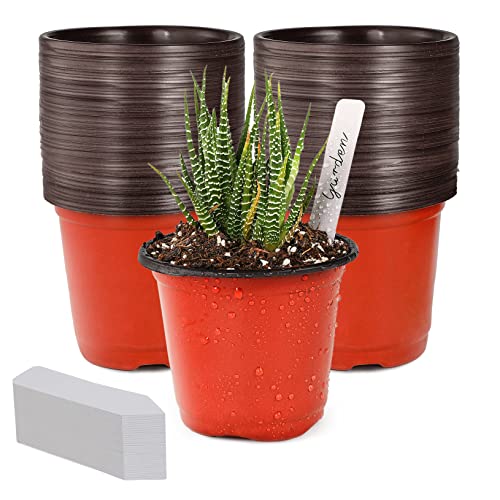
Best for: seed starters and small succulents. These 4″ pots feature eight drainage holes to promote aeration and prevent root rot. A clear set of 100 plant labels helps separate varieties during early growth. The compact 3.2-inch height makes them suitable for desktop or balcony seed projects. The 100-label option supports organization in busy seedling trays.
Why selected: The combination of multiple identical pots with labeled organization is ideal for beginners and hobbyists managing several varieties at once.
Caution: Plastic pots can dry out faster on hot days; monitor moisture levels accordingly.
OJYUDD 60 Pack 1 Gallon Flexible Pots

Best for: larger seedlings and cuttings that require a bigger starting space before transplanting. This set provides 1-gallon pots with 5.1″ bottom and 6.5″ opening, designed to tolerate mild compressions and be reusable. The thick-walled construction supports multiple uses in a season or across seasons.
Why selected: Flexible material reduces breakage during handling and makes moving larger transplants easier. Best for gardeners planning early-stage growth in a larger container before final pots.
Limitation: Slightly bulkier than 4″ pots, so storage and space planning are essential for small indoor setups.
JERIA 200-Pack 4 Inch Plastic Nursery Pots
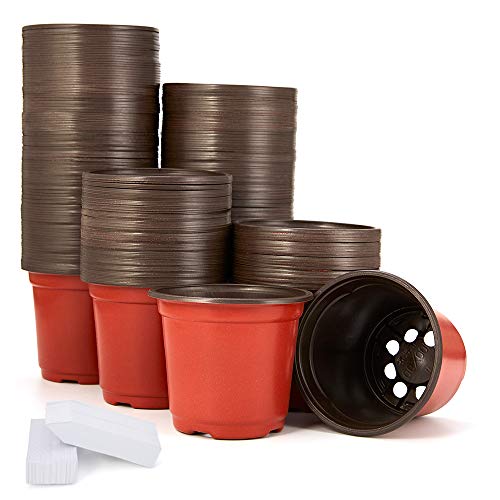
Best for: bulk seed starting and transplanting projects. Each pot is 4 inches with eight drainage holes and comes with 200 labels. The design emphasizes lightweight, soft plastic that remains reusable after compression. Raised rims aid handling and stacking.
Why selected: The large quantity and included labeling system suit classrooms, community gardens, or home projects requiring many identical pots and reliable drainage.
Caution: Space-saving stackability can be a double-edged sword if pots are stacked too tightly; ensure airflow to prevent mold in storage.
Dayify 100 Pack 4 Inch Pots

Best for: complete starter kits for seed starting and transplanting. This set includes 100 pots with 8 drainage holes and 100 plant labels. The polypropylene construction supports repeated use and resilient storage.
Why selected: A balanced package that emphasizes practical drainage and reuse, suitable for beginners and seasoned growers alike.
Limitation: The design focuses on standard 4″ size; specialty plants requiring different ratios may need alternative pots.
Augshy 250-Pack 4 Inch Pots with 300 Labels

Best for: high-volume seedling projects and education settings. The package includes 250 pots and 300 labels, designed to maximize organization while supporting efficient seed propagation. The 4-inch pot size balances root growth and space efficiency.
Why selected: The combination of heavy labeling and ample pots makes it a strong choice for classrooms, plant swaps, and small-scale nurseries that manage many varieties.
Caution: Labeling quality matters; consider labeling pens that resist smudging when used with soil.
TAQIXI 100 Packs 4 Inch Nursery Pots

Best for: growers needing large batch capacity without sacrificing portability. The 100-pack offers lightweight, sturdy pots with eight drainage holes, designed to withstand repeated handling during seed-starting and transplanting.
Why selected: Easy to move and deform, yet quick to restore to shape, these pots support efficient propagation in bulk projects.
Limitation: Some users may prefer a firmer plastic for long-term reuse; consider your storage and rotation schedule.
Buying Guide: Key Considerations For Plastic Seed-Starting Pots
- Size and plant type: 4-inch pots are a standard choice for many vegetables and flowers. Larger sizes support bigger transplants, while smaller sizes save space for seed trays.
- Drainage: Look for pots with multiple drainage holes (commonly eight). Good drainage prevents root rot and improves root health.
- Material and durability: PP plastic is flexible and reusable, helping pots recover from compression and last across seasons. Consider how readily the pots recover after storage or stacking.
- Labels and organization: Pots that include plant labels help keep varieties organized, especially in bulk sets. Choose compatible labeling systems and materials that resist soil moisture.
- Stackability and storage: Raised rims and lightweight design aid stacking and space efficiency. Ensure you have adequate storage space when not in use.
- Reuse and sustainability: Reusable pots reduce waste. Check for ease of cleaning and the pot’s capacity to retain shape after multiple uses.
- Cost per pot: Bulk sets reduce cost per pot. If you’re growing many varieties, factor in the labeling and planning needs to maximize value.
FAQ
- What size pot is best for seed starting?
– Four-inch pots are a versatile choice for many vegetables and flowers and balance space with root room. - Do these pots have enough drainage for healthy roots?
– Yes, most listed options include eight drainage holes to promote airflow and prevent rot. - Are these pots reusable?
– Most are designed to be reusable after care and gentle compression, though durability varies by brand. - Which kit is best for classrooms or groups?
– Kits with larger quantities and included labels (like 200 labels with 200 pots) streamline classroom propagation and group projects. - Should I buy separate labels or rely on included ones?
– If you manage many varieties, rely on sets that include ample labels; otherwise, separate durable plant markers may be useful. - Can I stack these pots for storage?
– Yes, many designs feature raised rims and flexible plastic that stack for compact storage, saving space when not in use.