For vegetable growers, plastic pots and grow bags offer lightweight, affordable options that handle transplanting, seed starting, and container gardening with ease. This guide highlights five reliable choices, tailored for different needs—from starter seedlings to larger vegetable crops. Best for small-space growers are flexible seed-start pots; best for spreading crops across a balcony are heavy-duty grow bags; best for quick transplants are sturdy nursery pots. The listed products prioritize drainage, durability, and ease of use, helping you choose the right container for your vegetables.
Summary of selected products
- OJYUDD 60 Pack 1 Gallon Flexible Plant Nursery Pots (Black) — Best for bulk starter seedlings and reusability.
- COKIELE 5 Pack 5 Gallon Grow Bags — Best for larger vegetables with strong root systems on a budget.
- FEED GARDEN 5 Gallon Grow Bags 4 Pack — Best for multi-season balcony or patio gardening with reinforced handles.
- RooTrimmer 3 Gallon Plastic Nursery Pots — Best for easy transplanting and nursery-level projects.
- SLMKHHU 30 Pack 5 Gallon Plastic Nursery Pots — Best for larger plants and weekend garden projects.
OJYUDD 60 Pack 1 Gallon Flexible Plant Nursery Pots

Best for bulk propagation, these 1-gallon pots are lightweight and reusable. The thickened flexible plastic tolerates compression and bending, which helps during transplanting and storage. Ideal for seed starting, cuttings, and early-stage vegetables in a nursery or home garden. Use when you need many identical pots for a large starter bed or for organizing loose seedlings.
Who it’s best for: prolific seed starters and educators who require many uniform containers. Why selected: high quantity, simple design, and reusability support rapid seedling production with easy handling.
Limitation: as the plastic is soft, pots may deform under heavy soil load if not adequately filled or supported.
COKIELE 5 Pack 5 Gallon Grow Bags

Best for larger crops with a focus on root health, these 5-gallon grow bags use heavy-duty 300G nonwoven fabric. The breathable material improves airflow and drainage, helping prevent overwatering and root rot. These are suitable for tomatoes, potatoes, strawberries, and other vegetables that benefit from air-pruned roots.
Who it’s best for: growers needing durable, reusable bags for sizeable crops. Why selected: strong fabric, good drainage, and portability make them versatile for balcony to yard setups.
Caution: fabric bags can dry out more quickly than plastic pots in dry conditions; monitor moisture accordingly.
FEED GARDEN 5 Gallon Grow Bags 4 Pack

Best for multi-season balcony or patio gardening, these 5-gallon bags emphasize fast drainage and durable construction. The upgraded thick fabric resists tearing, and reinforced handles simplify moving soil-filled bags. They’re suitable for vegetables, herbs, and flowering crops that require flexible containers and easy relocation.
Who it’s best for: compact or movable garden setups requiring durable grow bags. Why selected: sturdier fabric and easy handling support frequent plant changes and seasonal rotations.
Limitation: larger plants in tight spaces may require frequent checks for moisture balance and bag stability during high winds or heavy rains.
RooTrimmer 3 Gallon Plastic Nursery Pots

Best for nursery-level transplanting, these 3-gallon pots have drainage holes and a soft, lightweight body with reinforced rims. The dimensions (10″ top, 7.5″ bottom, 7.8″ height) suit mid-size vegetables and seedlings. They’re easy to handle and stack for storage, reducing setup time for multiple projects.
Who it’s best for: hobbyists and small gardens needing reliable transfer pots. Why selected: clear sizing and sturdy construction support orderly transplant workflows.
Limitation: labeled as 3-gallon capacity, actual planting space may be smaller than a bucket; verify dimensions for crowded setups.
SLMKHHU 30 Pack 5 Gallon Plastic Nursery Pots
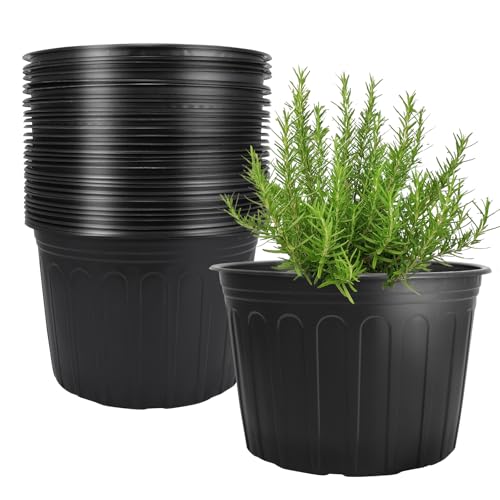
Best for larger container gardening, these 5-gallon pots are thickened and designed for long-term use. The set includes 30 pots with drainage holes to prevent waterlogging. They’re well-suited for starting vegetables that require more root room, such as peppers or larger leafy greens.
Who it’s best for: gardeners who plant bigger crops or run multi-plant projects. Why selected: robust plastic and practical size balance durability with portability.
Limitation: larger pots require more soil and water; plan for adequate watering and storage space.
Buying Guide: Key Considerations For Choosing Plastic Pots For Vegetables
- Plant size and growth stage: choose smaller 1–3 gallon pots for seedlings or starter cuttings; opt for 5 gallon or larger for tomatoes, peppers, and squash.
- Material and durability: thicker plastic offers more resilience; nonwoven fabric grow bags provide excellent drainage and root pruning but can dry out faster.
- Drainage: ensure pots have drainage holes to prevent root rot; consider saucers or trays to catch runoff.
- Mobility and storage: lightweight options are easy to move, while heavier bags stay in place during wind or rain; consider stackable designs for space efficiency.
- Reuse and cleanup: plastic pots are generally reusable; smooth surfaces are easier to clean and sanitize between seasons.
- Environment and climate: fabrics perform well in warm, dry climates due to breathability, while rigid plastics offer consistent performance in varied weather.
- Cost and quantity: bulk pots save money for large plant counts; balance quantity with space and planned crops.
FAQ
- What size pot should I use for tomatoes? – For indeterminate tomatoes, 5 gallon pots or larger are common; determinate varieties may thrive in 3–5 gallon containers.
- Are fabric grow bags better than plastic pots? – Fabric bags offer superior drainage and air pruning, which can improve root health, but may require more frequent watering in hot climates.
- Do pots need saucers? – Yes, to catch excess water and protect surfaces; ensure proper drainage to avoid waterlogging.
- Can plastic pots be reused after cold weather? – Yes, clean and dry them thoroughly; store in a dry place to prevent cracking or deformation.
- Which option is best for beginners with limited space? – Small 1–3 gallon pots or compact grow bags are easier to manage and store when not in use.
- How do I prevent root rot in pots? – Use pots with drainage holes, avoid overwatering, and provide good airflow around the root zone.