Polycarbonate sheets are a top choice for greenhouse coverings due to their strength, insulation, and high light transmission. This guide highlights five strong options ideal for American growers seeking reliable weather resistance, clear visibility, and year‑round growing potential. The featured products suit different greenhouse sizes and budgets, from heavy-duty panels for large structures to versatile packs for smaller setups.
Summary table of chosen products:
- Sinimaka 10 Pack Polycarbonate Greenhouse Panels — 8′ x 4′ x 0.24″ twin-wall, all-weather, high transparency
- FAHKNS 14 Pack Polycarbonate Greenhouse Panels — 4′ x 2′ x 0.16″ twin-wall, energy-efficient
- DGSL 6 Pcs Polycarbonate Greenhouse Panels — 4′ x 2′ x 0.16″ twin-wall, durable
- Sinimaka 8 Pack Polycarbonate Greenhouse Panels — 8′ x 4′ x 0.24″ twin-wall, good weather resilience
- FAHKNS 14 Pack Polycarbonate Greenhouse Panels — 4′ x 2′ x 0.24″ twin-wall, bright light transmission
Sinimaka 10 Pack Twin-Wall Panels

Best for larger greenhouses that need robust, all-weather panels with strong impact resistance. The twin-wall design enhances heat retention and insulation, helping extend the growing season. Suitable for growers who face hail or heavy wind loads.
Key advantages: 8′ x 4′ panels, 0.24″ thickness, -40°C to 120°C operating range, UV coating blocks 99.9% and transmits about 89% light. The set includes ten panels for flexible installation.
Caution: Ensure proper sealing at joints to optimize insulation and prevent heat loss in extreme cold.
FAHKNS 14 Pack Twin-Wall Panels, 4′ x 2′
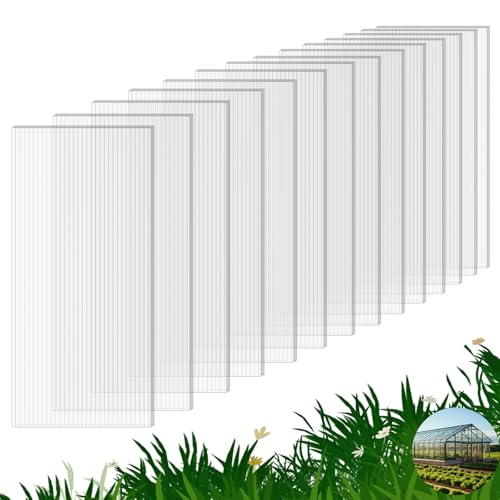
Best for mid-sized greenhouses needing high light transmission with reliable UV protection. These panels offer bright, even illumination and strong impact resistance in windy or storm-prone areas.
Highlights: 0.16″ thick twin-wall construction, about 80% light transmission, -44°C to 120°C range. They reduce heat loss while keeping plants exposed to adequate daylight.
Limitations: Slightly thinner than 0.24″ options; may require additional layers or framing to handle heavy snowfall in extreme environments.
DGSL 6 Pcs Panels, 4′ x 2′ x 0.16″

Best for growers needing reliable, shatterproof panels in a compact footprint. The 0.16″ thickness provides adequate light transmission with strong insulating properties for all-season growing.
Why choose: Twin-wall design and wide operating range (-44°C to 120°C) help maintain stable temperatures, supporting delicate crops in winter and heat-loving plants in summer.
Caution: Panels should be kept free of debris to maximize light diffusion and prevent clogging of ventilation openings in very hot climates.
Sinimaka 8 Pack Twin-Wall Panels

Best for smaller to mid-size greenhouses seeking high resilience with fewer panels needed for setup. The 0.24″ twin-wall design remains a strong option for impact resistance.
Benefits: Excellent weather resistance from -40°C to 120°C and high UV protection, maintaining structural clarity and plant-friendly light diffusion.
Limitation: Fewer panels per purchase compared to the 10- or 14-pack options; plan for expansion if your greenhouse grows.
FAHKNS 14 Pack 0.24″ Panels

Best for growers prioritizing maximum light diffusion and strong all-weather performance in larger installations. The thicker 0.24″ panels provide enhanced insulation for year-round reliability.
Key points: 80% light transmittance, UV protection, and a wide -44°C to 120°C working temperature range. They are durable and less prone to weather-related damage than glass alternatives.
Note: Consider panel spacing and framing to optimize airflow and prevent heat buildup in hot climates.
Buying Guide
What should you consider when choosing polycarbonate greenhouse panels?
- Panel thickness and insulation: Thicker panels (0.24″) offer better insulation and impact resistance, important in harsh climates.
- Light transmission: Look for panels with high light transmission plus UV protection to protect plants and reduce yellowing over time.
- Weather range: Ensure panels operate in your regional temperatures, especially if you experience freezing winters or hot summers.
- Panel size and pack quantity: Match panel dimensions to your greenhouse footprint and consider future expansion needs.
- Durability vs. weight: Twin-wall polycarbonate balances strength with lighter weight than glass, easing installation and reducing wind load concerns.
- UV stability and anti-yellowing: UV-resistant coatings help maintain clarity and prolong panel life.
Practical Comparison at a Glance
- Best for large, hail-prone greenhouses: Sinimaka 10 Pack (B0F1C8S6QL)
- Better for bright, year-round growth in mid-sized spaces: FAHKNS 14 Pack 0.16″ or 0.24″ (B0FH9M8FL6, B0GC51SSLT)
- Choose this if you need compact coverage and strong insulation: DGSL 6 Pcs (B0C9T3M8VL)
- Avoid this if you require the thickest, most durable panels for extreme conditions and you have a large budget: consider upgrading thickness or brand coverage
FAQ
- Q: Are polycarbonate panels safe for greenhouse use year-round? A: Yes, they are designed for outdoor exposure with UV protection and strong impact resistance.
- Q: Do these panels block too much light for photosynthesis? A: Most options provide around 80–89% light transmission, which supports healthy growth while reducing heat buildup.
- Q: Can I cut panels to fit my greenhouse shape? A: Some panels can be cut with professional tools; check product notes for cutting guidance.
- Q: Will polycarbonate panels prevent condensation issues? A: Twin-wall designs help with insulation, but proper ventilation is still important to manage condensation.
- Q: How long do polycarbonate panels last outdoors? A: UV-stabilized panels typically resist yellowing and cracking for many years under normal conditions.