Potting bags for plants offer a simple, affordable way to boost root health and improve drainage for vegetables, herbs, and ornamentals. This guide highlights five top options, clarifying who each bag best serves and why. Whether you’re a balcony gardener, a suburban planter, or a small-scale urban farmer, these bags help prevent root circling and support robust growth without heavy pots. The buyer-friendly table below summarizes key points to compare at a glance.
| Product | Size | Best For | Notes |
|---|---|---|---|
| Land Guard 10 Gallon (4-Pack) | 10 gal | Large-space planters, root pruning enthusiasts | Excellent drainage; sturdy handles |
| Land Guard 5 Gallon (4-Pack) | 5 gal | Compact patios, container growers | Lightweight, great air flow |
| Jorvila 5 Gallon (5-Pack) | 5 gal | Tomatoes, potatoes, versatile garden bags | 300G thick fabric; easy to store when empty |
| FEED GARDEN 10 Gallon (4-Pack) | 10 gal | Multi-season vegetable and herb gardens | Thick 300G fabric; reinforced handles |
| Gardzen 5 Gallon (10-Pack) | 5 gal | Healthy root development, frequent re-potting |
Land Guard 10 Gallon Fabric Grow Bags — 4 Pack
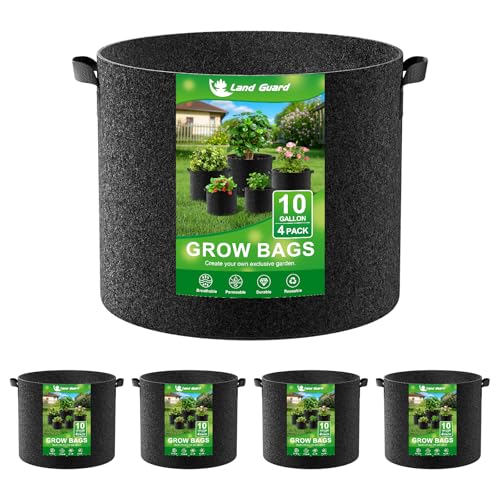
The Land Guard 10 Gallon grow bags use thick nonwoven fabric designed to be lightweight yet strong. They provide excellent drainage to prevent over-watering and promote plant respiration. The heavy-duty handles make moving full bags easier, which is helpful for seasonal rearrangements or repositioning for sun exposure. Best for gardeners seeking larger volumes in a portable, breathable container. Caution: When fully loaded with soil, the bags may require careful lifting to avoid strain on handles.
Land Guard 5 Gallon Fabric Grow Bags — 4 Pack

This 5-gallon option shares the same sturdy nonwoven fabric and drainage emphasis as the larger model, with lighter weight and easier portability. The bags are well-suited for small balcony gardens or planters where space is at a premium. Best for compact setups and seasonal crops that don’t require as much soil volume. Limitation: Smaller volume means less soil and moisture capacity, which may require more frequent watering in hot climates.
Jorvila 5 Pack 5 Gallon Grow Bags

Jorvila’s 5-gallon bags feature 300G thickened nonwoven fabric for durability and improved aeration. Their root-pruning-friendly design helps prevent circling and supports a healthier root structure. These bags are particularly suitable for heavy crops like tomatoes and potatoes. Caution: While durable, the fabric may require occasional washing to maintain performance after multiple seasons.
FEED GARDEN 10 Gallon Grow Bags — 4 Pack

FEED GARDEN’s 10-gallon bags use 300G thickened fabric to deliver superior drainage and robust air flow, supporting stronger root systems. The reinforced double-stitched handles simplify moving heavy soil and plants. This option is best for multi-season outdoor gardens where larger container volume is beneficial. Limitation: The heavier fabric may be stiffer in very cold weather, requiring extra care when handling in winter months.
Gardzen 10-Pack 5 Gallon Grow Bags

Gardzen’s 10-pack offers multiple 5-gallon bags made from 300G thickened nonwoven fabric, with reinforced X-shaped stitching on the handles for enhanced durability during frequent repositioning. These bags promote air pruning and prevent root circling, making them ideal for gardeners who rotate crops or repot several times in a growing season. Caution: The large pack size may require substantial storage space when not in use.
Gardzen 6-Pack 30 Gallon Grow Bags

Gardzen’s 30-gallon bags present a heavy-duty option for larger crops or backyard beds. They emphasize excellent aeration and breathability to avoid root circling while enabling faster growth. The woven design supports good drainage and overall plant vigor. Best for larger containers or space-limited outdoor setups. Limitation: Higher volume may be more than needed for small projects or balcony spaces.
FEED GARDEN 5 Gallon Grow Bags — 4 Pack

FEED GARDEN’s 5-gallon bags combine 300G thick fabric with reinforced double-stitched handles for easy movement and durability. They support fast drainage and healthy root growth, making them a practical option for balcony gardens or seasonal crops. Best for compact spaces and lighter crops; avoid if you need extremely large soil volumes in a single bag.
Buying Guide: Key Purchase Considerations
- Bag material and thickness: Look for 300G thickened nonwoven fabric for durability and aeration, which helps prevent root rot and supports healthy root systems.
- Drainage and aeration: Ensure the fabric promotes air pruning and allows excess water to escape to avoid waterlogged soil.
- Handles and portability: Reinforced handles and sturdy stitching help when moving full bags; consider bag weight and storage when empty.
- Size and crop type: Match bag size to intended crops; larger volumes suit tomatoes and root crops, while smaller bags work well for herbs and compact varieties.
- Multi-season use: For outdoor spaces, choose bags designed for resilience against tearing and deformation across seasons.
- Maintenance: Some bags are washable and foldable for storage; factor cleaning and reuse into long-term costs.
Frequently Asked Questions
- What is the main benefit of fabric grow bags over plastic pots?
Fabric bags promote better aeration and air pruning of roots, reducing root circling and encouraging healthier root systems. - Are thicker fabric grow bags more durable than thinner ones?
Yes, thicker fabric (like 300G) tends to resist tearing and deformation and lasts longer with frequent handling. - Can I reuse fabric grow bags for several seasons?
Many are designed for multi-season use, but durability depends on climate, crops, and handling. Clean and dry between uses. - Which size is best for tomatoes?
5–10 gallon bags are commonly used for tomatoes, offering enough root space while remaining manageable in containers or raised beds. - Do fabric bags require special drainage?
Fabric bags inherently drain well due to their porous material, but ensure pots are placed on drainage-friendly surfaces to prevent messes. - Should I avoid fabric bags in cold climates?
In extreme cold, fabric bags can stiffen; store or shelter them to protect handles and seams, and select heavier fabrics for durability.