When selecting a potting medium for orchids, the goal is to mimic their natural epiphytic environment: well-drained, aerated, and able to retain just enough moisture. The following products are curated for Phalaenopsis, Cattleya, Dendrobium, and other epiphytic orchids. They suit buyers seeking reliable drainage, strong root growth, and ease of repotting. This guide highlights five top options and explains who benefits most from each mix.
Summary table of selected products
| Product | Best For | Key Benefit | Size |
|---|---|---|---|
| Better-Gro Special Orchid Mix (8 Quarts) | General orchid care; multiple species | Balanced mix with bark, sponge rock, and perlite for drainage | 8 Quarts |
| Better-Gro Special Orchid Mix (4 Quarts) | Smaller setups; frequent repotting | Same formulation in smaller bag | 4 Quarts |
| [Upgraded] Duspro Orchid Potting Mix (2 Qt) | New orchid setups; compact spaces | Upgraded formula with pumice and chunky perlite | 2 Qt |
| Rosy Soil Orchid Potting Mix (4 Quarts) | Root health and growth; live soil benefits | Mycorrhizae and biochar for microbial activity | 4 Quarts |
| Sun Bulb Phalaenopsis Mix (8 Quarts) | Phalaenopsis focus; beginner to intermediate | Fertile blend optimized for Phalaenopsis | 8 Quarts |
Better-Gro Special Orchid Mix – 8 Quarts
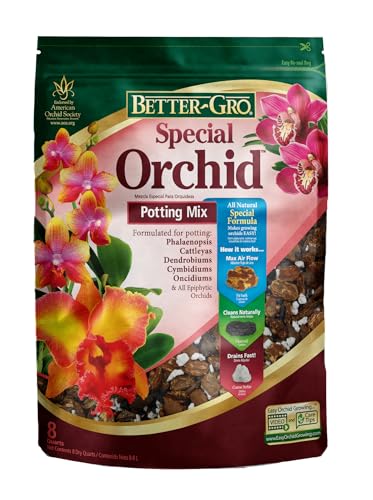
This multi-purpose mix targets a broad range of epiphytic orchids, including Phalaenopsis, Cattleya, and Dendrobium varieties. It blends western fir bark, hardwood charcoal, sponge rock, coarse perlite, and bark nuggets to support robust root growth and proper airflow. Best for established orchid hobbyists seeking a single, versatile medium that works across species.
Best for: growers wanting a versatile, all-in-one orchid mix that supports drainage and root health. Why selected: the combination of bark and rock ingredients mirrors natural habitats and promotes aeration while maintaining moisture balance.
Caution: very large bags may be too bulky for small setups; consider the 4-quart option for compact spaces.
Better-Gro Special Orchid Mix – 4 Quarts

This smaller bag preserves the same multi-purpose formulation, ideal for growers with limited space or those who repot orchids more frequently. It provides optimal root growth and drainage, mimicking natural epiphytic conditions. Use this when you want consistency across plants but with less material on hand.
Best for: beginners or hobbyists with modest repotting schedules. Why selected: it delivers the same core benefits as the 8-quart version in a more compact package.
Limitation: less long-term storage when planting multiple plants at once; plan ahead for larger collections.
[Upgraded] Duspro Orchid Potting Mix – 2 Qt

This mix features an upgraded formula with pumice and chunky perlite, replacing coco peat for improved aeration and reduced compaction. It also blends pine bark mulch and dried forest moss to create a stable, well-draining medium. Best for: newer orchids or small setups needing reliable drainage and robust root development.
Why selected: emphasis on durable structure and better air flow helps prevent root rot in moist climates. Caution: the smaller bag may require more frequent replenishment during active growth seasons.
[Upgraded] Duspro Orchid Potting Mix – 1 Qrt

This 1-quart option mirrors the 2-quart formula with pumice and chunky perlite, optimized for smaller repotting projects and compact orchid setups. It remains suitable for Phalaenopsis and related epiphytic varieties. Best for: mini-blooming orchids or space-limited environments. Why selected: compact size enables precise medium adjustments for individual plants.
Limitation: smaller quantity increases the need to monitor moisture closely and may require more frequent changes.
Sun Bulb Phalaenopsis Mix – 8 Quarts

This Phalaenopsis-focused mix blends Canadian chunk peat with western fir bark, hardwood charcoal, and coarse perlite. It aims to supply essential nutrients and moisture balance to promote strong Phalaenopsis growth and rooting. Best for: growers specializing in moth types or those seeking a dedicated Phalaenopsis medium. Why selected: formulation targets Phalaenopsis root structure and moisture needs specifically.
Limitation: designed primarily for Phalaenopsis; may not be ideal for highly diverse orchid collections without additional adjustments.
Buying Guide
What should I consider when choosing an orchid potting medium?
Drainage versus moisture retention balance is crucial. Epiphytic orchids need quick drainage but also some moisture retention for healthy roots. Look for mixes that combine bark, sponge rock, perlite, and occasional bioactive components like biochar or mycorrhizae.
Which mix is best for a beginner?
Phalaenopsis-focused or versatile blends (like the 8-quart Better-Gro or Sun Bulb Phalaenopsis mix) simplify decision-making by offering broad applicability and easier maintenance in standard home conditions.
How often should I repot?
Repotting frequency depends on the orchid species, growth rate, and media stability. Some blends are designed for longer intervals between repots, while others encourage more frequent adjustments to renew aeration and prevent soil compaction.
What about size and storage?
For small spaces, consider 1-quart or 2-quart bags to avoid waste and ease handling. Larger bags are economical but require more storage space and upfront setup planning.
Are there risks with these mixes?
Overly heavy mixes can lead to poor drainage and root rot. If the media becomes soggy, mix with additional chunky components to restore airflow. Always monitor moisture levels after repotting.
FAQ
Q: Can I use houseplant potting soil for orchids?
A: No. Orchid media are designed for fast drainage and air spaces, which typical houseplant soils lack.
Q: Is biochar beneficial in orchid mixes?
A: Yes. Biochar can improve microbial activity and nutrient availability, aiding root health in some mixes like Rosy Soil.
Q: Do all orchids need the same mix?
A: No. While many epiphytic varieties share drainage needs, some genera may prefer different textures or moisture levels; tailor the mix to species and climate.
Q: Should I rinse or soak new orchid media before potting?
A: It can help reduce dust and adjust moisture content. Check the product instructions for recommended prep steps.
Q: How can I tell if my orchid mix is too compact?
A: If roots show slowed growth or if the medium remains waterlogged after watering, it’s time to refresh with a chunkier mix or larger particles.
In summary, choosing the right orchid potting medium depends on orchid species, growing conditions, and personalization needs. The highlighted products offer a spectrum from Phalaenopsis-focused blends to versatile epiphytic mixes, enabling tailored solutions for healthy roots and vibrant blooms. Use the buying guide to compare texture, drainage, and longevity, and select the option that best aligns with your orchid collection and repotting schedule.